


What is the biodegradability of airport runway deicers?
Dec 31, 2025
Leave a message
In the aviation industry, safety is of paramount importance, especially during the cold winter months when ice and snow can pose significant threats to airport runway operations. Airport runway deicers play a crucial role in maintaining safe take - offs and landings by preventing the formation of ice and snow on runways. As a leading supplier of airport runway deicers, I am often asked about the biodegradability of these products. In this blog post, I will explore what biodegradability means in the context of airport runway deicers, its significance, and the different types of deicers in terms of their biodegradable properties.
Understanding Biodegradability
Biodegradability refers to the ability of a substance to be broken down by natural biological processes, typically by microorganisms such as bacteria, fungi, and algae, into simpler substances like water, carbon dioxide, and biomass. In the case of airport runway deicers, biodegradability is an important environmental consideration. When deicers are applied to runways, they eventually wash off into the surrounding soil, water bodies, and stormwater systems. If deicers are non - biodegradable, they can accumulate in the environment over time, potentially causing long - term harm to ecosystems, including aquatic life, soil health, and groundwater quality.
Traditional Deicers and Their Biodegradability Challenges
Chloride - based Deicers
Chloride - based deicers, such as sodium chloride (rock salt) and calcium chloride, have been widely used on airport runways for decades. These deicers are effective at melting ice and snow, but they are not highly biodegradable. Sodium chloride is a stable compound that does not break down easily in the environment. When it enters water bodies, it can increase the salinity of the water, which can be harmful to many aquatic organisms, including fish, amphibians, and plants.
Calcium chloride, while it may have some limited biological interactions, also persists in the environment. The high levels of chloride ions from these deicers can cause corrosion of infrastructure, including runway surfaces, aircraft, and vehicles, and can also contaminate soil and groundwater.
Glycol - based Deicers
Glycol - based deicers, such as ethylene glycol and propylene glycol, are another common type of airport runway deicer. These compounds are more biodegradable than chloride - based deicers. Microorganisms in the environment can break down glycols under aerobic (with oxygen) conditions. However, the biodegradation process can be slow, especially in cold temperatures or in anaerobic (without oxygen) environments such as deep water or waterlogged soil.
When glycol - based deicers are released in large quantities, the rapid consumption of oxygen by the microorganisms during the biodegradation process can lead to oxygen depletion in water bodies. This can create "dead zones" where aquatic life cannot survive.
Biodegradable Alternatives
Organic Acid Salts
Organic acid salts, such as sodium formate, potassium acetate, and calcium magnesium acetate (CMA), are considered more environmentally friendly and biodegradable alternatives to traditional deicers.
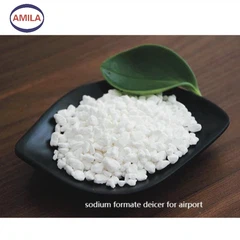
Sodium formate is a particularly promising option. It is a white, crystalline powder that has excellent ice - melting properties. Sodium formate is highly biodegradable, as it can be quickly broken down by microorganisms in the environment. It has a low toxicity level and does not cause significant corrosion to infrastructure. Our company offers high - quality Sodium Formate Deicer for Highways that can also be used effectively on airport runways.
Sodium Formate Granules Deicer is one of our popular products. These granules are easy to handle and spread, making them a convenient choice for airport runway deicing operations. The product is made from Sodium Formate Granular materials, which are known for their fast - acting ice - melting capabilities and biodegradable nature.
Potassium acetate is another organic acid salt that is biodegradable. It has a high freezing - point depression and is effective at low temperatures. However, it can be more expensive than some other deicers. Calcium magnesium acetate (CMA) is also biodegradable and has relatively low environmental impacts. It is less corrosive than chloride - based deicers but may have lower ice - melting efficiency in extremely cold conditions.
Assessing the Biodegradability of Deicers
The biodegradability of airport runway deicers is typically evaluated through standardized tests. One of the most commonly used tests is the OECD 301 series of tests, which measure the ready biodegradability of a substance in an aerobic aqueous medium. These tests simulate the conditions in which microorganisms break down the deicer over a specific period, usually 28 days.
In these tests, the percentage of the deicer that is degraded into carbon dioxide and other simple substances is measured. A substance is considered readily biodegradable if it achieves a certain threshold of degradation, typically 60% or more within 28 days. These test results help airport operators and environmental regulators to assess the environmental impact of different deicers and make informed decisions about their use.
Importance of Biodegradable Deicers for Airports
Using biodegradable deicers is not only an environmental responsibility but also has practical benefits for airports.
Environmental Compliance
Many airports are subject to strict environmental regulations regarding the use and disposal of deicers. Using biodegradable deicers helps airports to comply with these regulations, avoiding potential fines and legal issues. It also helps airports to reduce their overall environmental footprint and contribute to sustainable development.
Protection of Infrastructure
Biodegradable deicers, such as organic acid salts, are generally less corrosive than traditional chloride - based deicers. This means that they can help to extend the lifespan of airport runways, taxiways, and aprons, as well as aircraft and ground support equipment. Reducing corrosion can save airports significant amounts of money on maintenance and replacement costs in the long run.
Public Perception
In today's environmentally conscious society, the public is increasingly concerned about the environmental impact of airport operations. By using biodegradable deicers, airports can enhance their public image and demonstrate their commitment to environmental stewardship. This can lead to better community relations and potentially more support for airport expansion and development projects.
Conclusion
The biodegradability of airport runway deicers is an important aspect to consider in ensuring the safety of aviation operations while minimizing environmental impacts. Traditional deicers, such as chloride - based and some glycol - based products, have their limitations in terms of biodegradability and environmental friendliness. On the other hand, organic acid salts like sodium formate offer a more sustainable and effective solution.


As a supplier of airport runway deicers, we are committed to providing high - quality, biodegradable products that meet the needs of our customers. If you are an airport operator or involved in airport maintenance and safety operations, I encourage you to reach out to us to discuss your deicing requirements. We can offer customized solutions and advice on the best deicers for your specific situation. Let's work together to ensure safe and environmentally friendly airport operations during the winter months.
References
- European Union. (2023). Assessment of ready biodegradability. Retrieved from relevant EU environmental regulations.
- ASTM International. (2023). Standards for testing the performance and environmental impact of runway deicers. ASTM publications.
- Airport Cooperative Research Program. (2023). Reports on the use and management of airport runway deicers. ACRP documents.
Send Inquiry