Your Leading Feed Additives Supplier


Zibo Amila New Material Co.,Ltd is a professional formates manufacturer and supplier in China.We adopted German equipment and technology in research & development, and production. Feed additives are products used in animal nutrition to achieve an effect on the feed itself, on the animals, on food products obtained from the animals consuming the feed additive, or on the environment. They are used in feed for food-producing animals and in pet food. We have many types of feed additives products, including calcium formate, sodium formate, potassium diformate, etc. The product quality is stable and meets national standards, with a content of over 98%.

 
  • Feed Grade Calcium Formate

    Feed grade calcium formate is a calcium salt containing formic acid, containing 31% calcium, 69% formic acid, neutral pH value, and low water content. Mixing calcium formate into additive premixes

  • Sodium Formate 98% Min

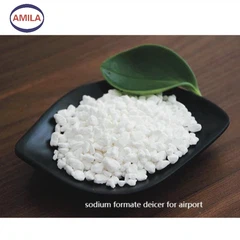
    Name: Sodium formate . CAS: 141-53-7 . Molecular formula: CHNaO2 . Dangerous goods level: Not dangerous goods. . Melting point: ≥253℃. Boiling point: 360℃ . Density (ρ20): 1.92g/cm³ . Appearance:

  • Calcium Formate E238

    Calcium formate, Ca(HCOO)2, is the calcium salt of formic acid. It is also known as food additive E238 in food industry. The mineral form is very rare and called formicaite. It is known from a few

  • Feed Grade Potassium Diformate

    Potassium Diformate(K-Diformate). Chemical Name: POTASSIUM DIFORMATE; FORMIC ACID, POTASSIUM SALT (2:1); potassium formate(1:2); Potassium hydrogen diformate (KHF). CAS: 20642-05-1. Molecular

  • Formic Acid Supplement

    Calcium formate is one of formic acid supplement .

  • Antibacterial Agent

    Formic acid, also known as formic acid, is an organic acid with the simplest structure and has excellent antibacterial ability. However, its strong pungent odor and corrosiveness limit its single

  • Calcium Supplements

    In the field of aquaculture, with the continuous advancement of science and technology and the increasing maturity of aquaculture technology, the application of new feed additives has become an

  • Acidifier

    Adding organic acids to feed can effectively play an antibacterial and antimicrobial role. Feed grade calcium formate is an organic acid calcium that can supplement the calcium element that is

  • Sodium Formate Powder

    Sodium formate powder is an acidic substance and it can be used in feed industry.For a long time in the past,there has always been controversy over the use of sodium formate as a feed additive, but

  • Feed Grade Sodium Formate

    Sodium formate can also be used as a preservative and acidulant for food and feed additives. It can prevent food and feed from spoiling, extend their shelf life, and as an acidulant it can enhance

  • Sodium Formate 99% Min

    Sodium formate is the simplest organic carboxylate, white crystal or powder, with a slight formic acid odor; slightly deliquescent and hygroscopic; soluble in water and glycerol, slightly soluble in

  • K-Diformate

    In recent years, the feed industry has faced increasingly strict regulations on the use of antibiotics, especially in the European Union and China, where bans on the use of antibiotics in feed have

First 12 Last
 
Why Choose Us?

Production Capacity

We owns three major production bases in China, with well-equipped manufacturing facilities and laboratories, with an annual capacity of 40,000MT for calcium formate and 30,000MT of sodium formate, respectively.

Professional Technical Team

Our team of experts is always available to provide technical guidance, helping you choose the right product for your specific needs. From application advice to troubleshooting, we’re here to support you every step of the way.

Customized Solutions

We understand that every client has unique requirements. Whether you need specific packaging, tailored formulations, or bulk quantities, we are flexible and ready to accommodate your needs.

Quality Guaranteed

Zibo Amila QC measures are implemented at every stage of the manufacturing process. Samples are available before bulk orders to confirm that the quality meets your requirements. Third party inspection is available before shipment upon request.


Classification of Feed Additives


Calcium Formate

Calcium formate is an inorganic compound widely used as a preservative in animal feed. The primary function of calcium formate is to acidify the feed, prevent microbial growth, and extend the shelf life.


Sodium Formate

Sodium formate (HCOONa), used as a feed additive, particularly to improve animal performance and intestinal health and to lower the pH of complete feeds for pigs and poultry, at a level not exceeding 1.2% of the complete feed.


Potassium Diformate

Potassium diformate (KDF), an antibiotic substitute used as a feed additive, improves animal growth performance, although there is less direct evidence of its preventive effect on bacterial infections and its influence on the intestinal flora of animals.


Parameters of Feed Additives


Index item

Quality standard

Appearance

White crystalline powder

Calcium formate,%

98 min

Ca Content(%)

30.1 max

Dry-loss(%)

0.5 max

PH of 10% solution

6.0-8.0

Heavy Metal(Pb) %

0.002max

As(%)

0.002max


Functions of Feed Additives


01
 

Pigs

● Increase feed intake and daily weight gain, and reduce feed-to-meat ratio.
● Partially replace acidifiers and antibiotics to reduce diarrhea.

 
02
 

Poultry

● Broilers can increase weight and slaughter rate, reduce feed-to-meat ratio, and improve immunity.
● It can reduce necrotic enteritis in broilers.

 
03
 

Aquaculture

● Increase daily weight gain, growth rate, and survival rate of shrimp, and reduce feed conversion rate.
● Increase the growth rate of sea cucumbers, and reduce the infection and incidence of Vibrio infection in sea cucumbers.
● Increase the growth rate and feed conversion rate of tilapia.

Feed Grade Calcium Formate


Amount of Feed Additives


The rates of introduction of sodium formate 98% are:
● For broiler chickens, laying hens, turkeys: 0.2-5.0 kg / t of feed;
● For weaned piglets: 0.5-6.0 kg / t of feed;
● For fattening pigs: 0.5-3.0 kg / t of feed;
● For sows: 1.0-7.0 kg/t of feed.


Ordering Process


Buyer sends inquiry

1

>>

Buyer receives quotation

2

>>

Order confirmation

3

>>

Buyer sends deposit

4

>>

Seller prepares

5


Feed Grade Sodium Formate


Storage Conditions for Feed Additives

① Temperatures between 5°C and 30°C: Proper storage


② Temperatures below 5°C: Agglomeration or crystallization


③ Temperatures above 30°C: Accelerated decomposition


Packaging and Delivery


Packing

25kg Kraft paper bag / 1200kg Big bag

Customized according to the requirement.

Shipping

By logistics; by train; by shipping.

Payment

TT or L/C


Our Services


① Pre Sales Service
Product Introduction --> Answering questions --> Product Demonstration --> Provide personalized customization


② In Sales Service
Order tracking --> After sales guarantee --> Customer training --> Feedback collection


③ After-Sale Service
24-hour online consulting service --> Regularly inquire about usage and needs


FAQ


Q: Are there safety standards for feed additives?

A: Yes. Our QC system ensures that all products meet the required safety standards and your desired effects. We monitor and control the temperature, reaction time, and other critical processes. Regular sampling and testing are conducted to evaluate the additives' quality at different stages. It may involve testing for purity, pH, solid content, particle size, and other indicators.

Q: What are the benefits of feed additives?

A: Additives enhance nutrient absorption, boost immunity, reduce disease risk, improve growth rates, and extend feed shelf life. For example, enzymes break down complex nutrients, while prebiotics support gut health.

Q: Can I use eco-friendly feed additives?

A: Absolutely. Sustainable options include bio-based enzymes, plant-derived antioxidants, and recycled nutrient sources. Many suppliers offer products with low carbon footprints or vegan certifications.

Q: Do feed additives vary by animal species?

A: Yes. For example:
Ruminants (cattle) may require rumen modifiers to optimize digestion.
Poultry benefit from coccidiostats to prevent parasites.
Aquaculture uses immune stimulants for disease resistance in fish.

Q: How should I store feed additives?

A: Store in cool, dry conditions (5°C–30°C for most products) away from direct sunlight. Use airtight containers to prevent moisture absorption or oxidation. Avoid mixing incompatible substances (e.g., acids and alkalis).

Q: Do your products support customization?

A: Yes. Provide personalized customized solutions based on customer needs and scenarios to meet their special requirements.

As one of the most professional feed additives manufacturers and suppliers in China, we're featured by high quality customized service and OEM service. Please rest assured to wholesale bulk discount feed additives from our factory.

Send Inquiry