


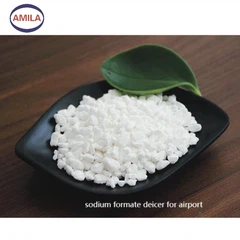


Sodium Formate 99% Min
Properties of Sodium Formate
Melting point: 259-262°C(lit.)
Boiling Point: 360°C
Density: 1.16g/ml at20°C
Storage conditions: Store at 5°C to 30°C
Solubility: 8M in water at 20°C, clear, colorless
Acidity coefficient(pKa): 3.86[at20℃]
Specific gravity: 1.92
Color: White
Odor: a slight formic acid odor
PH: 7.4(1mM solution);7.83(10mM solution);8.25(100mM solution);8.57(1000m Msolution)
Water solubility: Soluble
Product Features
High Purity
Sodium Formate 99% Min has a purity of up to 99% and very few impurities.
Wide range of applications
Sodium Formate 99% Min can be widely used in the leather industry (as a reducing agent, pH regulator), concrete antifreeze, road deicing agent, oil drilling fluid corrosion inhibitor and other scenarios.
Production method
There are three main methods for producing sodium formate: carbon monoxide synthesis method, pentaerythritol by-product method and neopentyl glycol by-product method.
Carbon monoxide synthesis method
1). The steps are as follows: First, carbon monoxide reacts with sodium hydroxide solution under high temperature (160~200℃) and high pressure (2MPa) to generate sodium formate. Subsequently, pure sodium formate product is obtained through sulfuric acid acid hydrolysis, distillation and other steps. The reaction equation is: CO+NaOH→HCOONa
This process uses coke as raw material, and obtains the carbon monoxide gas required for the process through gasification and dust removal, water washing, decarbonization, and re-dust removal. Then, it is heated and pressurized with sodium hydroxide to generate sodium formate solution, and then evaporated, separated, and dried to obtain solid sodium formate.
Advantages: The sodium formate produced by this process has a high content of up to 99%, white color, and crystalline form, which is suitable for the production of feed additives, insurance powder, etc.
2). The process descriptions are as follows:
- Gasification: The coke is sent into the gasifier and incompletely burned with air to generate a mixed gas such as carbon monoxide, carbon dioxide and nitrogen.
- Purification: The mixed gas first passes through a cyclone dust collector to remove solid particles, then enters a scrubber and is washed with water to further remove solid particles. In the alkaline scrubber, sodium hydroxide solution is used as an absorbent to remove carbon dioxide. Finally, the remaining solid particles are removed by an electrostatic precipitator.
- Compression: The purified mixed gas is pressurized to 2.0~2.2MPa by a compressor and mixed with a preheated alkaline solution to basically remove carbon dioxide and obtain carbon monoxide gas.
- Synthesis: Carbon monoxide gas reacts with sodium hydroxide in a synthesis reactor to generate sodium formate solution. After pressure relief and gas-liquid separation, the sodium formate solution is stored for standby use, and the mixed gas is discharged.
- Evaporation separation: The sodium formate solution is heated in an evaporator to evaporate most of the water to obtain a sodium formate solution with a content of 70~80%. After centrifugal separation, about 5% sodium formate can be obtained.
- Packaging: The sodium formate solution is centrifuged and dried, and then packaged.
Pentaerythritol by-product method
Using the alkaline environment in the production process of pentaerythritol, sodium hydroxide reacts with formic acid to produce a by-product sodium formate. The sodium formate is white or off-white, and the purity is usually between 90% and 95%. It is suitable for sewage treatment and leather treatment, and is favored for its low impurity content and non-corrosiveness.
Advantages: white color and high purity
Neopentyl glycol by-product method
In the preparation process of neopentyl glycol, formaldehyde reacts with liquid alkali under the action of a catalyst to produce neopentyl glycol and a by-product sodium formate with a content of about 98%.
Advantages: white color, high purity, no caking, wide range of applications
Hot Tags: sodium formate 99% min, China sodium formate 99% min manufacturers, suppliers, factory, carrier sodium formate, filtration aid sodium formate, microfiltration sodium formate, flexible packaging sodium formate, solvent sodium formate, ultrafiltration sodium formate
You Might Also Like


Send Inquiry