


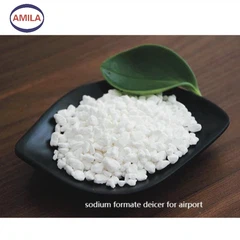


Aircraft Deicer
Therefore, civil aviation authorities in various countries are increasingly concerned about the problem of aircraft icing and snow accumulation. To ensure flight safety, strict anti icing and de icing procedures need to be implemented.
aircraft deicer

There are currently four mature aircraft de icing/anti icing methods: chemical liquid de icing, gas thermal de icing, electric thermal de icing, and mechanical de icing. The chemical method is to use de icing solution to melt the ice layer, such as ethylene glycol, propylene glycol, urea, etc. The physical method is to use hot air, warm air, etc. to heat the surface of the aircraft, causing it to melt the ice layer. De icing refers to the process of removing ice from an aircraft. Once the ice is removed, a second step may be required, known as anti icing, to prevent the ice from forming again after being cleared. These two processes ensure the safety of the aircraft, crew, and passengers in the sky.

De icing agent is a compound composed of chemical ethylene glycol and water. Ethylene glycol lowers the freezing point of solvent water. The formula of the medicine varies according to different weather conditions, but regardless of the formula, the method of using the composite agent is the same. It is heated and sprayed onto the aircraft through a hose to remove snow, ice, or frost. Speed and thoroughness are crucial when using deicing agents. Therefore, it is necessary to execute the application program in a timely and orderly manner, and pay attention to the so-called dwell time, which is the time that the aircraft must be reprocessed before it freezes again after de icing. The retention time varies depending on the composition of the compound and is set by the fluid manufacturer. Due to the high cost of de icing compounds reaching up to $5 per gallon, the program may cost thousands of dollars (considering processing and storage costs), so it is crucial not to exceed the holding time. The detention time also explains why de icing is only carried out after everyone has boarded the plane and the plane is preparing for takeoff in other aspects. The dwell time may only be a few minutes, so the aircraft must be prepared to taxi to the runway and enter the air as soon as possible after de icing.
According to the regulations of the Federal Aviation Administration of the United States, the parts of an aircraft that may require de icing and anti icing are: wings, vertical and horizontal tail surfaces, fuselage, engine air intakes and fan blades, control surfaces and gaps, landing gear and landing gear doors, antennas and sensors, and propellers. Ground crew and flight personnel must work together to determine which surfaces need to be de iced based on temperature and weather conditions, as well as the best procedures to use. The Federal Aviation Administration of the United States recommends using 2 to 4 de icing vehicles for commercial aircraft. The program starts from the front of the fuselage, goes to the wings, then to the rear fuselage, vertical stabilizer, and finally to the horizontal stabilizer (the latter two are part of the aircraft's tail wing).
As a dedicated and innovative specialty chemical company, Amila also has extraordinary strength in the field of de icing. With over 10 years of industry experience, Amila has become one of the globally renowned manufacturers of de icing agents/anti icing fluids, developing formate based de icing agents for airport runways.
Regarding runway de icing and safe takeoff and landing
The de icing/anti icing agent for the runway of Emira airport is mainly composed of potassium formate or sodium formate, including liquid and solid forms, which meet the requirements of internationally recognized aviation material specifications AMS 1435 and AMS 1431, respectively.
Airport operation and maintenance 'good helper'
Unlike common de icing/anti icing agents on the market, the special ingredients of the de icing/anti icing agents manufactured by Emira ensure minimal corrosion to airport and aircraft materials, and are independently certified by the International Scientific Materials (SMI) to be compatible with various metal and polymer materials.
Only after completing important de icing/anti icing procedures can the aircraft fly without distractions.
Hot Tags: aircraft deicer, China aircraft deicer manufacturers, suppliers, factory, Eco friendly Deicer
You Might Also Like


Send Inquiry