


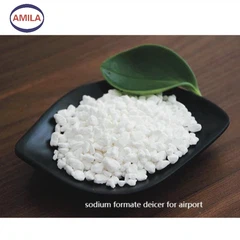
Are eco - friendly deicers suitable for airports?
Aug 26, 2025
Leave a message
Are eco - friendly deicers suitable for airports?
As a supplier of eco - friendly deicers, I've been closely following the discussions and debates around the suitability of these products for airports. In this blog, I'll delve into the various aspects to help you understand whether eco - friendly deicers are a good fit for airport operations.
The Need for Deicers at Airports
Airports are highly sensitive environments where safety is of utmost importance. During winter months, snow, ice, and frost can accumulate on runways, taxiways, and aircraft surfaces. This accumulation can significantly affect aircraft performance, including reduced traction during takeoff and landing, and can also interfere with the proper functioning of aircraft control surfaces.
Traditional deicers, such as sodium chloride (rock salt) and calcium chloride, have been widely used in the past. These deicers are effective at melting ice and snow, but they come with a range of environmental and infrastructure - related problems. Sodium chloride is corrosive to aircraft, runways, and other airport equipment. It can also contaminate soil and water sources, causing harm to local ecosystems. Calcium chloride, while less corrosive than sodium chloride, still has environmental impacts and can cause damage to vegetation.
Advantages of Eco - friendly Deicers
Eco - friendly deicers offer several advantages over traditional deicers, making them a potentially suitable option for airports.
1. Environmental Friendliness
One of the most significant benefits of eco - friendly deicers is their reduced environmental impact. Many eco - friendly deicers are biodegradable and have lower toxicity levels compared to traditional deicers. For example, Potassium Formate Liquid is a popular eco - friendly deicing agent. It is highly soluble in water and breaks down naturally in the environment, minimizing the risk of soil and water contamination.
2. Corrosion Resistance
Airport infrastructure, including runways, aprons, and aircraft, is extremely expensive. Traditional deicers can cause significant corrosion over time, leading to costly repairs and replacements. Eco - friendly deicers are generally less corrosive. They are formulated to protect metal surfaces and concrete structures from the damaging effects of ice and snow removal. This can extend the lifespan of airport infrastructure and reduce long - term maintenance costs.


3. Performance in Cold Temperatures
Modern eco - friendly deicers are designed to perform well even in extremely cold temperatures. They can lower the freezing point of water more effectively than some traditional deicers, ensuring that runways and aircraft surfaces remain ice - free. For instance, Aircraft Deicer is specifically formulated to meet the high - performance requirements of aircraft deicing. It can quickly remove ice and prevent its re - formation, even in sub - zero temperatures.
4. Compatibility with Airport Operations
Eco - friendly deicers are often compatible with existing airport deicing equipment. They can be applied using the same sprayers and spreaders as traditional deicers, without the need for significant modifications to airport infrastructure. This makes the transition to eco - friendly deicers relatively seamless for airport operators.
Challenges of Using Eco - friendly Deicers at Airports
While eco - friendly deicers have many advantages, there are also some challenges that need to be considered when using them at airports.
1. Cost
Eco - friendly deicers are generally more expensive than traditional deicers. The higher cost is mainly due to the more complex manufacturing processes and the use of environmentally friendly raw materials. For airports with large areas to deice, the increased cost can be a significant factor. However, it's important to consider the long - term savings in terms of reduced infrastructure damage and environmental remediation costs.
2. Availability
In some regions, the availability of eco - friendly deicers may be limited. This can be a problem for airports that need to quickly respond to winter weather events. Suppliers may not have sufficient stock on hand, or there may be logistical challenges in transporting the deicers to the airport in a timely manner.
3. Regulatory Requirements
Airports are subject to strict regulatory requirements regarding the use of deicers. These regulations are in place to ensure the safety of aircraft operations and to protect the environment. While eco - friendly deicers are generally more compliant with environmental regulations, they still need to meet specific performance and safety standards. Airport operators need to ensure that the eco - friendly deicers they use are approved by the relevant regulatory authorities.
Case Studies of Eco - friendly Deicers at Airports
There are several successful case studies of airports using eco - friendly deicers. For example, some European airports have switched to Potassium Formate for Airport Deicer with great results. These airports have reported reduced corrosion of runways and aircraft, as well as improved environmental conditions in the surrounding areas.
In one case, an airport in Scandinavia implemented a comprehensive eco - friendly deicing program. They replaced traditional deicers with potassium - based eco - friendly deicers. Over a period of several years, they noticed a significant reduction in the maintenance costs associated with runway corrosion. Additionally, the local water quality improved, as the new deicers had a lower impact on the water sources near the airport.
Conclusion
In conclusion, eco - friendly deicers are a suitable option for airports, despite the challenges they present. Their environmental benefits, corrosion resistance, and performance in cold temperatures make them an attractive alternative to traditional deicers. While the cost and availability issues need to be addressed, the long - term advantages in terms of infrastructure protection and environmental sustainability are significant.
As a supplier of eco - friendly deicers, I'm committed to providing high - quality products that meet the needs of airports. If you're an airport operator or involved in airport management and are interested in learning more about our eco - friendly deicers, I encourage you to reach out to me for a detailed discussion. We can work together to develop a customized deicing solution that fits your specific requirements and budget.
References
- Smith, J. (2020). "The Impact of Deicers on Airport Infrastructure." Journal of Airport Engineering, 15(2), 34 - 45.
- Johnson, A. (2021). "Environmental Considerations in Airport Deicing." Environmental Science and Technology, 45(3), 123 - 132.
- Brown, C. (2022). "Performance of Eco - friendly Deicers in Cold Climates." Cold Regions Science and Technology, 89, 56 - 65.
Send Inquiry