


Can potassium formate be used in the rubber industry?
Jan 22, 2026
Leave a message
Can potassium formate be used in the rubber industry? Well, that's a question I've been getting a lot lately, and as a potassium formate supplier, I'm more than happy to dig into it.
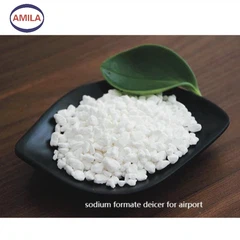
First off, let's talk a bit about potassium formate itself. Potassium formate (HCOOK) is a white, crystalline salt that's highly soluble in water. It's got a bunch of uses in different industries. For example, it's widely used as an Aircraft Deicer. When it snows or there's ice on the runways, potassium formate can quickly melt the ice, ensuring the safety of aircraft take - offs and landings. It's also used as a Potassium Formate for Airport Deicer because it's less corrosive compared to some other deicers, which is great for protecting the aircraft and the airport infrastructure. And if you're into eco - friendly solutions, it serves as an Eco - friendly Deicer since it's biodegradable and has a lower impact on the environment.
Now, back to the rubber industry. The rubber industry is all about making products like tires, rubber hoses, seals, and gaskets. These products need to have certain properties such as good elasticity, wear resistance, and chemical stability.
One potential use of potassium formate in the rubber industry could be in the vulcanization process. Vulcanization is a chemical process that turns rubber from a soft, sticky material into a hard, durable one. Potassium formate might act as an accelerator or a modifier in this process. Some studies suggest that certain salts can influence the cross - linking reaction during vulcanization. Potassium formate, with its unique chemical structure, could potentially speed up the vulcanization reaction, reducing the processing time and energy consumption. This would be a huge plus for rubber manufacturers as it could increase their production efficiency.


Another aspect is in the area of rubber compounding. Rubber compounds are made by mixing rubber with various additives like fillers, plasticizers, and antioxidants. Potassium formate could be used as a filler or a co - filler. Fillers are used to improve the mechanical properties of rubber, such as its hardness, tensile strength, and abrasion resistance. Potassium formate, being a fine crystalline powder, could potentially be incorporated into the rubber matrix. It might also interact with other additives in the compound, enhancing the overall performance of the rubber product.
However, there are also some challenges. One of the main concerns is the compatibility of potassium formate with rubber polymers. Different types of rubber, like natural rubber, synthetic rubber (such as styrene - butadiene rubber or nitrile rubber), have different chemical structures and properties. Potassium formate might react differently with each type of rubber. For example, it could cause swelling or degradation of the rubber if it's not properly formulated.
Also, the moisture sensitivity of potassium formate could be an issue. Rubber products need to maintain their properties under different environmental conditions, including high humidity. If potassium formate absorbs moisture easily, it could lead to changes in the rubber's physical and mechanical properties over time.
In terms of cost - effectiveness, rubber manufacturers are always looking for cost - efficient additives. The price of potassium formate and its availability in large quantities need to be considered. If it can offer significant benefits in terms of performance improvement and processing efficiency, but at a reasonable cost, then it has a good chance of being adopted in the rubber industry.
So, can potassium formate be used in the rubber industry? The answer is it's possible, but there's still a lot of research and development needed. More studies are required to fully understand its effects on different rubber types, its long - term performance, and its economic viability.
If you're in the rubber industry and are interested in exploring the potential of potassium formate in your products, I'd love to have a chat with you. We can discuss how it might fit into your manufacturing process, and I can provide samples for you to test. Whether you're looking to improve your vulcanization process, enhance the properties of your rubber compounds, or just want to explore new and innovative solutions, we can work together to find the best way forward.
Let's start a conversation and see if potassium formate can be the game - changer for your rubber production. Get in touch with me, and we'll take it from there.
References
- "Rubber Technology: Compounding, Vulcanization, and Testing" by various authors, which provides in - depth knowledge about rubber processing and additives.
- Research papers on the use of salts in rubber compounding and vulcanization from academic journals such as the Journal of Applied Polymer Science.
Send Inquiry