


Can solid potassium formate be used in the production of potassium hydrogen carbonate?
Dec 22, 2025
Leave a message
Hey there! As a supplier of Solid Potassium Formate, I often get asked about the various applications of this chemical compound. One question that has popped up quite a bit lately is whether solid potassium formate can be used in the production of potassium hydrogen carbonate. Well, let's dive right in and explore this topic.
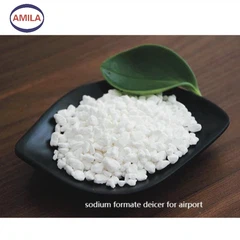
First off, let's talk a bit about solid potassium formate. It's a white, crystalline powder that's highly soluble in water. We offer Potassium Formate 98% Min and Solid Potassium Formate which are of top - notch quality. Solid potassium formate has a bunch of uses. It's commonly used in oil and gas drilling fluids as a density modifier and shale inhibitor. It's also used in de - icing applications because of its low freezing point and environmental friendliness compared to some other de - icers.
Now, onto potassium hydrogen carbonate. It's also known as potassium bicarbonate, and it's a white, odorless powder. Potassium hydrogen carbonate has a wide range of applications. It's used in the food industry as a leavening agent, in fire extinguishers, and in medicine as an antacid.
So, can solid potassium formate be used in the production of potassium hydrogen carbonate? The short answer is yes, it can. But let's break down the process and the science behind it.
The chemical formula for potassium formate is HCOOK, and for potassium hydrogen carbonate, it's KHCO₃. To produce potassium hydrogen carbonate from potassium formate, we need to introduce carbon dioxide (CO₂) into the reaction. The reaction can be represented by the following chemical equation:
HCOOK + CO₂+ H₂O → KHCO₃+ HCOOH


In this reaction, potassium formate reacts with carbon dioxide and water to form potassium hydrogen carbonate and formic acid. The reaction conditions are crucial. Usually, this reaction takes place in an aqueous solution. You dissolve solid potassium formate in water to create a potassium formate solution. Then, you bubble carbon dioxide through the solution. The carbon dioxide reacts with the potassium formate and water to form the desired potassium hydrogen carbonate.
One of the advantages of using solid potassium formate for this production is its high purity. Our Solid Potassium Formate has a high purity level, which means that there are fewer impurities in the starting material. This can lead to a higher - quality potassium hydrogen carbonate product.
Another benefit is the solubility of solid potassium formate. Since it dissolves easily in water, it's relatively straightforward to create the necessary potassium formate solution for the reaction. This makes the production process more efficient.
However, there are also some challenges. One of the main challenges is the control of the reaction conditions. The reaction rate depends on factors like temperature, pressure, and the concentration of carbon dioxide. If the temperature is too high, the formic acid produced in the reaction might decompose or react further, which can affect the yield of potassium hydrogen carbonate. Similarly, if the pressure of carbon dioxide is not right, the reaction might not proceed as efficiently.
Another aspect to consider is the separation of the products. After the reaction is complete, you have a mixture of potassium hydrogen carbonate and formic acid in the solution. You need to separate the potassium hydrogen carbonate from the formic acid and any unreacted potassium formate. This usually involves processes like evaporation, crystallization, and filtration.
In industrial settings, the production of potassium hydrogen carbonate from solid potassium formate can be optimized. By carefully controlling the reaction conditions and using advanced separation techniques, manufacturers can achieve high yields and high - quality products.
Now, let's talk about the market demand. The demand for potassium hydrogen carbonate is growing, especially in the food and beverage industry. With the increasing consumer demand for natural and healthy food products, potassium hydrogen carbonate is becoming a popular choice as a leavening agent. This means that there's a potential market for using solid potassium formate in the production of potassium hydrogen carbonate.
If you're in the business of producing potassium hydrogen carbonate, using solid potassium formate as a raw material could be a great option. Our Solid Potassium Formate offers a reliable and high - quality starting material for this production. We also offer Liquid Potassium Formate which might be more convenient for some applications, especially if you want to skip the step of dissolving the solid form.
If you're interested in using our solid potassium formate for the production of potassium hydrogen carbonate, or if you have any questions about the process or our products, don't hesitate to reach out. We're here to help you with your procurement needs and to ensure that you get the best - quality product for your production process.
In conclusion, solid potassium formate can definitely be used in the production of potassium hydrogen carbonate. It offers several advantages in terms of purity and solubility, but there are also some challenges that need to be addressed in the production process. With the right approach and the right starting material, you can produce high - quality potassium hydrogen carbonate using solid potassium formate.
If you're looking to source solid potassium formate for your potassium hydrogen carbonate production or any other application, we're your go - to supplier. Contact us to start a discussion about your requirements and how we can meet them.
References
- Atkins, P., & de Paula, J. (2014). Physical Chemistry for the Life Sciences. Oxford University Press.
- Brown, T. L., LeMay, H. E., Bursten, B. E., Murphy, C. J., Woodward, P. M., & Stoltzfus, M. W. (2017). Chemistry: The Central Science. Pearson.
Send Inquiry