


Can solid potassium formate be used in the production of potassium sebacate?
Jan 21, 2026
Leave a message
Can solid potassium formate be used in the production of potassium sebacate? That's a question I've been getting a lot lately, and as a solid potassium formate supplier, I'm stoked to dive into it.
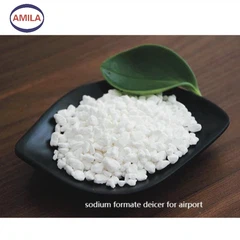
First off, let's quickly go over what we're talking about here. Potassium formate is a chemical compound that's got a bunch of uses. You might know it from Potassium Formate for Oildrilling, which is a big deal in the oil - drilling industry. It's also available as Liquid Potassium Formate for those who prefer it in that state, and we've got Potassium Formate 98% Min for customers who need high - purity stuff.
On the other hand, potassium sebacate is an important chemical mainly used in the production of certain polymers and some specialty chemicals. It's made from sebacic acid, which comes from castor oil or other sources, and a potassium - containing compound.
Now, getting back to the main question: Can solid potassium formate be used in the production of potassium sebacate?


The theory behind potentially using solid potassium formate in this production is based on its chemical properties. Potassium formate (HCOOK) contains potassium ions (K+). In the reaction to form potassium sebacate, you need to introduce potassium ions to react with sebacic acid (HOOC(CH₂)₈COOH). So, in theory, the potassium ions in solid potassium formate could potentially react with sebacic acid to form potassium sebacate, assuming the reaction conditions are right.
For a chemical reaction like this to happen, we need to consider several things. Firstly, temperature plays a crucial role. Different chemical reactions have optimal temperature ranges. For the reaction between solid potassium formate and sebacic acid, we'd need to heat the mixture to a certain temperature to make the reaction proceed at a reasonable rate. Sometimes, if it's too cold, the reaction might be so slow that it's almost non - existent. But if it's too hot, other side reactions could occur, reducing the yield of potassium sebacate or even producing unwanted by - products.
Another factor is the reaction medium. Usually, these types of reactions are carried out in a suitable solvent. The choice of solvent can affect how well the reactants dissolve and interact with each other. Solid potassium formate has a certain solubility in different solvents, and we need to find one that also dissolves sebacic acid well. This way, the potassium ions can easily come into contact with the acid groups in sebacic acid.
The stoichiometry of the reaction is also super important. We need to make sure we have the right amount of solid potassium formate and sebacic acid. If we have too much potassium formate, it could lead to waste and might also complicate the purification process of the potassium sebacate. On the flip side, if we don't have enough, the reaction won't go to completion, and we'll end up with a lower yield of the desired product.
In practice, though, there are a few challenges. One of the main ones is that solid potassium formate can be a bit tricky to handle in a reaction setup. It's a solid, and getting it to react uniformly with a liquid or another solid like sebacic acid can be difficult. It might form clumps during the reaction, which reduces the surface area available for the reaction to occur. This means that the reaction rate could be slower than expected, and we might need to use some mechanical means like stirring or grinding to improve the mixing.
There are also some potential side reactions. For example, the formate part of potassium formate (HCOO⁻) could potentially react with other species in the reaction mixture under certain conditions. This could not only reduce the efficiency of the reaction to form potassium sebacate but also introduce impurities into the final product.
However, if these challenges can be overcome, using solid potassium formate in the production of potassium sebacate could have some advantages. One major benefit is cost. Solid potassium formate can be more cost - effective compared to some other potassium - containing reagents. It's relatively easy to produce and transport, so if we can find a way to use it efficiently in this reaction, it could lead to lower production costs for potassium sebacate manufacturers.
Another advantage is availability. As a supplier, I can tell you that solid potassium formate is quite readily available in large quantities. This means that manufacturers don't have to worry too much about supply shortages, allowing them to plan their production schedules more effectively.
In conclusion, while there are challenges to using solid potassium formate in the production of potassium sebacate, it's definitely a possibility. The chemical properties of potassium formate suggest that it could work, but we need to optimize the reaction conditions and find ways to deal with the handling and side - reaction issues.
If you're a manufacturer interested in exploring the use of solid potassium formate in your potassium sebacate production or have any other questions about our products, feel free to reach out. We're always happy to discuss potential applications and work together to find the best solutions for your business.
References
- General knowledge on chemical reactions and properties of potassium formate and potassium sebacate from chemistry textbooks.
- Industry - specific knowledge on the use of potassium formate in various applications.
Send Inquiry