


Does Solid Runway Deicer require any special handling during transportation?
Sep 18, 2025
Leave a message
Does Solid Runway Deicer require any special handling during transportation?
As a supplier of solid runway deicers, I often get asked about the transportation requirements for these essential products. Solid runway deicers play a crucial role in ensuring the safety of aircraft operations during winter by preventing the formation of ice and snow on runways. But does transporting them require any special handling? Let's delve into this topic in detail.
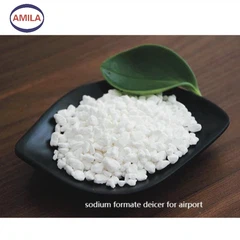
First, it's important to understand what solid runway deicers are. Most common solid runway deicers are made from various chemical compounds, with sodium formate being a popular choice. Sodium formate is effective in lowering the freezing point of water, which helps to melt ice and snow quickly. For instance, our Sodium Formate Granules Deicer is a high - quality product that has been widely used in airport runways around the world.
One of the primary considerations during transportation is the physical nature of the solid deicer. Solid runway deicers usually come in granular form, such as our Sodium Formate Granules. Granular substances are prone to dust formation. When these granules are jostled during transportation, fine dust particles can be generated. This dust can be a respiratory hazard if inhaled by workers involved in the loading, unloading, or transportation process. Therefore, proper ventilation in the transport vehicle is essential. The vehicle should be well - sealed to prevent dust from escaping into the environment, but at the same time, it should have a ventilation system that can remove any dust that might accumulate inside.
Another aspect related to the granular nature is the potential for spillage. If the packaging of the solid deicer is damaged during transportation, the granules can spill onto the vehicle floor or even onto the road. Spilled deicer can not only lead to a loss of product but also pose a safety hazard. For example, if the deicer spills on the road, it can make the surface slippery, increasing the risk of accidents. To prevent spillage, the deicer should be packed in sturdy, well - sealed containers. During loading and unloading, workers should handle the containers with care to avoid any damage.
Chemical stability is also a key factor. Solid runway deicers, especially those containing sodium formate, need to be protected from moisture. Sodium formate can absorb moisture from the air, which can cause it to clump together. Once clumped, the deicer may not spread evenly on the runway, reducing its effectiveness. During transportation, the deicers should be kept in a dry environment. If the transport vehicle is exposed to rain or high humidity, it can lead to moisture penetration into the packaging. Therefore, the vehicle should be equipped with a waterproof cover or be a fully enclosed, climate - controlled container.
In addition to physical and chemical considerations, regulatory requirements must be followed. Different regions may have specific regulations regarding the transportation of chemical substances, including solid runway deicers. For example, some areas may require special permits for transporting large quantities of deicers. These regulations are in place to ensure the safety of the public and the environment. As a supplier, we are well - versed in these regulations and ensure that all our products are transported in full compliance.
When it comes to long - distance transportation, temperature control can be an issue. Extreme temperatures can affect the properties of the solid deicer. In very cold temperatures, the granules may become more brittle and prone to breakage, leading to increased dust formation. On the other hand, high temperatures can cause some chemical reactions in the deicer, potentially reducing its effectiveness. For long - haul transportation, especially across different climate zones, it may be necessary to use temperature - controlled transport vehicles.
The weight and volume of the solid deicer also matter during transportation. Solid runway deicers are often shipped in large quantities to meet the high demand of airports. The weight of these large shipments can put a strain on the transport vehicle. Overloading can lead to mechanical problems, such as tire blowouts or brake failures. Therefore, it's important to calculate the weight and volume accurately and ensure that the transport vehicle is suitable for the load.
Let's take a look at our Sodium Formate Deicer for Highways. Although it is mainly designed for highways, the transportation requirements are similar to those of runway deicers. It also needs to be protected from dust, moisture, and extreme temperatures. The same principles of proper packaging, ventilation, and regulatory compliance apply.
In conclusion, solid runway deicers do require special handling during transportation. From protecting against dust and spillage to ensuring chemical stability and complying with regulations, every aspect of transportation needs to be carefully considered. As a reliable supplier, we take all these factors into account to ensure that our products reach our customers in the best possible condition.


If you are in the market for high - quality solid runway deicers, we are here to provide you with the best products and services. We understand the importance of proper transportation and are committed to delivering our deicers safely and efficiently. Contact us for more information about our products and to start a procurement discussion.
References
- "Transportation Regulations for Chemical Substances", Department of Transportation, [Year of Publication]
- "Properties and Handling of Sodium Formate in Snow and Ice Control", Journal of Chemical Engineering, [Year of Publication]
Send Inquiry