


How do aircraft deicers work on engine components?
Sep 17, 2025
Leave a message
Hey there! As a supplier of aircraft deicers, I often get asked about how these nifty products work on engine components. So, I thought I'd take a few minutes to break it down for you in a way that's easy to understand.
First off, let's talk about why deicing engine components is so important. When an aircraft is sitting on the ground in cold, snowy, or icy conditions, ice and snow can build up on the engine and its components. This buildup can cause a whole bunch of problems. For starters, it can disrupt the smooth flow of air into the engine, which is crucial for proper combustion. This can lead to reduced engine performance, increased fuel consumption, and even engine stall in extreme cases. Additionally, ice chunks breaking off from the engine can damage other parts of the aircraft, posing a serious safety risk.
So, how do aircraft deicers come to the rescue? Well, it all boils down to some basic chemistry and physics. Most aircraft deicers are made up of a combination of chemicals that lower the freezing point of water. The most common types of deicers used for engine components are glycol - based solutions, but there are also some Eco - friendly Deicer options out there that are becoming more popular.
Glycol - based deicers work by mixing with the water on the engine components. When glycol is added to water, it interferes with the water molecules' ability to form ice crystals. Water freezes at 0°C (32°F), but when glycol is present, the freezing point drops significantly. For example, a typical glycol - based deicer can lower the freezing point of water to as low as - 40°C (- 40°F). This means that even in extremely cold conditions, the water on the engine components remains in a liquid state, preventing ice from forming.
Now, let's take a closer look at how these deicers are applied to engine components. Usually, the deicing process starts with a pre - flight inspection. Ground crew will visually check the engine for any signs of ice or snow buildup. If ice is detected, they'll use specialized deicing equipment, such as deicing trucks or sprayers. These machines are designed to deliver the deicer at the right pressure and volume to ensure complete coverage of the engine components.


The deicer is sprayed onto the engine in a fine mist. This mist adheres to the surface of the engine and starts to work immediately. As it mixes with the ice and snow, it begins to melt them. The liquid mixture then runs off the engine, taking the ice and snow with it. It's important to note that the deicing process needs to be done carefully. Too much pressure when spraying can damage sensitive engine components, while too little may not provide adequate coverage.
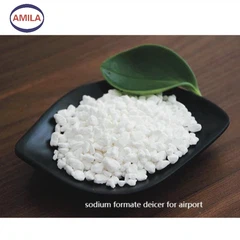
Another type of deicer that's gaining traction in the aviation industry is Potassium Formate Liquid. Potassium formate is a salt - like compound that has excellent deicing properties. It works in a similar way to glycol - based deicers by lowering the freezing point of water. But it has some advantages. For one, it's more environmentally friendly than glycol. It biodegrades more quickly and has a lower impact on soil and water quality.
When using potassium formate as an aircraft deicer for engine components, it's often formulated as a liquid solution. This solution can be easily sprayed onto the engine, just like glycol - based deicers. Once applied, it quickly penetrates the ice and snow, breaking down the ice crystals and causing them to melt. The liquid potassium formate - water mixture then drains away, leaving the engine free of ice.
Potassium Formate for Airport Deicer is also designed to provide some residual protection. After the initial deicing, a thin film of the deicer remains on the engine components. This film acts as a barrier, preventing new ice from forming for a certain period of time. The length of this protection depends on various factors, such as the outside temperature, humidity, and the amount of deicer applied.
However, it's not all smooth sailing when it comes to using deicers on engine components. There are some challenges that need to be addressed. One of the main issues is the potential for corrosion. Some deicers, especially those with high salt content, can cause corrosion on the metal surfaces of the engine over time. To combat this, manufacturers are constantly working on developing deicers that are less corrosive while still being effective at deicing.
Another challenge is the cost. High - quality deicers, especially the eco - friendly ones, can be quite expensive. Airlines and airport operators need to balance the cost of deicing with the safety and performance benefits. But in the long run, investing in good deicers can save money by preventing engine damage and reducing maintenance costs.
In conclusion, aircraft deicers play a crucial role in keeping engine components ice - free and ensuring the safe operation of aircraft. Whether it's glycol - based deicers or Eco - friendly Deicer options like potassium formate, these products work by lowering the freezing point of water and melting ice and snow. They are applied using specialized equipment to ensure proper coverage, and they provide both immediate and residual protection.
If you're in the aviation industry and looking for a reliable aircraft deicer supplier, we've got you covered. We offer a range of high - quality deicers that are effective, environmentally friendly, and cost - competitive. Whether you need deicers for small private planes or large commercial airliners, we can provide the right solution for your needs. So, if you're interested in learning more or want to start a procurement discussion, don't hesitate to reach out.
References
- "Aviation Deicing and Anti - icing: Principles and Practices" by Aviation Maintenance Magazine
- "The Chemistry of Aircraft Deicers" by Journal of Chemical Education
- "Environmental Impact of Aircraft Deicers" by Environmental Science and Technology Journal
Send Inquiry