


How do airport runway deicers affect wildlife?
Oct 07, 2025
Leave a message
Airport runway deicers play a crucial role in ensuring the safety and efficiency of air travel during winter months. As a supplier of Airport Runway Deicer, I've witnessed firsthand the importance of these substances in maintaining operational runways. However, it's also essential to understand the potential impacts of these deicers on wildlife. This blog post aims to explore how airport runway deicers affect wildlife and what steps can be taken to mitigate these effects.
Types of Airport Runway Deicers
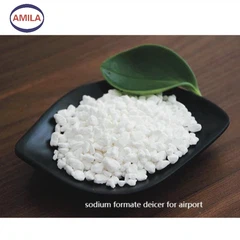
There are several types of deicers used on airport runways, each with its own chemical composition and properties. One common type is Sodium Formate Granules Deicer, which is known for its effectiveness in melting ice and snow at low temperatures. Another type is Solid Runway Deicer, which is often used for pre - treatment of runways to prevent ice formation.
These deicers typically work by lowering the freezing point of water, which helps to melt existing ice and snow and prevent new ice from forming. However, the chemicals in these deicers can have unintended consequences for wildlife when they enter the environment.
Direct Impacts on Wildlife
One of the most immediate ways that airport runway deicers can affect wildlife is through direct ingestion. Birds and other small animals may mistake deicer granules for food or water sources. Sodium formate, for example, can be toxic if ingested in large quantities. It can cause gastrointestinal distress, electrolyte imbalances, and in severe cases, it can be fatal.
Aquatic wildlife is also at risk. When deicers are washed off runways by rain or melting snow, they can enter nearby water bodies. The increased salt or chemical concentration in the water can disrupt the osmoregulation of fish and other aquatic organisms. This means that their bodies have a harder time maintaining the right balance of water and salts, which can lead to stress, reduced growth, and even death.
Indirect Impacts on Wildlife
Deicers can also have indirect impacts on wildlife by altering their habitats. The chemicals in deicers can change the soil chemistry around airports. This can affect the growth of plants, which are the foundation of many food chains. If the plants are damaged or their growth is inhibited, it can lead to a decrease in the availability of food and shelter for wildlife.
For example, some deicers can increase the salinity of the soil, making it difficult for native plants to grow. This can lead to a loss of biodiversity as non - native plants that are more tolerant of high salt levels may take over. Birds and small mammals that rely on these native plants for food and nesting materials may be forced to move to other areas, which can disrupt their normal behaviors and migration patterns.


Effects on Avian Wildlife
Airports are often located near areas that are important habitats for birds. The use of deicers can attract birds to runways in several ways. The shiny appearance of deicer granules may be mistaken for food items, and the melted snow and ice can create open water sources in otherwise frozen landscapes. This can increase the risk of bird - aircraft collisions, which are not only dangerous for the birds but also for the safety of air travel.
Moreover, the chemicals in deicers can affect the health of birds. For instance, sodium formate can cause damage to a bird's respiratory system if inhaled as a fine dust. It can also have long - term effects on their reproductive systems, reducing the number of viable eggs and chicks.
Mitigation Strategies
As a supplier of airport runway deicers, we are committed to finding solutions to minimize the impacts on wildlife. One approach is to use more environmentally friendly deicers. For example, some newer deicers are formulated to be less toxic and more biodegradable. These deicers break down more quickly in the environment, reducing their long - term effects on wildlife.
Another strategy is to improve the application methods of deicers. By using more precise application techniques, we can reduce the amount of deicer that is used and minimize the amount that enters the surrounding environment. This includes using targeted spraying systems that only apply deicer where it is needed.
We can also work with airports and environmental organizations to implement habitat restoration projects around airports. By planting native plants and creating wildlife corridors, we can help to offset the negative impacts of deicers on wildlife habitats.
The Role of Research
Ongoing research is essential to better understand the impacts of airport runway deicers on wildlife. Scientists are studying the long - term effects of different deicers on various species of wildlife. This research can help us to develop more effective mitigation strategies and to improve the formulations of deicers.
For example, research can help us to determine the safe levels of deicer chemicals in the environment and to identify the most vulnerable species. This information can then be used to develop guidelines for the use of deicers at airports.
Conclusion
The use of airport runway deicers is necessary for the safety of air travel, but it's important to recognize the potential impacts on wildlife. As a supplier of Airport Runway Deicer, Sodium Formate Granules Deicer, and Solid Runway Deicer, we are dedicated to being part of the solution.
By using more environmentally friendly deicers, improving application methods, and supporting habitat restoration projects, we can help to protect wildlife while still ensuring the safe operation of airports. If you are an airport operator or involved in the aviation industry and are interested in learning more about our products and how we can help you balance safety and environmental concerns, we invite you to contact us for a procurement discussion. We look forward to working with you to find the best solutions for your deicing needs.
References
- Environment Canada. (2010). Effects of Airport De - icers on Aquatic and Terrestrial Ecosystems.
- US Geological Survey. (2015). Impacts of Chemical De - icers on Wildlife in Airport Environments.
- International Civil Aviation Organization. (2018). Guidelines for the Use of Environmentally Friendly De - icers at Airports.
Send Inquiry