


How does potassium formate react with bases?
Sep 11, 2025
Leave a message
Potassium formate, with the chemical formula HCOOK, is a versatile compound that finds wide applications in various industries. As a leading supplier of potassium formate, I am often asked about its chemical reactions, especially its interaction with bases. In this blog post, I will delve into the details of how potassium formate reacts with bases, exploring the underlying chemical mechanisms, products formed, and the practical implications of these reactions.
Chemical Structure and Properties of Potassium Formate
Before we discuss its reactions with bases, it is essential to understand the chemical structure and properties of potassium formate. Potassium formate is an ionic compound composed of a potassium cation (K⁺) and a formate anion (HCOO⁻). The formate anion is a conjugate base of formic acid (HCOOH), which is a weak acid. This means that the formate anion has a tendency to accept a proton (H⁺) and act as a base itself.
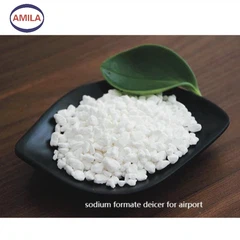
Potassium formate is a white, crystalline solid that is highly soluble in water. It has a melting point of around 165 °C and is stable under normal conditions. Due to its hygroscopic nature, it can absorb moisture from the air, which makes it useful in applications such as deicing and drilling fluids.
General Reaction of Potassium Formate with Bases
When potassium formate reacts with a base, the formate anion (HCOO⁻) in potassium formate can react with the hydroxide ion (OH⁻) from the base. The general reaction can be represented as follows:
[HCOOK + BOH \rightarrow HCOOB + KOH]
where BOH represents a base, and HCOOB is the salt formed by the reaction of the formate anion with the cation of the base.
Let's take the reaction of potassium formate with sodium hydroxide (NaOH) as an example:
[HCOOK + NaOH \rightarrow HCOONa + KOH]
In this reaction, the sodium ion (Na⁺) from sodium hydroxide replaces the potassium ion (K⁺) in potassium formate, forming sodium formate (HCOONa) and potassium hydroxide (KOH). This is a typical double - displacement reaction, where the cations of the two reactants exchange places.


Reaction Mechanism
The reaction between potassium formate and a base occurs in an aqueous solution. When potassium formate and the base are dissolved in water, they dissociate into their respective ions. The formate anion (HCOO⁻) and the hydroxide ion (OH⁻) can then interact.
The formate anion has a lone pair of electrons on the oxygen atom, which can attract the proton from the water molecule in the solution. However, in the presence of a stronger base (such as OH⁻), the hydroxide ion will react with the formate anion. The reaction proceeds through a nucleophilic substitution mechanism, where the hydroxide ion attacks the carbon atom of the formate group.
The reaction can be divided into the following steps:
- Dissociation of potassium formate and the base in water:
- [HCOOK \rightarrow K^{+}+ HCOO^{-}]
- [BOH \rightarrow B^{+}+ OH^{-}]
- Reaction between the formate anion and the hydroxide ion:
- [HCOO^{-}+ OH^{-}\rightleftharpoons HCOOOH + e^{-}] (This is an intermediate step, and the formic acid formed can further react with the base)
- [HCOOOH + BOH \rightarrow HCOOB + H_{2}O]
Factors Affecting the Reaction
Several factors can affect the reaction between potassium formate and bases, including:
- Concentration of Reactants: Higher concentrations of potassium formate and the base generally lead to a faster reaction rate. According to the law of mass action, an increase in the concentration of the reactants increases the frequency of collisions between the ions, thereby increasing the reaction rate.
- Temperature: An increase in temperature usually increases the reaction rate. This is because at higher temperatures, the kinetic energy of the ions increases, leading to more frequent and energetic collisions.
- Nature of the Base: The strength of the base plays a crucial role in the reaction. Strong bases, such as sodium hydroxide and potassium hydroxide, react more readily with potassium formate compared to weak bases.
Applications of the Reaction Products
The products formed from the reaction of potassium formate with bases have various applications:
- Deicing Agents: The salts formed, such as sodium formate and potassium formate itself, are widely used as deicing agents. They can lower the freezing point of water, preventing the formation of ice on roads, runways, and other surfaces. For example, Potassium Formate Liquid is an effective deicing agent that is environmentally friendly and has a low corrosion rate.
- Aircraft Deicing: Aircraft Deicer containing potassium formate and its reaction products can be used to remove ice and snow from aircraft surfaces. These deicers are designed to be effective at low temperatures and to have minimal impact on the aircraft's materials.
- Eco - friendly Deicing: Eco - friendly Deicer based on potassium formate and its reaction products are preferred in many applications due to their low toxicity and biodegradability. They have a lower environmental impact compared to traditional deicers such as sodium chloride.
Practical Considerations in the Reaction
When carrying out the reaction between potassium formate and bases in an industrial setting, several practical considerations need to be taken into account:
- Safety: Both potassium formate and bases can be hazardous if not handled properly. Potassium formate can cause skin and eye irritation, and strong bases can be corrosive. Appropriate safety measures, such as wearing protective clothing and using proper ventilation, should be taken.
- Reaction Conditions: The reaction should be carried out under controlled conditions, including temperature, pressure, and pH. Monitoring these parameters can ensure the efficiency and safety of the reaction.
- Product Separation and Purification: After the reaction, the products need to be separated and purified. This may involve processes such as filtration, evaporation, and crystallization to obtain the desired product in a pure form.
Conclusion
In conclusion, potassium formate reacts with bases through a double - displacement reaction, forming salts and potassium hydroxide. The reaction is influenced by factors such as concentration, temperature, and the nature of the base. The products formed have various applications, especially in the field of deicing. As a potassium formate supplier, I am committed to providing high - quality products and technical support to our customers. If you are interested in purchasing potassium formate or have any questions about its reactions and applications, please feel free to contact us for further discussion and negotiation.
References
- Housecroft, C. E., & Sharpe, A. G. (2012). Inorganic Chemistry. Pearson Education.
- Chang, R. (2010). Chemistry. McGraw - Hill.
- Atkins, P., & de Paula, J. (2006). Physical Chemistry. Oxford University Press.
Send Inquiry