


How does sodium formate react with acids?
Jul 02, 2025
Leave a message
Hey there! I'm a supplier of sodium formate, and today I wanna talk about how sodium formate reacts with acids. It's a topic that's not only super interesting from a chemical perspective but also has some real - world applications that I'm excited to share with you.
What is Sodium Formate?
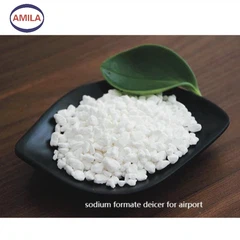
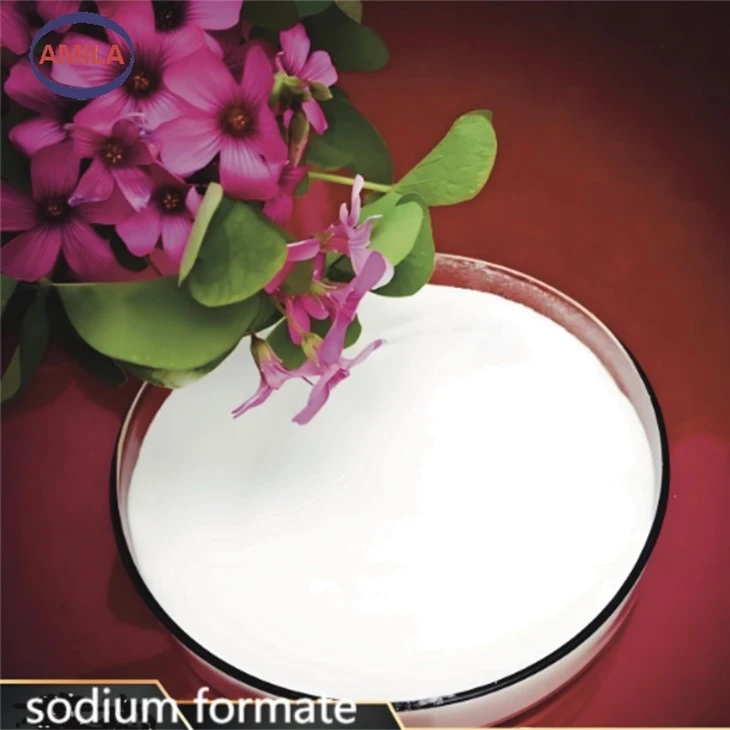
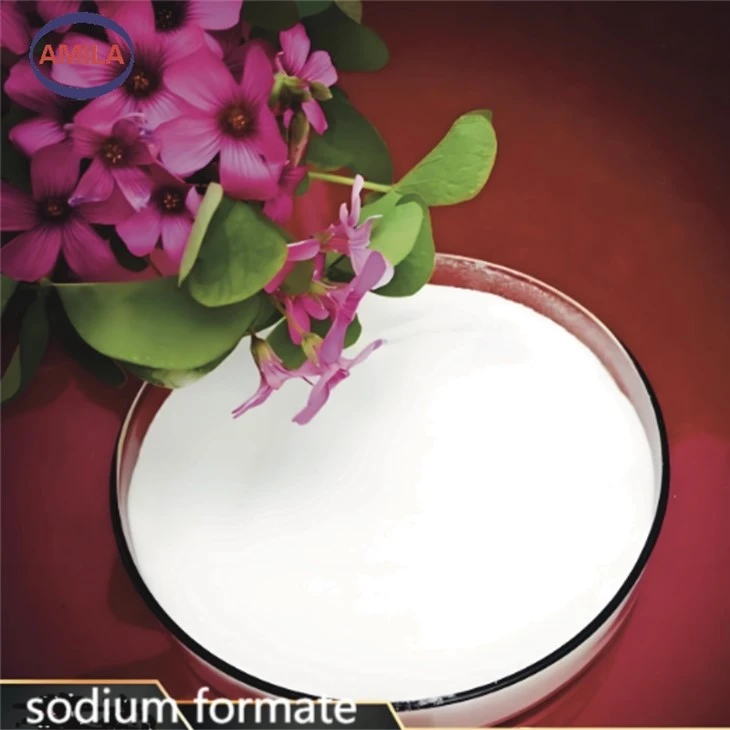
First off, let's quickly go over what sodium formate is. Sodium formate has the chemical formula HCOONa. It's a white, crystalline powder that's highly soluble in water. We supply different grades of sodium formate, like Sodium Formate 95% Min. It's used in a bunch of industries, such as oil drilling (Sodium Formate for Oildrilling) and leather tanning (Sodium Formate for Leather Tanning).
General Reaction Mechanism with Acids
When sodium formate reacts with an acid, it's a classic acid - base reaction. The basic formate ion (HCOO⁻) in sodium formate reacts with the hydrogen ions (H⁺) from the acid. The general chemical equation for the reaction between sodium formate and an acid (HA) can be written as:
[ HCOONa+HA \rightarrow HCOOH + NaA ]
Let's break this down. The sodium formate (HCOONa) reacts with the acid (HA). The hydrogen ion from the acid combines with the formate ion to form formic acid (HCOOH), and the sodium ion (Na⁺) combines with the anion of the acid (A⁻) to form a salt (NaA).
Reaction with Hydrochloric Acid
One of the most common acids used in these reactions is hydrochloric acid (HCl). When sodium formate reacts with hydrochloric acid, the reaction is as follows:
[ HCOONa + HCl \rightarrow HCOOH+NaCl ]
This is a straightforward reaction. The hydrogen ion from hydrochloric acid displaces the sodium ion in sodium formate. The result is formic acid and sodium chloride. In a lab setting, you'd see a clear solution if the reactants are in proper proportions. The reaction is exothermic, which means it releases heat. You might even feel the container getting warmer if you're doing the reaction in a beaker.
Reaction with Sulfuric Acid
Now, let's talk about the reaction with sulfuric acid (H₂SO₄). The reaction is a bit more complex because sulfuric acid is a diprotic acid, meaning it can donate two hydrogen ions.
The first step of the reaction is:
[ 2HCOONa + H₂SO₄ \rightarrow 2HCOOH+Na₂SO₄ ]
Here, two moles of sodium formate react with one mole of sulfuric acid to produce two moles of formic acid and one mole of sodium sulfate.
If the reaction conditions are right, formic acid can further decompose when heated in the presence of concentrated sulfuric acid. The decomposition reaction is:
[ HCOOH \xrightarrow{H₂SO₄(\text{conc})} CO + H₂O ]
This reaction is used in the laboratory to produce carbon monoxide gas. So, when you react sodium formate with concentrated sulfuric acid, you can potentially get carbon monoxide gas as a product if the conditions are suitable.
Reaction with Nitric Acid
When sodium formate reacts with nitric acid (HNO₃), the reaction is:
[ HCOONa + HNO₃ \rightarrow HCOOH+NaNO₃ ]
Similar to the reactions with hydrochloric and sulfuric acids, the hydrogen ion from nitric acid replaces the sodium ion in sodium formate, forming formic acid and sodium nitrate. Nitric acid is a strong oxidizing agent, so there might be some side - reactions depending on the reaction conditions. For example, formic acid can be oxidized by nitric acid under certain circumstances, but under normal conditions, the main reaction is the formation of formic acid and the corresponding salt.
Factors Affecting the Reaction
There are a few factors that can affect how sodium formate reacts with acids.
Concentration of the Acid: A more concentrated acid will generally react faster with sodium formate. For example, concentrated sulfuric acid will react more vigorously with sodium formate than a dilute solution. This is because there are more hydrogen ions available in a concentrated solution to react with the formate ions.
Temperature: Higher temperatures usually speed up the reaction. As the temperature increases, the kinetic energy of the molecules increases, and they collide more frequently and with more energy. This makes it easier for the reaction to occur. However, as we saw with the reaction with concentrated sulfuric acid, high temperatures can also lead to side - reactions like the decomposition of formic acid.
Presence of Catalysts: Although the reactions between sodium formate and acids are usually fast enough without a catalyst, in some cases, a catalyst can be used to speed up the reaction even more. For example, certain metal ions can act as catalysts in acid - base reactions.
Applications of the Reaction Products
The products of the reaction between sodium formate and acids have several applications.
Formic Acid: Formic acid is used in many industries. In the textile industry, it's used as a reducing agent and in the dyeing process. It's also used in the production of leather, as a coagulant in the rubber industry, and as a preservative in the animal feed industry.
Salts: The salts produced, such as sodium chloride, sodium sulfate, and sodium nitrate, also have various uses. Sodium chloride is used in the food industry as a seasoning and in water treatment. Sodium sulfate is used in the production of detergents and paper. Sodium nitrate is used in fertilizers and in the production of explosives.
Why Choose Our Sodium Formate?
As a supplier of sodium formate, we offer high - quality products. Our sodium formate is produced under strict quality control measures to ensure its purity and reactivity. Whether you're in the oil drilling, leather tanning, or any other industry that uses sodium formate, our product will give you the best results in your acid - base reactions.
If you're interested in purchasing sodium formate for your business, we'd love to have a chat with you. We can discuss your specific needs, the quantity you require, and the best pricing options for you. Contact us to start the procurement process and let's see how our sodium formate can benefit your operations.
References
- Atkins, P., & de Paula, J. (2014). Physical Chemistry. Oxford University Press.
- Housecroft, C. E., & Sharpe, A. G. (2012). Inorganic Chemistry. Pearson.
- McMurry, J. (2012). Organic Chemistry. Brooks/Cole.
Send Inquiry