


How does solid potassium formate affect the evaporation rate of a solution?
May 26, 2025
Leave a message
Hey there! As a solid potassium formate supplier, I've been getting a lot of questions lately about how this nifty compound affects the evaporation rate of a solution. So, I thought I'd take some time to break it down for you in a way that's easy to understand.
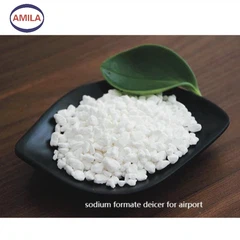
First off, let's talk a bit about solid potassium formate. It's a white, crystalline powder that's highly soluble in water. You can find our high - quality products like [Potassium Formate 98% Min](/oil - drilling - additives/potassium - formate/potassium - formate - 98 - min.html) which is widely used in various industries, from oil drilling to carbon black production. And if you're interested in a different form, we also offer [Liquid Potassium Formate](/oil - drilling - additives/potassium - formate/liquid - potassium - formate.html). It's also worth mentioning our [Potassium Formate for Carbon Black](/oil - drilling - additives/potassium - formate/potassium - formate - for - carbon - black.html), which is specially formulated for that industry.
Now, let's dive into the science of how solid potassium formate impacts the evaporation rate of a solution. When you dissolve solid potassium formate in a solution, it dissociates into potassium ions (K⁺) and formate ions (HCOO⁻). These ions interact with the water molecules in the solution through a process called ion - dipole interaction.


Water molecules are polar, which means they have a positive end (the hydrogen atoms) and a negative end (the oxygen atom). The potassium ions, being positively charged, are attracted to the negative end of the water molecules, while the formate ions, which are negatively charged, are attracted to the positive end. This interaction essentially "ties up" the water molecules, making it more difficult for them to break free from the liquid phase and enter the gas phase.
In simple terms, the presence of solid potassium formate in a solution slows down the evaporation rate. The more potassium formate you add to the solution, the stronger the ion - dipole interactions become, and the slower the evaporation. This can be really useful in many applications.
For example, in the oil drilling industry, drilling fluids are used to cool and lubricate the drill bit, carry the cuttings to the surface, and maintain pressure in the wellbore. These fluids often contain potassium formate. By reducing the evaporation rate, the drilling fluid can maintain its volume and properties for a longer time, which is crucial for the efficiency and safety of the drilling operation.
In the chemical manufacturing sector, some processes require solutions to be stable over a certain period without significant evaporation. Adding solid potassium formate can help achieve this stability. It can also be used in some cooling systems where you want to prevent the coolant from evaporating too quickly.
To better understand the effect of solid potassium formate on evaporation rate, we can look at some experiments. Let's say we have two identical containers filled with water. In one container, we add a measured amount of solid potassium formate, and in the other, we leave it as pure water. We then place both containers in the same environment with controlled temperature, humidity, and air flow.
Over time, we'll notice that the container with pure water will lose water through evaporation at a faster rate compared to the container with the potassium formate solution. This is a clear demonstration of how potassium formate can slow down evaporation.
The concentration of potassium formate in the solution also plays a key role. A higher concentration of potassium formate will lead to a more significant reduction in the evaporation rate. However, there's a limit to how much potassium formate you can add. At extremely high concentrations, the solution may become too viscous, which can cause other problems depending on the application.
Another factor that affects the relationship between potassium formate and evaporation rate is temperature. Generally, as the temperature increases, the evaporation rate of any solution goes up. But the presence of potassium formate still has an inhibitory effect. Even at higher temperatures, the solution with potassium formate will evaporate more slowly than a pure water solution.
Humidity is also an important consideration. In a high - humidity environment, the evaporation rate of all solutions is lower because the air is already saturated with water vapor. But again, the solution with potassium formate will have an even lower evaporation rate compared to a solution without it.
So, if you're in an industry where controlling the evaporation rate of a solution is important, solid potassium formate could be a great option for you. Whether you're involved in oil drilling, chemical manufacturing, or any other field where solution stability is crucial, our high - quality potassium formate products can meet your needs.
If you're interested in learning more about how our solid potassium formate can benefit your operations or if you want to place an order, don't hesitate to get in touch. We're here to answer all your questions and help you find the best solution for your specific requirements.
References
- Atkins, P., & de Paula, J. (2014). Physical Chemistry for the Life Sciences. Oxford University Press.
- Chang, R. (2010). Chemistry. McGraw - Hill.
Send Inquiry