


How does solid sodium formate react with acids?
Dec 04, 2025
Leave a message
As a supplier of solid sodium formate, I've witnessed firsthand the wide - ranging applications and unique chemical properties of this compound. One of the most interesting aspects of solid sodium formate is its reaction with acids. In this blog, we'll explore in detail how solid sodium formate reacts with acids, its implications, and the industrial applications related to these reactions.
Chemical Structure and Basic Properties of Solid Sodium Formate
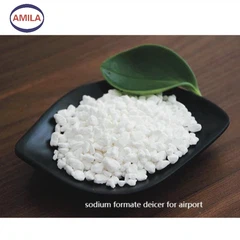
Solid sodium formate (HCOONa) is an odorless, white crystalline powder. It is highly soluble in water, and its aqueous solutions are alkaline due to the hydrolysis of the formate ion. The chemical structure consists of a sodium cation (Na⁺) and a formate anion (HCOO⁻). The formate anion is a conjugate base of formic acid (HCOOH), which gives it the ability to react with acids.
General Reaction Mechanism with Acids
When solid sodium formate reacts with an acid, a typical acid - base reaction occurs. The general equation for the reaction between sodium formate and a strong acid (HA) can be written as:
[HCOONa+HA\rightarrow HCOOH + NaA]
In this reaction, the formate anion (HCOO⁻) from sodium formate accepts a proton ((H^{+})) from the acid (HA), forming formic acid (HCOOH). The sodium cation ((Na^{+})) combines with the conjugate base of the acid ((A^{-})) to form a salt (NaA).
For example, when solid sodium formate reacts with hydrochloric acid (HCl), the reaction is as follows:


[HCOONa + HCl\rightarrow HCOOH+NaCl]
This reaction is exothermic, which means it releases heat. The heat released can be significant depending on the concentration and amount of reactants.
Factors Affecting the Reaction
Several factors can influence the reaction between solid sodium formate and acids:
1. Acid Strength
The strength of the acid plays a crucial role. Strong acids, such as hydrochloric acid (HCl), sulfuric acid ((H_{2}SO_{4})), and nitric acid ((HNO_{3})), react readily with sodium formate. They completely dissociate in water, providing a high concentration of (H^{+}) ions for the reaction. Weak acids, on the other hand, only partially dissociate. For instance, acetic acid ((CH_{3}COOH)) will react with sodium formate, but the reaction rate will be slower because the concentration of (H^{+}) ions in an acetic acid solution is lower compared to a strong acid solution.
2. Temperature
An increase in temperature generally increases the reaction rate. According to the Arrhenius equation, a higher temperature provides more energy to the reactant molecules, allowing them to overcome the activation energy barrier more easily. In the reaction between sodium formate and acids, a higher temperature can lead to a faster formation of formic acid and the corresponding salt.
3. Concentration
The concentration of both the acid and sodium formate affects the reaction. A higher concentration of the acid means more (H^{+}) ions are available for the reaction, increasing the reaction rate. Similarly, a higher concentration of sodium formate provides more formate anions to react with the (H^{+}) ions.
Industrial Applications Related to the Reaction
The reaction of solid sodium formate with acids has several important industrial applications:
1. Production of Formic Acid
One of the most significant applications is the production of formic acid. Formic acid is used in various industries, such as leather tanning, textile dyeing, and as a preservative in the feed industry. By reacting solid sodium formate with a strong acid, high - quality formic acid can be produced. Our Sodium Formate Powder is an ideal raw material for this process, as it is of high purity and reacts efficiently with acids.
2. Oil Drilling
In the oil drilling industry, sodium formate is used as an additive. When it reacts with acids in the drilling fluid, it can help adjust the pH and rheological properties of the fluid. Our Sodium Formate for Oildrilling is specially formulated to ensure optimal performance in these reactions, which can improve the efficiency of the drilling process.
3. Leather Tanning
In leather tanning, the reaction of sodium formate with acids can be used to control the pH of the tanning bath. This is important for the proper fixation of tannins on the leather. Our Sodium Formate for Leather Tanning provides a reliable source of formate ions for this process, ensuring high - quality leather production.
Safety Considerations
When handling the reaction between solid sodium formate and acids, safety is of utmost importance. Both sodium formate and acids can be hazardous if not handled properly.
- Acids: Strong acids are corrosive and can cause severe burns to the skin and eyes. They also release toxic fumes when reacting with sodium formate. Adequate ventilation is required when conducting the reaction.
- Sodium Formate: Although sodium formate is relatively less hazardous compared to strong acids, it can still cause irritation to the skin and eyes. Protective equipment, such as gloves and goggles, should be worn when handling it.
Conclusion
The reaction between solid sodium formate and acids is a fundamental chemical process with wide - ranging industrial applications. Understanding the reaction mechanism, the factors affecting it, and the safety considerations is essential for anyone involved in industries that use sodium formate.
As a supplier of solid sodium formate, we are committed to providing high - quality products that meet the needs of our customers. Whether you are in the formic acid production, oil drilling, or leather tanning industry, our sodium formate products can offer excellent performance. If you are interested in purchasing solid sodium formate or have any questions about its reactions with acids, please feel free to contact us for further discussion and negotiation.
References
- Atkins, P., & de Paula, J. (2014). Physical Chemistry. Oxford University Press.
- Housecroft, C. E., & Sharpe, A. G. (2012). Inorganic Chemistry. Pearson.
- Smith, M. B., & March, J. (2007). March's Advanced Organic Chemistry: Reactions, Mechanisms, and Structure. Wiley.
Send Inquiry