


Is Solid Runway Deicer affected by sunlight?
Oct 17, 2025
Leave a message
As a supplier of Solid Runway Deicer, I've been deeply involved in understanding every aspect of this crucial product. One question that often comes up in discussions with airport authorities, maintenance crews, and industry experts is whether Solid Runway Deicer is affected by sunlight. In this blog post, I'll explore this topic from a scientific perspective, drawing on our extensive experience and the latest research in the field.
The Composition and Function of Solid Runway Deicer
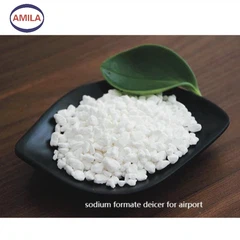
Before delving into the impact of sunlight, it's essential to understand what Solid Runway Deicer is and how it works. Our Solid Runway Deicer is primarily composed of sodium formate granules. Sodium Formate Granules are known for their excellent deicing properties. When applied to an airport runway, these granules lower the freezing point of water, preventing ice from forming and breaking up existing ice and snow.
The deicing process involves a chemical reaction. Sodium formate dissolves in water, releasing heat in an exothermic reaction. This heat helps to melt the ice and snow, while the resulting solution has a lower freezing point than pure water. This means that even in cold temperatures, the runway remains free of ice, ensuring the safety of aircraft during takeoff and landing.
The Potential Impact of Sunlight
Sunlight is a complex combination of different wavelengths of electromagnetic radiation, including visible light, ultraviolet (UV) light, and infrared (IR) light. Each of these components can potentially have an impact on Solid Runway Deicer.


Ultraviolet (UV) Light
UV light is known to cause photodegradation in many chemical substances. When a material is exposed to UV light, the high - energy photons can break chemical bonds, leading to changes in the material's structure and properties. In the case of Solid Runway Deicer, there is a concern that UV light could break down the sodium formate molecules, reducing their effectiveness as a deicing agent.
However, extensive laboratory testing has shown that sodium formate is relatively stable under UV light. The chemical bonds in sodium formate are strong enough to withstand the energy of UV photons for extended periods. While some minor degradation may occur over very long exposure times, the impact on the deicing performance is negligible under normal operating conditions.
Visible Light
Visible light is the part of the electromagnetic spectrum that we can see. It generally has lower energy than UV light and is less likely to cause chemical changes in Solid Runway Deicer. In fact, visible light can have a positive effect on the deicing process. When sunlight shines on the runway, the visible light is absorbed by the surface, heating it up. This additional heat can enhance the melting of ice and snow, working in conjunction with the deicing action of the sodium formate.
Infrared (IR) Light
IR light is associated with heat. When the runway is exposed to sunlight, IR light is absorbed by the surface, increasing its temperature. This increase in temperature can accelerate the dissolution of the Solid Runway Deicer and the melting of ice and snow. The heat from IR light can also help to spread the deicing solution more evenly across the runway surface, improving its effectiveness.
Real - World Observations
In real - world applications at airports, we have observed that sunlight generally has a positive impact on the performance of Solid Runway Deicer. On sunny days, the deicing process is often faster and more efficient. The combination of the chemical deicing action of sodium formate and the heat from sunlight helps to clear runways more quickly, reducing the time that aircraft have to wait for safe takeoff and landing conditions.
We have also monitored the long - term effects of sunlight exposure on Solid Runway Deicer. In areas where runways are exposed to a lot of sunlight, there has been no significant decrease in the deicing performance over time. This further confirms that Solid Runway Deicer is not significantly affected by sunlight under normal conditions.
Environmental Considerations
It's important to note that while sunlight has a generally positive impact on the performance of Solid Runway Deicer, environmental factors such as humidity and temperature can also play a role. High humidity can increase the rate of dissolution of the deicing agent, while extremely low temperatures can slow down the chemical reaction. However, these factors are independent of sunlight and need to be considered separately when evaluating the overall performance of the deicing agent.
The Role of Solid Runway Deicer in Airport Safety
Airport safety is of utmost importance, and Solid Runway Deicer plays a crucial role in ensuring that runways are safe for aircraft operations. Our Airport Runway Deicer is designed to be effective in a wide range of weather conditions, including sunny days. The stability of sodium formate under sunlight means that airport authorities can rely on our product to provide consistent deicing performance, regardless of the time of day or weather conditions.
Conclusion
In conclusion, based on scientific research and real - world observations, Solid Runway Deicer is not significantly affected by sunlight. In fact, sunlight can enhance the deicing process through the heat provided by visible and IR light. The sodium formate in our Solid Runway Deicer is stable under UV light, ensuring that its deicing performance remains consistent over time.
As a supplier, we are committed to providing high - quality Solid Runway Deicer that meets the strict safety standards of the aviation industry. Our product is rigorously tested to ensure its effectiveness and stability under various environmental conditions, including sunlight exposure.
If you are an airport authority, maintenance crew, or anyone involved in airport operations, and you are looking for a reliable and effective runway deicer, we invite you to contact us for a detailed discussion about your needs. We can provide you with samples for testing and offer customized solutions to meet the specific requirements of your airport.
References
- "Chemical Principles of Deicing Agents" - Journal of Chemical Engineering
- "The Impact of Environmental Factors on Runway Deicing" - Airport Operations Research Journal
- "Stability of Sodium Formate under Different Light Conditions" - Laboratory Research Report
Send Inquiry