


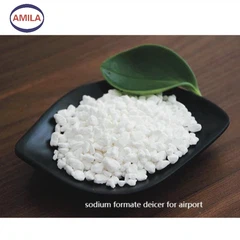
Is Solid Runway Deicer suitable for small airports?
May 30, 2025
Leave a message
Is Solid Runway Deicer suitable for small airports?
As a supplier of solid runway deicers, I've been frequently asked whether our product is suitable for small airports. Small airports play a vital role in local transportation, business aviation, and general aviation. They often have different operational requirements and resource constraints compared to large international airports. Therefore, carefully evaluating the suitability of solid runway deicer for them is crucial.
The Characteristics of Small Airports
Small airports typically handle a smaller volume of air traffic. Their runways may be shorter and less busy. They also often have limited budgets for infrastructure and maintenance. These airports rely on efficient yet cost - effective solutions to ensure the safety of flights, especially during winter when snow and ice can accumulate on the runways. Moreover, local environmental concerns are also significant factors as small airports are often closer to residential areas and natural habitats.
Advantages of Solid Runway Deicer for Small Airports
Cost - effectiveness
One of the key advantages of solid runway deicers is their cost - effectiveness. Small airports usually operate on tighter budgets compared to large ones. Solid deicers, such as Sodium Formate Granular, are relatively inexpensive to produce and store. They require less specialized equipment for application compared to liquid deicers. With solid deicers, small airports can achieve the same level of ice and snow removal performance at a lower cost per unit area. This cost - savings allows them to allocate their limited resources to other important aspects of airport operations, such as facility upgrades and safety training.
Ease of Storage and Handling
Solid runway deicers are much easier to store and handle than liquid ones. Small airports may not have large storage facilities dedicated to deicing agents. Solid deicers can be stored in simple silos or warehouses with minimal risk of leakage. They are also less likely to freeze during storage in cold temperatures. When it comes to application, solid deicers can be spread using standard road - maintenance spreaders. This simplicity means that small airports do not need to invest in expensive, specialized liquid - spraying equipment. For example, a small airport in a rural area can easily manage the storage and application of Airport Runway Deicer with its existing ground - handling staff.
Environment - friendly
In recent years, environmental protection has become a top priority for airports of all sizes. Small airports, which are often located near sensitive ecological areas, need to be especially careful about the environmental impact of their deicing operations. Many solid deicers, like Ecological Chlorine Free Snow Melting Agent, are chloride - free. Traditional chloride - based deicers can cause damage to soil, water sources, and airport infrastructure over time. Chloride can contaminate groundwater and corrode runways and aircraft landing gear. Solid chloride - free deicers break down more easily in the environment and have a lower impact on the local ecosystem. This makes them an ideal choice for small airports that wish to minimize their environmental footprint.
Long - lasting Effect
Solid runway deicers generally have a longer - lasting effect compared to liquid deicers. Liquid deicers can be easily washed away by snowmelt or precipitation. In contrast, solid deicers gradually dissolve and release their deicing agents over time. When applied to a small airport runway, the solid deicer can continue to work for an extended period, providing continuous protection against ice formation. This reduces the frequency of deicing operations, saving both time and resources for small airports. For example, in a light snowfall situation, a single application of a high - quality solid deicer can keep the runway safe for several hours.
Challenges and Mitigations
Initial Coverage
One challenge of using solid runway deicers is achieving even initial coverage on the runway surface. Since solid deicers are spread in granular form, they may not cover the surface as smoothly as liquid deicers. However, this issue can be mitigated by using well - calibrated spreaders. Small airports can invest in or rent spreaders with adjustable spreading widths and rates. They can also conduct pre - season calibration tests to ensure that the deicer is spread evenly across the runway. Additionally, trained operators can drive the spreaders at a consistent speed to achieve better coverage.
Response Time
In some emergency situations, such as sudden heavy snowfall, solid deicers may have a slower response time compared to liquid deicers. Liquid deicers start melting ice immediately upon application, while solid deicers need time to dissolve. To address this, small airports can adopt a hybrid approach. They can keep a small amount of liquid deicer on hand for rapid response during emergencies and use solid deicers for routine deicing operations. This combination allows for a quick initial reaction to ice and snow, followed by long - term protection from the solid deicer.
Compatibility with Aircraft
Small airports need to ensure that the solid runway deicer they use is compatible with the types of aircraft they serve. Some aircraft manufacturers have specific requirements regarding the deicing agents used on runways. Most modern solid deicers, however, are designed to be aircraft - friendly. Small airports should communicate with aircraft operators and consult the deicer manufacturer's guidelines to ensure that there are no compatibility issues.
Conclusion
In conclusion, solid runway deicers are generally highly suitable for small airports. Their cost - effectiveness, ease of storage and handling, environmental friendliness, and long - lasting effect make them an attractive option for airports with limited resources. While there are some challenges such as initial coverage and response time, these can be effectively mitigated through proper equipment selection, calibration, and a hybrid deicing strategy.


If you are an operator of a small airport and are interested in learning more about our solid runway deicer products, we encourage you to contact us for a consultation. We can provide detailed information on product specifications, application methods, and pricing. Our team of experts is ready to work with you to find the best deicing solution for your specific needs. Let's work together to ensure the safe and efficient operation of your small airport during the winter months.
References
- "Airport Winter Maintenance Handbook", Federal Aviation Administration
- "Environmental Impact of Deicing Agents", Journal of Environmental Science and Technology
- "Cost - Benefit Analysis of Runway Deicing Methods", Transportation Research Board
Send Inquiry