


What chemicals are used in airport runway deicers?
Nov 24, 2025
Leave a message
What chemicals are used in airport runway deicers?
As a supplier of airport runway deicers, I often get asked about the chemicals used in these crucial products. Airport runway deicers play a vital role in ensuring the safety of air travel during winter months by preventing the formation of ice and snow on runways, taxiways, and aprons. In this blog post, I'll delve into the common chemicals used in airport runway deicers, their properties, and their environmental and operational impacts.
1. Glycol - Based Deicers
Glycols are among the most widely used chemicals in airport runway deicers. Ethylene glycol (EG) and propylene glycol (PG) are the two primary types.


Ethylene Glycol (EG)
Ethylene glycol has been used for deicing purposes for many years. It has a relatively low freezing point, which allows it to effectively melt ice and snow. EG works by lowering the freezing point of water when it comes into contact with ice on the runway surface. When sprayed on the runway, it disrupts the crystal structure of ice, causing it to melt. However, ethylene glycol is toxic to humans and animals. If it enters water bodies, it can have a negative impact on aquatic life. Despite its toxicity, it was widely used in the past due to its effectiveness.
Propylene Glycol (PG)
Propylene glycol is a more environmentally friendly alternative to ethylene glycol. It has similar deicing properties but is less toxic. PG is biodegradable, which means it breaks down more easily in the environment. This makes it a preferred choice for many airports today. Propylene glycol - based deicers are often used in a mixture with water and other additives to enhance their performance. They are effective at preventing ice formation and can also be used to de - ice runways after snow or ice has already accumulated.
2. Chloride - Based Deicers
Chloride - based deicers have been used for deicing roads and runways for a long time. The most common chlorides used are sodium chloride (NaCl), calcium chloride (CaCl₂), and magnesium chloride (MgCl₂).
Sodium Chloride (NaCl)
Sodium chloride, also known as table salt, is a widely available and inexpensive deicing agent. It works by lowering the freezing point of water. When it is spread on the runway, it dissolves in the thin layer of water on the ice surface, creating a brine solution with a lower freezing point than pure water. However, sodium chloride has some limitations. It is less effective at very low temperatures, typically below - 10°C (- 14°F). Also, it can cause corrosion to aircraft, runway infrastructure, and vehicles. The chloride ions in sodium chloride can react with metals, leading to rust and deterioration over time.
Calcium Chloride (CaCl₂)
Calcium chloride is more effective at lower temperatures compared to sodium chloride. It releases heat when it dissolves in water, which helps to melt ice more quickly. This exothermic reaction is an advantage in cold weather conditions. Calcium chloride is also hygroscopic, meaning it can attract moisture from the air. This property allows it to form a brine solution even in relatively dry conditions. However, like sodium chloride, it can cause corrosion and has some environmental concerns. If it enters water bodies, it can increase the salinity, which can be harmful to aquatic plants and animals.
Magnesium Chloride (MgCl₂)
Magnesium chloride is another chloride - based deicer. It has similar properties to calcium chloride, being effective at lower temperatures and having a hygroscopic nature. Magnesium chloride is often considered to be less corrosive than calcium chloride, but it still has some potential for causing corrosion. It is also more expensive than sodium chloride, which can be a factor in its use.
3. Organic Acid Salts
Organic acid salts, such as sodium formate, are becoming increasingly popular as airport runway deicers.
Sodium Formate
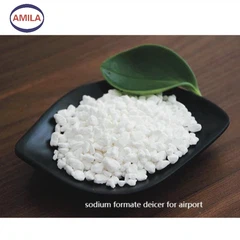
Sodium formate is a non - chloride deicer. It works by lowering the freezing point of water and has several advantages over chloride - based deicers. Sodium formate is less corrosive to aircraft and runway infrastructure. It is also biodegradable, which means it has a lower environmental impact compared to chloride - based deicers. It can be used at a wide range of temperatures and is effective in preventing ice formation. Our company offers high - quality sodium formate - based deicers, such as the Ecological Chlorine Free Snow Melting Agent, Sodium Formate Deicer for Highways, and Sodium Formate Granules Deicer. These products are designed to meet the strict requirements of airport runway deicing operations.
Environmental and Operational Considerations
When choosing a deicing chemical, airports need to consider both environmental and operational factors.
Environmental Impact
As mentioned earlier, some deicing chemicals can have a negative impact on the environment. Chloride - based deicers can increase the salinity of water bodies, harming aquatic life. Toxic chemicals like ethylene glycol can pose a risk to humans and animals. Airports are increasingly looking for more environmentally friendly alternatives, such as propylene glycol and sodium formate. These chemicals are biodegradable and have a lower impact on the ecosystem.
Operational Effectiveness
The effectiveness of a deicing chemical is crucial. It needs to be able to quickly melt ice and snow, prevent ice formation, and work at a wide range of temperatures. The application method also matters. Some deicers are sprayed, while others are spread. The deicer should be easy to apply and should not cause any damage to the runway surface or aircraft.
Cost
Cost is always a consideration. Some deicing chemicals, like sodium chloride, are relatively inexpensive, while others, such as sodium formate, can be more costly. However, the long - term cost, including the cost of corrosion prevention and environmental remediation, also needs to be taken into account.
Conclusion
In conclusion, there are several chemicals used in airport runway deicers, each with its own advantages and disadvantages. Glycol - based deicers, chloride - based deicers, and organic acid salts all play important roles in keeping runways safe during winter. As an airport runway deicer supplier, we understand the importance of providing high - quality, effective, and environmentally friendly products. Our sodium formate - based deicers offer a great alternative to traditional deicing chemicals, providing excellent deicing performance with a lower environmental impact.
If you are an airport operator or involved in airport maintenance and are interested in learning more about our airport runway deicers, we invite you to contact us for a detailed discussion. We can provide you with samples, technical specifications, and pricing information to help you make an informed decision. Let's work together to ensure the safety of air travel during the winter months.
References
- "Deicing and Anti - icing of Airport Pavements" by the Federal Aviation Administration (FAA).
- "Environmental Impacts of Airport Deicing Operations" by the Environmental Protection Agency (EPA).
- Journal articles on deicing chemicals and their properties in scientific journals such as the Journal of Chemical Engineering and the Journal of Environmental Science.
Send Inquiry