


What is the refractive index of potassium formate solution?
Sep 25, 2025
Leave a message
Hey there! As a potassium formate supplier, I often get asked a bunch of questions about this versatile chemical. One question that pops up quite a bit is, "What is the refractive index of potassium formate solution?" Today, I'm gonna dive deep into this topic and share everything you need to know.
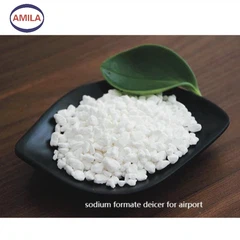
First off, let's quickly go over what potassium formate is. Potassium formate (HCOOK) is a white, crystalline, water - soluble salt. It's got a whole bunch of applications. For example, it's used in Potassium Formate for Airport Deicer. Airport runways need to be kept clear of ice and snow for safety reasons, and potassium formate does an amazing job at melting ice without being as harmful to the environment as some other deicers. It's also an Eco - friendly Deicer, which is a big plus these days when we're all trying to be more environmentally conscious. Another common use is in the oil and gas industry, where Potassium Formate Liquid is used in drilling fluids.
Now, let's talk about the refractive index. The refractive index is a measure of how much light bends when it passes from one medium to another. In the case of a potassium formate solution, it tells us how the solution interacts with light. The refractive index of a solution depends on a few factors, mainly the concentration of the solute (in this case, potassium formate) and the temperature.
The refractive index of a pure solvent (usually water when we're talking about potassium formate solutions) is well - known. For water at 20°C, the refractive index is approximately 1.333. When we start adding potassium formate to the water, the refractive index changes. As the concentration of potassium formate increases, the refractive index of the solution also increases. This is because the solute molecules (potassium formate) interact with the light in a way that causes it to bend more than it would in pure water.
To measure the refractive index of a potassium formate solution, we usually use a refractometer. It's a simple and handy tool that can give us a quick and accurate reading. You just put a few drops of the solution on the prism of the refractometer, and it measures the angle at which the light bends. Then, based on some pre - calibrated settings, it gives you the refractive index value.
Let's take a look at some data. At low concentrations of potassium formate, say around 1% by weight, the refractive index of the solution might be only slightly higher than that of pure water, maybe around 1.334. But as we increase the concentration to 10%, the refractive index can go up to around 1.345. And if we get to a really high concentration, like 50%, the refractive index can be as high as 1.38 or even more.
Temperature also plays a role. Generally, as the temperature increases, the refractive index of the solution decreases. This is because the molecules in the solution move more freely at higher temperatures, and this affects how they interact with light. For example, if we have a 20% potassium formate solution at 20°C with a refractive index of 1.35, at 30°C, the refractive index might drop to around 1.348.
Why is knowing the refractive index of a potassium formate solution important? Well, for one, it can be used to determine the concentration of the solution. If you know the relationship between the refractive index and the concentration (which can be established through calibration curves), you can measure the refractive index and then figure out how much potassium formate is in the solution. This is really useful in quality control in manufacturing processes.


In the deicing industry, it can also be important. The performance of a deicer can be related to its concentration. By measuring the refractive index, we can make sure that the deicing solution has the right concentration to work effectively. In the oil and gas industry, the refractive index can give us an idea of the properties of the drilling fluid, which can affect how well the drilling process goes.
Now, if you're in the market for potassium formate, whether it's for deicing, oil and gas applications, or any other use, we've got you covered. We offer high - quality potassium formate products at competitive prices. Our products are carefully manufactured to meet the highest standards, and we can provide you with all the technical support you need.
If you're interested in learning more about our potassium formate products or have any questions about the refractive index or other properties, don't hesitate to reach out. We're always happy to have a chat and discuss your specific needs. Whether you're a small business or a large corporation, we can work with you to find the best solution for your requirements.
So, if you're thinking about using potassium formate in your operations, get in touch with us. We're here to help you make the most of this amazing chemical.
References:
- General Chemistry textbooks for the basic principles of refractive index and solution properties.
- Industry reports on the use of potassium formate in deicing and oil and gas applications.
Send Inquiry