


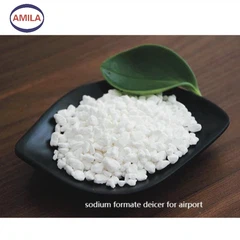
What is the role of solid potassium formate in the dispersion process?
Nov 12, 2025
Leave a message
Solid potassium formate, a compound with the chemical formula HCOOK, has emerged as a crucial player in various industrial processes, particularly in the dispersion process. As a leading supplier of solid potassium formate, I have witnessed firsthand the diverse and significant roles this compound plays in enhancing the efficiency and effectiveness of dispersion. In this blog, I will delve into the science behind solid potassium formate and its specific contributions to the dispersion process.
Understanding the Dispersion Process
Before we explore the role of solid potassium formate, it is essential to understand what the dispersion process entails. Dispersion refers to the process of distributing one substance (the dispersed phase) uniformly throughout another substance (the continuous phase). This can involve dispersing solid particles in a liquid, a gas in a liquid, or even one liquid in another. The goal of dispersion is to create a stable mixture where the dispersed phase remains evenly distributed over time, preventing aggregation or settling.
Dispersion is a critical process in many industries, including paints and coatings, pharmaceuticals, food and beverages, and oil and gas. In each of these industries, proper dispersion ensures product quality, performance, and stability. For example, in the paint industry, a well - dispersed pigment in a paint formulation results in a uniform color and finish. In the oil and gas industry, dispersion of additives in drilling fluids is essential for maintaining the stability of the wellbore.
Role of Solid Potassium Formate in Dispersion
1. pH Regulation
One of the primary roles of solid potassium formate in the dispersion process is pH regulation. Many dispersion systems are highly sensitive to pH changes. An improper pH can lead to flocculation (clumping of particles), precipitation, or other forms of instability in the dispersed system.
Solid potassium formate can act as a buffer, helping to maintain a stable pH within the dispersion. It can react with acidic or basic components in the system to prevent large fluctuations in pH. For instance, in a water - based dispersion, if there are acidic contaminants, potassium formate can neutralize them, preventing the pH from dropping too low. This is particularly important in systems where the dispersed particles are sensitive to acidic conditions, as a low pH can cause the particles to aggregate and settle out of the dispersion.
2. Ionic Strength Adjustment
The ionic strength of a dispersion medium can significantly affect the stability of the dispersed phase. Solid potassium formate dissociates in solution to form potassium ions (K⁺) and formate ions (HCOO⁻). By adding solid potassium formate to a dispersion, we can adjust the ionic strength of the continuous phase.
Increasing the ionic strength can compress the electrical double layer around the dispersed particles. In a colloidal dispersion, particles often carry a surface charge, which creates an electrical double layer. When the ionic strength is increased, the thickness of this double layer decreases. This reduces the electrostatic repulsion between the particles, allowing them to come closer together. However, if the ionic strength is carefully controlled, it can lead to a more stable dispersion. The reduced electrostatic repulsion is balanced by other stabilizing forces, such as steric hindrance, preventing the particles from aggregating irreversibly.
3. Solubility Enhancement
In some dispersion processes, the solubility of certain components is a limiting factor. Solid potassium formate can enhance the solubility of other substances in the dispersion medium. For example, in oil - based dispersions, some additives may have limited solubility. By adding solid potassium formate, the solubility of these additives can be improved.
Potassium formate can interact with the additive molecules through various mechanisms, such as ion - dipole interactions or hydrogen bonding. These interactions can break down the intermolecular forces holding the additive molecules together, allowing them to dissolve more readily in the dispersion medium. This is beneficial as it ensures that all the components in the dispersion are uniformly distributed and available to perform their intended functions.


4. Anti - Corrosion and Anti - Freezing Properties
In many industrial dispersion applications, such as in oil and gas drilling fluids, corrosion and freezing are major concerns. Solid potassium formate offers excellent anti - corrosion and anti - freezing properties, which are crucial for maintaining the integrity of the dispersion system.
In a drilling fluid dispersion, the presence of water can lead to corrosion of the drilling equipment. Potassium formate forms a protective layer on the metal surface, preventing the metal from coming into contact with corrosive agents in the fluid. This not only extends the lifespan of the equipment but also ensures the stability of the dispersion itself, as corrosion products can contaminate the dispersion and cause instability.
Moreover, in cold environments, the freezing of the dispersion medium can disrupt the dispersion process. Solid potassium formate can lower the freezing point of the dispersion medium, preventing it from freezing. This is especially important in offshore or Arctic drilling operations, where low temperatures are common.
Applications in Different Industries
Oil and Gas Industry
In the oil and gas industry, Potassium Formate for Oildrilling is widely used in drilling fluids. These fluids are essential for lubricating the drill bit, carrying cuttings to the surface, and maintaining the stability of the wellbore. Solid potassium formate helps in the dispersion of various additives in the drilling fluid, such as viscosifiers, weighting agents, and corrosion inhibitors.
It also provides environmental benefits, as it is biodegradable and non - toxic compared to some other drilling fluid additives. The ability of potassium formate to adjust the density of the drilling fluid while maintaining good dispersion properties makes it a preferred choice in many drilling operations.
Paint and Coatings Industry
In the paint and coatings industry, solid potassium formate can be used to improve the dispersion of pigments and other additives. Pigments are finely divided solid particles that need to be uniformly dispersed in the paint matrix to achieve a high - quality finish. Potassium formate helps in maintaining the stability of the pigment dispersion by regulating the pH and ionic strength of the paint formulation.
It also contributes to the anti - corrosion properties of the paint, protecting the substrate from rust and other forms of degradation. This is particularly important in exterior coatings, where the paint is exposed to harsh environmental conditions.
Comparison with Other Dispersion Agents
When compared to other dispersion agents, solid potassium formate has several advantages. Some traditional dispersion agents may be toxic or have limited effectiveness in certain applications. For example, some inorganic salts used for pH regulation may cause scaling or corrosion in the dispersion system.
Solid potassium formate, on the other hand, is environmentally friendly, non - toxic, and has a wide range of applications. It can be used in both water - based and oil - based dispersion systems, making it a versatile choice for different industries. Additionally, its ability to perform multiple functions, such as pH regulation, ionic strength adjustment, and anti - corrosion protection, sets it apart from many other single - function dispersion agents.
Conclusion
Solid potassium formate plays a multifaceted and crucial role in the dispersion process. Its ability to regulate pH, adjust ionic strength, enhance solubility, and provide anti - corrosion and anti - freezing properties makes it an invaluable component in many industrial dispersion applications.
As a supplier of solid potassium formate, we are committed to providing high - quality products that meet the diverse needs of our customers. Whether you are in the oil and gas industry, paint and coatings industry, or any other industry that requires efficient dispersion, our solid potassium formate can offer the solutions you need.
If you are interested in learning more about our solid potassium formate products or would like to discuss your specific dispersion requirements, please do not hesitate to contact us. We are ready to assist you in finding the best solutions for your dispersion processes.
References
- Adamson, A. W., & Gast, A. P. (1997). Physical Chemistry of Surfaces. John Wiley & Sons.
- Hiemenz, P. C., & Rajagopalan, R. (1997). Principles of Colloid and Surface Chemistry. Marcel Dekker.
- McClements, D. J. (2005). Food Emulsions: Principles, Practice, and Techniques. CRC Press.
Send Inquiry