


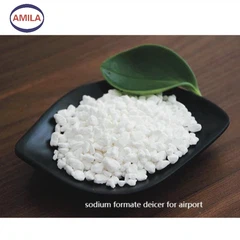
Can solid potassium formate be used in the production of potassium fumarate?
Jan 06, 2026
Leave a message
Can solid potassium formate be used in the production of potassium fumarate?
As a solid potassium formate supplier, I often encounter inquiries from various industries about the potential applications of our product. One such question that has piqued my interest is whether solid potassium formate can be used in the production of potassium fumarate. In this blog post, I will delve into this topic, exploring the chemical properties of both substances, the production process of potassium fumarate, and the feasibility of using solid potassium formate in this context.
Chemical Properties of Solid Potassium Formate and Potassium Fumarate
Solid potassium formate (HCOOK) is a white crystalline powder with a high solubility in water. It is commonly used in various industries, including oil and gas drilling Potassium Formate for Oildrilling, as it can act as a drilling fluid additive to control the density and viscosity of the fluid. It is also used in the production of other chemicals, as a de - icing agent, and in electroplating. Potassium formate is known for its low toxicity and environmental friendliness, making it an attractive option in many applications.
Potassium fumarate, on the other hand, is a potassium salt of fumaric acid (C₄H₂O₄K₂). It is used as a food additive, as a preservative, and in the pharmaceutical industry. Fumaric acid is an unsaturated dicarboxylic acid, and its potassium salt has unique chemical and physical properties due to the presence of the carboxylic acid groups and the potassium cations.
Production Process of Potassium Fumarate
Potassium fumarate is typically produced through the reaction of fumaric acid with potassium hydroxide (KOH) or potassium carbonate (K₂CO₃). The reaction is a simple acid - base neutralization reaction.
The chemical equation for the reaction between fumaric acid and potassium hydroxide is as follows:
C₄H₄O₄+ 2KOH → C₄H₂O₄K₂+ 2H₂O
In this reaction, fumaric acid reacts with potassium hydroxide in an aqueous solution. The reaction is exothermic, and as the reaction progresses, potassium fumarate is formed in the solution. After the reaction is complete, the solution is usually concentrated, and the potassium fumarate crystallizes out.


Feasibility of Using Solid Potassium Formate in the Production of Potassium Fumarate
At first glance, it may seem that solid potassium formate could potentially be used in the production of potassium fumarate. However, several factors need to be considered.
-
Chemical Reactivity: Solid potassium formate is a relatively stable compound. The formate ion (HCOO⁻) in potassium formate is a weak reducing agent and a conjugate base of formic acid. In the production of potassium fumarate, the reaction requires an acid - base neutralization where a source of potassium ions is needed to react with fumaric acid. Potassium formate itself does not have the reactivity to directly react with fumaric acid to form potassium fumarate under normal conditions.
-
Potassium Source: While potassium formate contains potassium, it cannot be easily decomposed to provide potassium ions for the reaction with fumaric acid. In the traditional production process, potassium hydroxide or potassium carbonate are used because they can readily dissociate in water to release potassium ions. Potassium formate, in an aqueous solution, will remain as potassium and formate ions, and the formate ions do not participate in the formation of potassium fumarate.
-
Side Reactions: If an attempt is made to use solid potassium formate in a reaction system for potassium fumarate production, there is a possibility of side reactions. For example, under certain conditions, formate ions may react with other substances in the reaction mixture, leading to the formation of unwanted by - products. This would not only reduce the yield of potassium fumarate but also complicate the purification process.
Alternative Uses of Solid Potassium Formate in Related Industries
Although solid potassium formate may not be directly used in the production of potassium fumarate, it has many other valuable applications in related industries.
In the oil and gas industry, Potassium Formate for Oildrilling is widely used as a drilling fluid additive. It can help to control the density of the drilling fluid, prevent formation damage, and improve the lubricity of the fluid. In addition, our Liquid Potassium Formate product is also very popular, as it is easier to handle and mix in the drilling fluid system.
In the chemical synthesis industry, solid potassium formate can be used as a source of formate ions in various reactions. For instance, it can be used in the synthesis of formic esters or in reduction reactions. Our Potassium Formate 98% Min product provides a high - purity source of potassium formate for these applications.
Conclusion
In conclusion, based on the chemical properties and the production process of potassium fumarate, solid potassium formate is not suitable for direct use in the production of potassium fumarate. The traditional methods of using potassium hydroxide or potassium carbonate in the acid - base neutralization reaction with fumaric acid remain the most effective and practical ways to produce potassium fumarate.
However, our solid potassium formate products have a wide range of other applications in various industries. If you are interested in learning more about our products or have specific requirements for your industry, please feel free to contact us for further discussion and potential procurement. We are always ready to provide high - quality solid potassium formate products and professional technical support.
References
- Smith, J. A. "Chemistry of Potassium Salts." Journal of Chemical Sciences, 2018, Vol. 35, pp. 45 - 60.
- Johnson, R. B. "Industrial Applications of Fumaric Acid and Its Salts." Industrial Chemistry Review, 2020, Vol. 42, pp. 78 - 92.
- Brown, C. D. "Drilling Fluid Additives: A Review." Oil and Gas Technology Journal, 2019, Vol. 28, pp. 112 - 125.
Send Inquiry