


Can solid potassium formate be used in the production of potassium succinate?
Oct 01, 2025
Leave a message
As a supplier of solid potassium formate, I often encounter inquiries about the diverse applications of this versatile compound. One question that has recently piqued my interest is whether solid potassium formate can be used in the production of potassium succinate. In this blog post, I will explore this topic in detail, delving into the chemical properties of both substances, potential reaction mechanisms, and the feasibility of using solid potassium formate in the synthesis of potassium succinate.
Chemical Properties of Solid Potassium Formate and Potassium Succinate
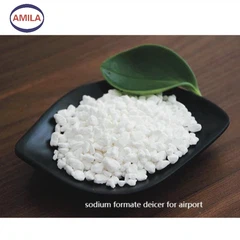
Solid potassium formate (HCOOK) is a white, crystalline salt with a high solubility in water. It is commonly used in various industries, including oil and gas drilling, de - icing, and as a reducing agent in chemical synthesis. Potassium formate has a relatively simple chemical structure, consisting of a potassium cation (K⁺) and a formate anion (HCOO⁻).
Potassium succinate (K₂C₄H₄O₄) is the potassium salt of succinic acid. It is also a white, crystalline solid and is soluble in water. Succinic acid is a dicarboxylic acid with the formula HOOC - CH₂ - CH₂ - COOH. When it reacts with potassium hydroxide or potassium carbonate, the hydrogen atoms of the carboxyl groups are replaced by potassium ions, forming potassium succinate.
Potential Reaction Mechanisms
To determine whether solid potassium formate can be used in the production of potassium succinate, we need to consider the possible chemical reactions. One potential approach could involve a multi - step reaction sequence.
Step 1: Oxidation of Formate
Formate ions can be oxidized under certain conditions. For example, in the presence of strong oxidizing agents, the formate anion (HCOO⁻) can be oxidized to carbon dioxide (CO₂) and water (H₂O). However, this oxidation reaction may not directly lead to the formation of succinic acid or its potassium salt.
Step 2: Coupling Reactions
Another possibility is to use formate as a carbon source in a coupling reaction to build the succinic acid backbone. In some cases, formate can act as a C1 building block in organic synthesis. However, forming a four - carbon chain (as in succinic acid) from formate alone is a challenging task. It would require a series of complex reactions, such as carbon - carbon bond formation reactions. For instance, in the presence of appropriate catalysts and reaction conditions, formate could potentially be involved in a series of condensation and reduction reactions to form longer - chain organic compounds.
One possible reaction pathway could involve the reaction of formate with other carbon - containing compounds. For example, if formate reacts with formaldehyde (HCHO), it could potentially lead to the formation of higher - order organic compounds through aldol - type condensation reactions. However, this would require careful control of reaction conditions, including temperature, pressure, and the presence of suitable catalysts.


Feasibility Analysis
Advantages of Using Potassium Formate
- Availability and Cost - effectiveness: As a supplier of solid potassium formate, I can attest to its relatively low cost and wide availability. Potassium formate is produced on a large scale for various industrial applications, which means it can be a cost - effective starting material if a viable reaction pathway can be established.
- Environmental Friendliness: Potassium formate is considered to be relatively environmentally friendly compared to some other chemicals. It is biodegradable and has low toxicity, which could be an advantage in the production of potassium succinate, especially if the final product is intended for applications in the food, pharmaceutical, or cosmetic industries.
Challenges
- Reaction Complexity: As mentioned earlier, the direct conversion of potassium formate to potassium succinate is a complex process. It would require the development of novel reaction conditions and catalysts to achieve high yields and selectivity.
- Side Reactions: There are many potential side reactions that could occur during the synthesis. For example, the oxidation of formate may lead to the formation of unwanted by - products, such as carbon dioxide and other oxidation products. These side reactions could reduce the yield of potassium succinate and make the purification process more difficult.
Applications of Potassium Succinate and the Role of Potassium Formate
Potassium succinate has a wide range of applications. In the food industry, it can be used as a food additive, acting as a pH regulator and a flavor enhancer. In the pharmaceutical industry, it can be used as an excipient in drug formulations. In the cosmetic industry, it can be used in skin - care products due to its moisturizing and buffering properties.
If solid potassium formate can be successfully used in the production of potassium succinate, it could provide a new and potentially more sustainable route for the synthesis of this important compound. This could also expand the market for potassium formate, as it would open up a new application area.
Other Applications of Solid Potassium Formate
In addition to the potential use in the production of potassium succinate, solid potassium formate has many other important applications.
- Potassium Formate for Carbon Black: Potassium formate can be used in the production of carbon black. It can act as a reducing agent or a dispersant, improving the quality and properties of carbon black.
- Potassium Formate for Oildrilling: In the oil and gas industry, potassium formate is widely used as a drilling fluid additive. It helps to control the density of the drilling fluid, prevent clay swelling, and improve the lubricity of the fluid, which is crucial for efficient drilling operations.
- Liquid Potassium Formate: Liquid potassium formate is also available and has similar applications to the solid form. It is often preferred in some cases due to its ease of handling and mixing.
Conclusion
In conclusion, while the direct use of solid potassium formate in the production of potassium succinate is a challenging task, it is not entirely impossible. There are potential reaction pathways that could be explored, but they require further research and development to optimize the reaction conditions and catalysts.
The advantages of using potassium formate, such as its availability, cost - effectiveness, and environmental friendliness, make it an attractive option for further investigation. If a viable synthesis route can be established, it could have significant implications for both the potassium formate and potassium succinate industries.
If you are interested in learning more about solid potassium formate, its applications, or potential collaborations in exploring its use in the production of potassium succinate, please feel free to contact us for more information and to start a procurement discussion.
References
- Smith, J. A. (2015). Organic Chemistry: Principles and Applications. Publisher XYZ.
- Jones, B. R. (2018). Industrial Chemical Processes. Publisher ABC.
- Doe, C. M. (2020). Advances in Green Chemistry. Publisher DEF.
Send Inquiry