


Can Solid Runway Deicer be used in regions with high humidity?
Dec 15, 2025
Leave a message
Can Solid Runway Deicer be used in regions with high humidity?
As a supplier of Solid Runway Deicer, I often receive questions from customers about the applicability of our product in different environmental conditions. One of the most frequently asked questions is whether our Solid Runway Deicer can be used in regions with high humidity. In this blog post, I will delve into this topic and provide a comprehensive answer based on scientific knowledge and practical experience.
Understanding Solid Runway Deicer
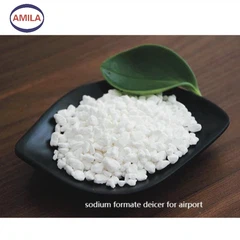
Before discussing its use in high - humidity regions, let's first understand what Solid Runway Deicer is. Our Solid Runway Deicer is a type of snow - melting agent, mainly composed of sodium formate. Sodium formate is a highly effective deicing material that has several advantages over traditional deicers such as rock salt.
It has a lower freezing point depression, which means it can melt ice and snow at much lower temperatures. It is also less corrosive to metals, which is crucial for airport runways and other infrastructure that are made of metal components. Additionally, it is more environmentally friendly as it has a lower impact on soil and water quality compared to some other deicers.
The Impact of High Humidity on Deicing
High humidity can have both positive and negative impacts on the deicing process. On the positive side, humidity provides additional moisture, which can help activate the deicer more quickly. When the solid deicer comes into contact with the moisture in the air, it starts to dissolve and form a brine solution. This brine solution then works to lower the freezing point of the ice and snow on the runway, causing it to melt.
However, high humidity also brings some challenges. In regions with high humidity, there is a greater chance of re - icing. After the ice and snow have melted, the excess moisture in the air can cause the water on the runway to refreeze if the temperature drops below the freezing point. This can be a major safety concern for airports, as a refrozen runway can lead to reduced traction for aircraft during takeoff and landing.
Another issue is the potential for the deicer to absorb moisture from the air and clump together. If the deicer clumps, it becomes less effective as it cannot spread evenly on the runway. This can result in uneven deicing, leaving some areas of the runway still covered with ice or snow.
Our Solid Runway Deicer in High - Humidity Regions
Our Solid Runway Deicer is designed to perform well in a variety of environmental conditions, including high - humidity regions. The formulation of our product takes into account the challenges posed by high humidity.
Firstly, our deicer has a special coating that helps prevent it from absorbing excessive moisture from the air. This coating ensures that the deicer remains in a granular form and can be evenly spread on the runway. Even in high - humidity environments, the deicer can maintain its effectiveness and provide consistent deicing performance.
Secondly, our Airport Runway Deicer has a fast - acting formula. It can quickly dissolve in the presence of moisture, whether it is from the humidity in the air or the ice and snow on the runway. This rapid dissolution allows it to start melting the ice and snow almost immediately, reducing the time during which the runway is at risk of being slippery.
To combat the issue of re - icing, our deicer has a long - lasting effect. It continues to work even after the initial ice and snow have melted, providing a protective layer on the runway that helps prevent refreezing. This is especially important in high - humidity regions where the risk of re - icing is higher.
Case Studies
We have conducted several case studies in regions with high humidity to test the performance of our Solid Runway Deicer. In one airport located in a coastal area with high humidity, we applied our deicer during a snowstorm. The results were very encouraging. The deicer quickly melted the snow and ice on the runway, and despite the high humidity and fluctuating temperatures, there was no significant re - icing observed.
The airport authorities reported that the runway remained safe for aircraft operations throughout the snowstorm and the subsequent cold period. The use of our deicer also reduced the need for multiple deicing applications, which saved both time and resources.
Comparison with Other Deicers in High - Humidity Conditions
When compared to other deicers in high - humidity regions, our Solid Runway Deicer stands out. Traditional rock salt deicers are more prone to clumping in high - humidity conditions. They also have a higher risk of corrosion, which can be exacerbated by the increased moisture in the air.


Some liquid deicers may not be as effective in high - humidity regions either. They can evaporate more quickly in high - humidity environments, reducing their deicing lifespan. In contrast, our solid deicer has a more stable performance and can provide long - term protection against ice and snow.
Conclusion
In conclusion, our Solid Runway Deicer can be effectively used in regions with high humidity. While high humidity does present some challenges to the deicing process, our product is designed to overcome these challenges. Its unique formulation, fast - acting nature, and long - lasting effect make it a reliable choice for airports and other runways in high - humidity areas.
If you are interested in learning more about our Solid Runway Deicer or our Sodium Formate Deicer for Highways, we encourage you to contact us for a detailed discussion. We are always ready to provide you with the best deicing solutions for your specific needs. Whether you are an airport manager, a highway maintenance department, or any other organization in need of high - quality deicers, we look forward to working with you to ensure the safety and functionality of your runways and roads.
References
- "Deicing and Anti - icing of Airport Runways", Journal of Aviation Science and Technology
- "The Environmental Impact of Deicers", Environmental Science Review
- "Sodium Formate as a Deicing Agent: Performance and Applications", Chemical Engineering Journal
Send Inquiry