


How does Sodium Formate 99% Min react with bases?
Dec 12, 2025
Leave a message
As a supplier of Sodium Formate 99% Min, I've delved deep into the chemical properties and reactions of this compound. In this blog, I'll explore how Sodium Formate 99% Min reacts with bases, sharing scientific insights and practical knowledge.
Chemical Structure and Basic Properties of Sodium Formate 99% Min
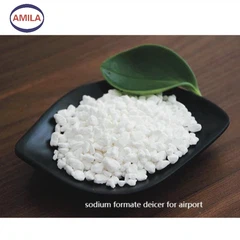
Sodium Formate 99% Min, with the chemical formula HCOONa, is a white crystalline powder. It is highly soluble in water, and its aqueous solution is slightly alkaline due to the hydrolysis of the formate ion. The high purity of 99% Min ensures that the chemical reactions it participates in are more predictable and efficient.
The formate ion (HCOO⁻) in Sodium Formate 99% Min has a unique structure. The carbon atom in the formate ion is bonded to an oxygen atom by a double - bond and to another oxygen atom (which is also bonded to a sodium ion) by a single - bond. This structure gives the formate ion certain chemical reactivity, especially when it comes to reactions with bases.
General Reaction Mechanisms with Bases
When Sodium Formate 99% Min reacts with bases, the main reaction involves the formate ion. Bases typically contain hydroxide ions (OH⁻) in aqueous solutions. The general reaction between Sodium Formate and a base can be written as follows:
[HCOONa + BOH\rightarrow HCOOB + NaOH]
where B represents a metal cation from the base. For example, if the base is potassium hydroxide (KOH), the reaction is:
[HCOONa+KOH\rightarrow HCOOK + NaOH]
This is a simple metathesis reaction, also known as a double - displacement reaction. In this reaction, the sodium ion (Na⁺) in Sodium Formate is replaced by the metal cation from the base, while the hydroxide ion from the base combines with the sodium ion to form sodium hydroxide.
Reaction Conditions and Influencing Factors
Temperature
Temperature plays a crucial role in the reaction between Sodium Formate 99% Min and bases. Generally, an increase in temperature can accelerate the reaction rate. According to the Arrhenius equation, the rate constant (k) of a chemical reaction is related to the activation energy (E_a) and temperature (T) by the formula (k = A\mathrm{e}^{-E_a/RT}), where (A) is the pre - exponential factor, (R) is the gas constant.
At higher temperatures, the molecules have more kinetic energy, which means more molecules have enough energy to overcome the activation energy barrier of the reaction. However, if the temperature is too high, side reactions may occur. For example, formate ions may decompose at extremely high temperatures, affecting the yield and purity of the reaction products.
Concentration
The concentration of Sodium Formate 99% Min and the base also affects the reaction. According to the law of mass action, for the reaction (aA + bB\rightarrow cC + dD), the reaction rate (r) is proportional to the product of the concentrations of the reactants raised to their stoichiometric coefficients, i.e., (r=k[A]^a[B]^b).
In the reaction between Sodium Formate and a base, increasing the concentration of either Sodium Formate or the base can increase the reaction rate. However, in practice, extremely high concentrations may lead to problems such as precipitation or difficulty in mixing, which can affect the reaction efficiency.
Solvent
The choice of solvent can significantly influence the reaction. Aqueous solutions are commonly used because both Sodium Formate 99% Min and many bases are highly soluble in water. Water can also act as a medium to facilitate the dissociation of ions and the collision of reactant molecules.
However, some non - aqueous solvents may also be used in specific reactions. For example, in some organic synthesis reactions, organic solvents such as ethanol or dimethylformamide (DMF) may be used. The polarity and dielectric constant of the solvent can affect the solubility of the reactants and the stability of the transition state during the reaction.
Specific Reactions with Common Bases
Reaction with Sodium Hydroxide (NaOH)
When Sodium Formate 99% Min reacts with sodium hydroxide, the reaction is relatively simple because the cation in the base is the same as the cation in Sodium Formate. In this case, there is no obvious metathesis reaction in the traditional sense. However, in the presence of high - temperature and high - pressure conditions, formate ions may undergo a disproportionation reaction:
[2HCOONa+2NaOH\rightarrow Na_2CO_3 + H_2+Na_2O]


This reaction is an important reaction in the industrial production of some chemicals. Under normal conditions, the reaction between Sodium Formate and sodium hydroxide is relatively slow, but with the addition of catalysts or under specific reaction conditions, the reaction can proceed more efficiently.
Reaction with Calcium Hydroxide ((Ca(OH)_2))
When Sodium Formate 99% Min reacts with calcium hydroxide, a double - displacement reaction occurs:
[2HCOONa+Ca(OH)_2\rightarrow (HCOO)_2Ca + 2NaOH]
Calcium formate ((HCOO)_2Ca) is an important chemical product. It is widely used in the feed industry, as a de - icing agent, and in the production of other chemicals. The reaction between Sodium Formate and calcium hydroxide can be carried out in aqueous solutions at room temperature. The reaction rate can be increased by stirring or heating slightly.
Applications of the Reactions
In the Chemical Industry
The reactions between Sodium Formate 99% Min and bases are widely used in the chemical industry. For example, the production of various metal formates through the reaction with different bases can be used as raw materials for the synthesis of other organic compounds. Metal formates can be used in the production of plastics, dyes, and pharmaceuticals.
In the Feed Industry
As a supplier of Sodium Formate 99% Min, I know that the reaction products are also relevant in the feed industry. Feed Grade Sodium Formate can react with some bases to form compounds that can improve the nutritional value and palatability of animal feed. For example, the reaction with calcium hydroxide to form calcium formate can be used as a feed additive to provide calcium and formic acid equivalents, which can help in the digestion and growth of animals.
Conclusion
In conclusion, the reaction between Sodium Formate 99% Min and bases is a complex chemical process that is affected by many factors such as temperature, concentration, and solvent. Understanding these reactions is crucial for the production and application of Sodium Formate and its reaction products.
If you are interested in Sodium Formate 99% Min or Sodium Formate 98% Min for your industrial or feed - related needs, please feel free to contact us for further discussions on procurement and technical details.
References
- Atkins, P. W., & de Paula, J. (2014). Physical Chemistry. Oxford University Press.
- Housecroft, C. E., & Sharpe, A. G. (2012). Inorganic Chemistry. Pearson Education.
- McMurry, J. (2016). Organic Chemistry. Cengage Learning.
Send Inquiry