


How do eco - friendly deicers compare to sand in deicing?
Jan 09, 2026
Leave a message
Eco-friendly deicers have emerged as a significant alternative to traditional sand in recent years, especially in regions prone to snow and ice. As a supplier of eco-friendly deicers, I've witnessed firsthand the growing interest in these products and the shift away from sand. In this blog, I'll compare eco-friendly deicers to sand in terms of effectiveness, environmental impact, and cost, and explain why the former might be the better choice for your deicing needs.
Effectiveness
One of the primary factors when choosing a deicing method is its effectiveness. Sand has been used for decades to improve traction on icy surfaces. When spread on snow or ice, it provides a rough surface that helps vehicles and pedestrians gain better footing. However, sand does not actually melt ice; it merely offers a physical barrier to enhance grip. This means that sand is less effective in reducing the risk of slips and falls compared to deicers, which actively melt the ice.
Eco-friendly deicers, such as Potassium Formate Liquid, work by lowering the freezing point of water. This causes the ice to melt, providing a clear surface. These deicers are particularly effective in cold temperatures, where sand's effectiveness is significantly reduced. For example, in extremely cold environments, sand can become embedded in the ice, making it less effective at providing traction. In contrast, potassium formate liquid can continue to work at temperatures as low as -60°F (-51°C), ensuring that surfaces remain safe and accessible.
In addition to melting ice, eco-friendly deicers can also prevent the formation of new ice. By creating a thin layer of liquid on the surface, they inhibit the bonding of water molecules, making it more difficult for ice to form. This proactive approach to deicing can save time and resources in the long run, as it reduces the need for repeated applications.
Environmental Impact
Another crucial aspect to consider is the environmental impact of deicing methods. Sand is often considered a natural and environmentally friendly option because it is a non-toxic material. However, the use of sand can have several negative environmental consequences. When sand is washed away by rain or snowmelt, it can end up in waterways, where it can harm aquatic ecosystems. The sedimentation caused by sand can smother fish eggs and aquatic plants, disrupting the food chain. Additionally, sand can clog storm drains and sewer systems, leading to flooding and water pollution.
Eco-friendly deicers, on the other hand, are designed to minimize their environmental impact. Many of these deicers are biodegradable and non-toxic, making them safer for the environment. For instance, potassium formate is a readily biodegradable compound that breaks down into carbon dioxide and water. It does not contain harmful chemicals such as chloride, which can corrode infrastructure and contaminate groundwater. Moreover, eco-friendly deicers are often formulated to be less corrosive to metals, reducing the damage to vehicles, bridges, and other structures.
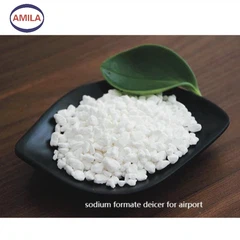
Some eco-friendly deicers, like Aircraft Deicer and Potassium Formate for Airport Deicer, are specifically designed for use in sensitive environments such as airports. These deicers meet strict environmental regulations and are optimized to provide effective deicing while minimizing the risk of pollution.
Cost
Cost is always a significant consideration when choosing a deicing solution. Sand is generally less expensive than eco-friendly deicers, especially in the short term. The initial cost of purchasing sand is relatively low, and it can be easily obtained from local sources. However, the long-term costs associated with sand can be significantly higher.


As mentioned earlier, sand can cause damage to infrastructure and environmental systems. The cost of repairing corrosion and sedimentation damage can be substantial over time. Additionally, the need for frequent reapplication of sand due to its limited effectiveness can increase labor and material costs.
Eco-friendly deicers, while more expensive upfront, can offer cost savings in the long run. Their effectiveness means that they require fewer applications, reducing labor and material costs. Moreover, the reduced environmental impact can lead to lower costs associated with environmental remediation and infrastructure repair. For example, using a high-quality eco-friendly deicer can extend the lifespan of bridges and other structures, saving on replacement costs.
Case Studies
To illustrate the benefits of eco-friendly deicers over sand, let's look at a few case studies. In a large city, the local government decided to switch from sand to an eco-friendly deicer for its sidewalks and roads. After the first winter of using the deicer, they noticed a significant reduction in slip-and-fall accidents. The deicer was able to keep the surfaces clear even during extreme cold snaps, where sand had previously been ineffective. Additionally, the city saw a decrease in the amount of sediment in its waterways, indicating a positive environmental impact.
In an airport, the use of Potassium Formate for Airport Deicer led to improved safety and efficiency. The deicer was able to quickly clear runways and taxiways, reducing flight delays and cancellations. The airport also reported a decrease in corrosion on its aircraft and ground equipment, resulting in cost savings on maintenance and repairs.
Conclusion
In conclusion, eco-friendly deicers offer several advantages over sand in terms of effectiveness, environmental impact, and cost. While sand has been a traditional deicing option for many years, its limitations are becoming increasingly apparent. As the demand for sustainable and effective deicing solutions grows, eco-friendly deicers are emerging as the preferred choice.
If you're looking for a reliable and environmentally friendly deicing solution, I encourage you to consider our range of eco-friendly deicers. Our products, including Potassium Formate Liquid and Aircraft Deicer, are designed to provide superior performance while minimizing their impact on the environment. Contact us today to learn more about how our eco-friendly deicers can meet your specific deicing needs. We are ready to engage in procurement discussions and provide you with the best deicing solutions for your requirements.
References
- "Environmental Impacts of Snow and Ice Control Chemicals." Transportation Research Board.
- "The Effectiveness of Different Deicing Agents in Cold Climates." Journal of Cold Regions Engineering.
- "Cost-Benefit Analysis of Eco-Friendly Deicers vs. Traditional Methods." International Journal of Sustainable Transportation.
Send Inquiry