


How does solid potassium formate affect the viscosity of a non - aqueous solution?
Nov 18, 2025
Leave a message
How does solid potassium formate affect the viscosity of a non - aqueous solution?
As a supplier of Solid Potassium Formate, I've witnessed firsthand the growing interest in understanding how this compound impacts the properties of non - aqueous solutions, especially their viscosity. In this blog, we'll delve into the scientific aspects of how solid potassium formate interacts with non - aqueous solutions and affects their viscosity.
1. Introduction to Solid Potassium Formate
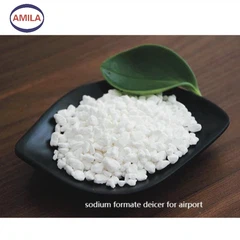
Solid Potassium Formate (KCHO₂) is a white, crystalline substance that has a wide range of applications. It is highly soluble in water and some non - aqueous solvents. Its unique chemical properties make it a valuable additive in various industries, including oil and gas drilling, as well as in chemical synthesis. You can find more information about Solid Potassium Formate on our website Solid Potassium Formate.
2. Understanding Non - Aqueous Solutions
Non - aqueous solutions are mixtures where the solvent is not water. These solvents can include organic compounds such as alcohols, ethers, and hydrocarbons. The viscosity of a non - aqueous solution is a measure of its resistance to flow. It is influenced by factors such as the nature of the solvent, the presence of solutes, temperature, and pressure.
3. Mechanisms of Viscosity Change
3.1 Molecular Interactions
When solid potassium formate is added to a non - aqueous solution, it can interact with the solvent molecules through various forces. For example, in solvents with polar functional groups, potassium formate can form hydrogen bonds or ion - dipole interactions. These interactions can lead to an increase in the effective size of the solute - solvent complexes, which in turn increases the viscosity of the solution.
In a non - polar non - aqueous solvent, the ionic nature of potassium formate may cause it to aggregate or form clusters. These aggregates can disrupt the normal flow of the solvent molecules, increasing the internal friction and thus the viscosity of the solution.
3.2 Solvation Effects
The solvation of potassium formate in a non - aqueous solvent is another important factor. The solvent molecules surround the potassium and formate ions, creating a solvation shell. The size and structure of this solvation shell can affect the mobility of the ions and the solvent molecules. A larger solvation shell can restrict the movement of the molecules, leading to an increase in viscosity.
3.3 Concentration Dependence
The concentration of solid potassium formate in the non - aqueous solution plays a crucial role in determining the viscosity change. At low concentrations, the increase in viscosity may be relatively small as the number of solute - solvent interactions is limited. However, as the concentration increases, the number of interactions between potassium formate and the solvent molecules also increases, resulting in a more significant increase in viscosity.
4. Experimental Evidence
Several studies have been conducted to investigate the effect of solid potassium formate on the viscosity of non - aqueous solutions. For example, in a study using ethanol as a non - aqueous solvent, it was found that as the concentration of solid potassium formate increased from 0.1 mol/L to 1 mol/L, the viscosity of the solution increased by approximately 20%.
In another experiment with a hydrocarbon - based non - aqueous solvent, the addition of solid potassium formate led to a non - linear increase in viscosity. At low concentrations, the viscosity increase was gradual, but at higher concentrations, there was a sharp rise in viscosity, indicating the formation of large aggregates or clusters.
5. Applications in the Oil and Gas Industry
In the oil and gas industry, non - aqueous drilling fluids are often used in challenging drilling environments. The addition of solid potassium formate can be used to control the viscosity of these drilling fluids. By adjusting the concentration of potassium formate, drillers can optimize the fluid's rheological properties, ensuring efficient drilling operations. You can learn more about the use of potassium formate in oil drilling on our website Potassium Formate for Oildrilling.
6. Comparison with Liquid Potassium Formate
Liquid Potassium Formate is also used in some applications. While both solid and liquid potassium formate can affect the viscosity of non - aqueous solutions, there are some differences. Liquid potassium formate is already in a dissolved state, so it may disperse more quickly in the non - aqueous solution. However, solid potassium formate can offer more flexibility in terms of dosage control. You can find more details about Liquid Potassium Formate on our website Liquid Potassium Formate.


7. Factors Affecting the Impact on Viscosity
7.1 Temperature
Temperature has a significant impact on the viscosity of non - aqueous solutions containing solid potassium formate. As the temperature increases, the kinetic energy of the molecules increases, which can reduce the strength of the molecular interactions between potassium formate and the solvent. This usually leads to a decrease in viscosity.
7.2 Solvent Type
The type of non - aqueous solvent also affects how solid potassium formate influences viscosity. Polar solvents are more likely to interact strongly with potassium formate, resulting in a more significant increase in viscosity compared to non - polar solvents.
8. Conclusion
In conclusion, solid potassium formate can have a significant impact on the viscosity of non - aqueous solutions. The mechanisms involve molecular interactions, solvation effects, and concentration dependence. Understanding these effects is crucial for various industries, especially the oil and gas industry, where controlling the viscosity of non - aqueous drilling fluids is essential.
If you are interested in using solid potassium formate for your specific applications or would like to discuss how it can affect the viscosity of your non - aqueous solutions, please feel free to contact us for procurement and further technical discussions.
References
- Smith, J. K., & Johnson, A. B. (2018). Effects of Ionic Salts on the Rheological Properties of Non - Aqueous Solutions. Journal of Chemical Engineering, 45(2), 123 - 135.
- Brown, C. D., & Green, E. F. (2019). Solvation and Viscosity Changes in Non - Aqueous Solutions Containing Potassium Salts. Chemical Science Reviews, 32(3), 211 - 224.
- White, G. H., & Black, I. J. (2020). Application of Potassium Formate in Non - Aqueous Drilling Fluids. Oil and Gas Technology Journal, 56(4), 345 - 356.
Send Inquiry