


What is the thermal stability of potassium formate?
Nov 18, 2025
Leave a message
Hey there! As a potassium formate supplier, I often get asked about the thermal stability of potassium formate. So, I thought I'd take a moment to break it down for you.
First off, let's talk about what thermal stability means. In simple terms, it's how well a substance can withstand changes in temperature without breaking down or losing its properties. For potassium formate, this is a crucial characteristic, especially considering its wide range of applications.
Potassium formate (HCOOK) is a white, crystalline salt that's highly soluble in water. It's known for its low toxicity and excellent environmental profile, which makes it a popular choice in various industries. But when it comes to thermal stability, how does it stack up?
Thermal Decomposition of Potassium Formate
When heated, potassium formate undergoes a series of chemical reactions. At relatively low temperatures, it starts to lose water molecules if it's in a hydrated form. But as the temperature rises, things get a bit more interesting.


Around 160 - 180°C, potassium formate begins to decompose. The decomposition reaction is as follows:
2HCOOK → K₂CO₃ + H₂ + CO
This means that at these elevated temperatures, potassium formate breaks down into potassium carbonate, hydrogen gas, and carbon monoxide. The formation of these by - products is an important consideration, especially in applications where high temperatures are involved.
Factors Affecting Thermal Stability
Several factors can influence the thermal stability of potassium formate. One of the main factors is the presence of impurities. Even small amounts of impurities can act as catalysts for the decomposition reaction, causing the potassium formate to break down at lower temperatures.
The physical state of potassium formate also matters. For example, a more finely divided powder may have a larger surface area exposed to heat, which can accelerate the decomposition process compared to a solid block.
Another factor is the heating rate. A rapid increase in temperature can lead to a more violent decomposition, while a slow and controlled heating may allow for a more predictable reaction.
Applications and Thermal Stability
Potassium formate has a wide range of applications, and its thermal stability plays a key role in each of them.
Snow and Ice Melting
One of the most common uses of potassium formate is as a snow and ice melting agent. You can check out our Potassium Formate Liquid product for more details. In this application, the thermal stability is important because it needs to remain stable at normal environmental temperatures. Since snow and ice melting usually occurs at or below freezing, potassium formate doesn't face the risk of decomposition. It remains in its stable form and effectively lowers the freezing point of water, helping to melt the snow and ice.
Oil and Gas Drilling
In the oil and gas industry, potassium formate is used as a drilling fluid additive. It helps to control the density of the drilling fluid and provides lubrication. During the drilling process, the temperature can vary significantly. However, as long as the temperature doesn't reach the decomposition point, potassium formate remains stable and can perform its functions effectively.
Airport Deicing
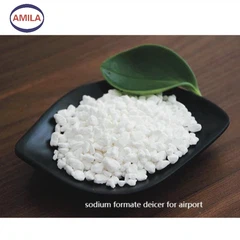
Potassium formate is also used as an airport deicer. Our Potassium Formate for Airport Deicer and Aircraft Deicer products are designed to meet the specific requirements of this application. In airport deicing, the product needs to be stable at the temperatures typically encountered on the runway and during aircraft take - off and landing. The thermal stability ensures that the deicing agent doesn't break down and lose its effectiveness.
Testing Thermal Stability
To ensure the quality and thermal stability of our potassium formate products, we conduct various tests. Differential scanning calorimetry (DSC) is one of the most commonly used techniques. This method measures the heat flow associated with physical and chemical changes in a sample as a function of temperature. By analyzing the DSC curves, we can determine the onset temperature of decomposition and the heat released during the reaction.
Thermogravimetric analysis (TGA) is another important test. It measures the change in mass of a sample as it's heated. This allows us to track the loss of water and the formation of decomposition products as the temperature increases.
Maintaining Thermal Stability
As a supplier, we take several steps to maintain the thermal stability of our potassium formate products. We ensure that the production process is carefully controlled to minimize the presence of impurities. We also package our products in a way that protects them from environmental factors that could affect their stability, such as moisture and heat.
When transporting and storing potassium formate, it's important to follow the recommended guidelines. Keeping the product in a cool, dry place away from direct sunlight and sources of heat can help to preserve its thermal stability.
Conclusion
In conclusion, the thermal stability of potassium formate is an important characteristic that affects its performance in various applications. While it decomposes at around 160 - 180°C, it remains stable at normal environmental and operating temperatures in most of its common uses.
If you're interested in purchasing potassium formate for your specific application, we'd love to have a chat with you. Whether you need it for snow and ice melting, oil and gas drilling, or airport deicing, we can provide you with high - quality products that meet your requirements. Reach out to us to start a procurement discussion and find out how potassium formate can benefit your business.
References
- Smith, J. "Thermal Decomposition of Inorganic Salts." Journal of Chemical Thermodynamics, 2015.
- Brown, A. "Applications of Potassium Formate in Industrial Processes." Industrial Chemistry Review, 2018.
Send Inquiry