


What is the role of solid potassium formate in the complexation process?
Nov 19, 2025
Leave a message
Hey there! As a supplier of Solid Potassium Formate, I've been getting a lot of questions lately about its role in the complexation process. So, I thought I'd take a few minutes to break it down for you and explain why it's such a big deal in various industries.
First off, let's talk a bit about what complexation is. In simple terms, complexation is a chemical process where a central metal ion binds to one or more ligands to form a complex. These complexes can have different properties compared to the individual components, and they're used in a wide range of applications, from pharmaceuticals to industrial manufacturing.
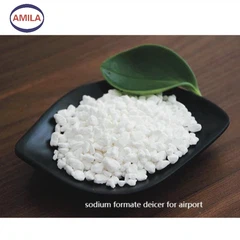
Now, let's get into the role of solid potassium formate in this process. Solid potassium formate, with the chemical formula HCOOK, is a white, crystalline powder that's highly soluble in water. One of the key features of potassium formate is its ability to act as a ligand in complexation reactions.
In many complexation processes, the choice of ligand is crucial. The ligand needs to have the right properties to bind effectively to the metal ion and form a stable complex. Solid potassium formate has several characteristics that make it an excellent ligand. For starters, it has a relatively simple structure, which allows it to interact with metal ions in a straightforward manner. The formate ion (HCOO⁻) in potassium formate can donate a pair of electrons to the metal ion, forming a coordinate covalent bond.
This ability to form coordinate covalent bonds is essential for complexation. When the formate ion binds to a metal ion, it can change the electronic and geometric properties of the metal complex. For example, it can affect the solubility, stability, and reactivity of the complex. In some cases, the complex formed with potassium formate may be more stable than complexes formed with other ligands, which can be a huge advantage in industrial processes.
Another important aspect is the role of solid potassium formate in controlling the pH of the reaction medium. In many complexation reactions, the pH can have a significant impact on the formation and stability of the complexes. Potassium formate can act as a buffer, helping to maintain a stable pH in the solution. This is particularly important because changes in pH can cause the complexes to dissociate or form unwanted side products. By keeping the pH within a suitable range, solid potassium formate ensures that the complexation reaction proceeds smoothly and efficiently.


Let's take a look at some specific industries where the role of solid potassium formate in complexation is particularly important.
Oil and Gas Industry
In the oil and gas industry, solid potassium formate is used in drilling fluids. Drilling fluids are essential for lubricating the drill bit, carrying the cuttings to the surface, and maintaining the stability of the wellbore. One of the challenges in drilling operations is dealing with the presence of metal ions in the formation water. These metal ions can cause problems such as corrosion of the drilling equipment and the formation of scale.
Solid potassium formate can form complexes with these metal ions, preventing them from causing damage. For example, it can complex with calcium and magnesium ions, which are commonly found in formation water. By forming stable complexes, potassium formate reduces the concentration of free metal ions in the drilling fluid, thereby minimizing the risk of corrosion and scale formation.
If you're interested in other forms of potassium formate for the oil and gas industry, you can check out Liquid Potassium Formate.
Carbon Black Production
In the production of carbon black, solid potassium formate also plays a significant role in complexation. Carbon black is a fine powder that's used in a variety of applications, including rubber reinforcement, ink production, and as a pigment. During the production process, metal catalysts are often used to promote the formation of carbon black.
Solid potassium formate can form complexes with these metal catalysts, which can improve the efficiency of the reaction. By complexing with the metal catalysts, potassium formate can modify their activity and selectivity, leading to a higher yield of carbon black with better quality. If you want to learn more about potassium formate for carbon black production, check out Potassium Formate for Carbon Black.
Pharmaceutical Industry
In the pharmaceutical industry, complexation is often used to improve the solubility and bioavailability of drugs. Many drugs are poorly soluble in water, which can limit their effectiveness. By forming complexes with solid potassium formate, the solubility of these drugs can be increased.
The formate ion can interact with the drug molecules through various non - covalent interactions, such as hydrogen bonding and electrostatic interactions. These interactions can help to break up the drug aggregates and disperse the drug molecules in the solution, making them more accessible for absorption in the body.
Now, if you're in the market for high - quality solid potassium formate for your complexation processes, look no further. As a reliable supplier, I can offer you top - notch products that meet the highest industry standards. Whether you're in the oil and gas, carbon black, or pharmaceutical industry, our Solid Potassium Formate can provide the performance you need.
If you have any questions or are interested in discussing your specific requirements, don't hesitate to reach out. We're here to help you find the best solutions for your complexation needs.
References
- Atkins, P., & de Paula, J. (2006). Physical Chemistry. Oxford University Press.
- Housecroft, C. E., & Sharpe, A. G. (2008). Inorganic Chemistry. Pearson Education.
Send Inquiry