


How is liquid sodium formate produced?
Aug 22, 2025
Leave a message
As a trusted supplier of Liquid Sodium Formate, I'm excited to share insights into how this valuable chemical is produced. Liquid Sodium Formate, with its diverse applications in industries such as oil drilling, leather tanning, and more, is a key player in many industrial processes. In this blog, we'll delve into the production methods, the science behind them, and the quality control measures that ensure we deliver a high - quality product.
The Chemical Basics of Sodium Formate
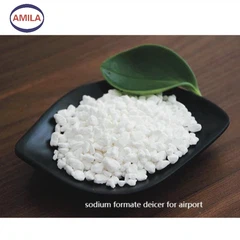
Before we jump into the production process, let's understand the chemical nature of sodium formate. Sodium formate has the chemical formula HCOONa. It is a white, crystalline, and hygroscopic salt that is highly soluble in water. In its liquid form, it is a convenient and easy - to - handle solution for various industrial applications.
Production Methods
1. Reaction of Sodium Hydroxide and Formic Acid
One of the most common methods for producing liquid sodium formate is through the reaction between sodium hydroxide (NaOH) and formic acid (HCOOH). This is an acid - base neutralization reaction, which can be represented by the following chemical equation:
[HCOOH+NaOH = HCOONa + H_2O]
The process begins by carefully measuring the appropriate amounts of formic acid and sodium hydroxide. The reaction is exothermic, which means it releases heat. Therefore, proper temperature control is crucial to ensure a safe and efficient reaction. Specialized reactors are used to carry out this reaction. These reactors are equipped with cooling systems to maintain the temperature within the desired range.
Once the reaction is complete, the resulting solution contains sodium formate and water. However, this solution may need further purification to remove any impurities that could affect the quality of the final product. Filtration is often used to remove solid impurities, and distillation can be employed to adjust the concentration of the liquid sodium formate solution.
2. Carbonylation of Sodium Hydroxide
Another method for producing sodium formate is the carbonylation of sodium hydroxide. In this process, carbon monoxide (CO) reacts with sodium hydroxide under specific conditions of temperature and pressure. The chemical reaction can be written as:
[CO + NaOH=HCOONa]
This reaction typically takes place in a high - pressure reactor. The reaction conditions need to be precisely controlled to achieve a high yield of sodium formate. High pressures (usually several atmospheres) and elevated temperatures are required to drive the reaction forward.
After the reaction, the product is a mixture of sodium formate and unreacted reactants. Separation and purification steps are then carried out to obtain a pure liquid sodium formate solution. This may involve processes such as extraction, where a suitable solvent is used to separate the sodium formate from other components, followed by distillation to remove the solvent and adjust the concentration.
Quality Control in Production
As a supplier, we understand the importance of quality control in the production of liquid sodium formate. Quality control measures are implemented at every stage of the production process.
Raw Material Inspection
Before the production process begins, the raw materials - formic acid, sodium hydroxide, and carbon monoxide (if using the carbonylation method) - are thoroughly inspected. The purity and quality of these raw materials directly affect the quality of the final product. For example, formic acid should have a high purity level, and any impurities in sodium hydroxide could lead to the formation of unwanted by - products.
In - process Monitoring
During the production process, various parameters are continuously monitored. Temperature, pressure, pH, and reaction time are closely watched to ensure that the reaction proceeds as expected. Any deviation from the optimal conditions can result in a lower - quality product or even a failed reaction.
Final Product Testing
Once the liquid sodium formate is produced, it undergoes a series of tests. These tests include measuring the concentration of sodium formate in the solution, checking for the presence of impurities such as heavy metals, and evaluating the physical properties of the liquid, such as its density and viscosity. Only when the product meets our strict quality standards is it ready for packaging and distribution.
Applications of Liquid Sodium Formate
Liquid sodium formate has a wide range of applications across different industries.
Oil Drilling
In the oil drilling industry, liquid sodium formate is used as a drilling fluid additive. It helps to control the density of the drilling fluid, which is crucial for maintaining wellbore stability. Our Sodium Formate 95% Min and Sodium Formate 98% Min products are specifically formulated to meet the high - performance requirements of oil drilling operations.
Leather Tanning
In leather tanning, sodium formate is used as a reducing agent and a pH regulator. It helps to improve the quality of the leather by enhancing the tanning process. Our Sodium Formate for Leather Tanning product is designed to provide excellent results in this application.


Conclusion
The production of liquid sodium formate is a complex process that requires careful control of chemical reactions, strict quality control measures, and in - depth knowledge of the product's applications. As a supplier, we are committed to producing high - quality liquid sodium formate that meets the diverse needs of our customers.
If you are interested in purchasing liquid sodium formate for your industrial applications, we invite you to contact us for a detailed discussion. Our team of experts is ready to answer your questions and provide you with the best solutions for your specific requirements.
References
- Smith, J. Chemical Engineering Basics. Publisher: ABC Publishing, 2015.
- Johnson, R. Industrial Chemical Processes. Publisher: XYZ Press, 2018.
- Brown, A. Applications of Sodium Formate in Different Industries. Journal of Industrial Chemistry, Vol. 25, No. 3, 2020.
Send Inquiry