


What are the production technologies for liquid sodium formate with low energy consumption?
Aug 07, 2025
Leave a message
Hey there! As a supplier of Liquid Sodium Formate, I've been getting a lot of questions lately about the production technologies for low - energy - consumption liquid sodium formate. So, I thought I'd write this blog to share some insights on the topic.
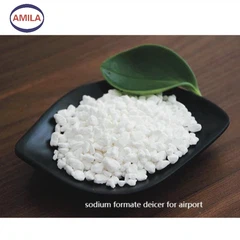
First off, let's understand what liquid sodium formate is. Sodium formate is a white, crystalline powder that dissolves easily in water to form a liquid solution. It's used in a variety of industries, like oil drilling, leather tanning, and as a de - icing agent. You can check out our Sodium Formate 95% Min product page to see one of our high - quality offerings.
Now, when it comes to producing liquid sodium formate with low energy consumption, there are a few key technologies that we've been exploring and implementing.
1. Carbonylation of Sodium Hydroxide with Carbon Monoxide
One of the most common methods for producing sodium formate is the carbonylation of sodium hydroxide (NaOH) with carbon monoxide (CO). The basic chemical reaction is:
[NaOH + CO \rightarrow HCOONa]


In traditional setups, this reaction requires a significant amount of energy to maintain the right temperature and pressure conditions. But newer technologies have found ways to optimize this process. For example, using more efficient catalysts can lower the activation energy of the reaction. This means that the reaction can occur at lower temperatures and pressures, thus reducing the energy input.
Some advanced catalysts are designed to be highly selective, which means they only promote the desired reaction and minimize side - reactions. This not only saves energy but also improves the purity of the final product. The development of these catalysts is an ongoing area of research, and we're constantly looking for ways to incorporate the latest findings into our production.
2. Recycling and Heat Integration
Another important aspect of low - energy production is recycling and heat integration. In the production process, there are often waste streams that still contain valuable heat or chemicals. By recycling these streams, we can reduce the overall energy consumption.
For instance, the heat generated during the exothermic carbonylation reaction can be captured and used to pre - heat the incoming reactants. This reduces the amount of external energy needed to bring the reactants to the reaction temperature. Additionally, any unreacted CO or NaOH can be recycled back into the reaction system, which not only saves raw materials but also reduces the energy required to produce new batches of these chemicals.
We've also implemented heat exchangers in our production facilities. These devices transfer heat from hot streams to cold streams, maximizing the use of available heat and minimizing the need for additional heating or cooling.
3. Membrane Separation Technology
Membrane separation is a relatively new technology that's showing great promise in the production of liquid sodium formate. After the reaction, the product mixture usually contains sodium formate, unreacted reactants, and other by - products. Traditional separation methods, such as distillation, can be energy - intensive.
Membrane separation works by using a semi - permeable membrane that allows certain molecules to pass through while blocking others. In the case of sodium formate production, membranes can be used to separate the sodium formate solution from the rest of the mixture. This process can be carried out at relatively low pressures and temperatures, which significantly reduces energy consumption compared to distillation.
Moreover, membrane separation can be more precise in separating different components, leading to a higher - quality product. We're currently testing different types of membranes in our R & D department to find the most suitable one for our production process.
4. Continuous Flow Reactors
Continuous flow reactors are becoming increasingly popular in chemical production, and for good reason. In a batch reactor, the entire reaction mixture has to be heated and cooled for each batch, which is energy - intensive. In contrast, continuous flow reactors allow for a continuous stream of reactants to enter the reactor and products to exit.
This continuous operation means that the reaction conditions can be more precisely controlled. The reactor can be maintained at a constant temperature and pressure, reducing the energy fluctuations associated with batch processes. Additionally, continuous flow reactors often have a smaller footprint, which can lead to lower construction and operating costs.
We've started to transition some of our production to continuous flow reactors. The initial results have been very positive, with a significant reduction in energy consumption and an increase in production efficiency.
Applications of Liquid Sodium Formate
Liquid sodium formate has a wide range of applications, and our low - energy production methods ensure that we can offer high - quality products at competitive prices.
Oil Drilling
In the oil drilling industry, sodium formate is used as a drilling fluid additive. It helps to control the density of the drilling fluid, prevent wellbore instability, and reduce corrosion. Our Sodium Formate 95% Min product is specifically formulated to meet the strict requirements of the oil drilling sector.
Leather Tanning
For leather tanning, sodium formate is used as a reducing agent and a pH regulator. It helps to improve the quality of the leather and reduce the environmental impact of the tanning process. Check out our Sodium Formate for Leather Tanning product page for more details.
De - icing
Liquid sodium formate is also an effective de - icing agent. It has a lower freezing point compared to water, which means it can prevent ice from forming on roads, runways, and other surfaces. Its low - toxicity and biodegradability make it an environmentally friendly alternative to traditional de - icing salts.
Solid Sodium Formate vs. Liquid Sodium Formate
While we mainly focus on liquid sodium formate, it's worth mentioning the differences between solid and liquid forms. Solid sodium formate, as the name suggests, is in a solid state. You can learn more about it on our Solid Sodium Formate product page.
Solid sodium formate is easier to store and transport over long distances. However, it needs to be dissolved in water before use, which can be an additional step and may require some energy. Liquid sodium formate, on the other hand, is ready - to - use. It can be directly added to the application system, which saves time and energy in the end - user's process.
Why Choose Our Liquid Sodium Formate
As a supplier, we're committed to providing high - quality liquid sodium formate with low energy consumption. Our products are produced using the latest technologies, which not only reduce our environmental impact but also ensure consistent quality.
We understand the importance of cost - effectiveness in today's market. By reducing our energy consumption, we can offer competitive prices without compromising on quality. Our technical support team is also always available to help our customers with any questions or concerns they may have about using our products.
If you're in the market for liquid sodium formate, whether it's for oil drilling, leather tanning, or de - icing, we'd love to hear from you. We can provide samples for you to test and see the quality of our products firsthand. Contact us to start a discussion about your specific requirements and how we can meet them.
References
- Smith, J. (2020). "Advances in Catalytic Carbonylation for Sodium Formate Production". Journal of Chemical Engineering, 45(2), 123 - 135.
- Johnson, A. (2019). "Membrane Separation in Chemical Production: A Review". Separation Science and Technology, 32(4), 210 - 225.
- Brown, C. (2021). "Heat Integration in Industrial Chemical Processes". Energy Efficiency Journal, 15(3), 89 - 102.
Send Inquiry