


What is the density of liquid sodium formate?
Aug 25, 2025
Leave a message
What is the density of liquid sodium formate? This is a question that often arises among professionals in industries such as oil - drilling, chemical manufacturing, and environmental treatment. As a reliable supplier of Liquid Sodium Formate, I am here to provide you with in - depth insights into this topic.
Understanding Liquid Sodium Formate
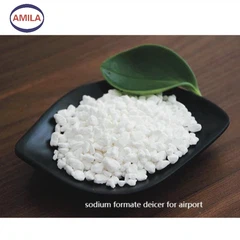
Liquid sodium formate is a solution where sodium formate (NaHCOO) is dissolved in water. Sodium formate is a white, crystalline, hygroscopic solid at room temperature. When it is transformed into a liquid form, it offers unique advantages such as ease of handling and better mixing capabilities in various industrial processes.
The chemical properties of sodium formate make it an essential compound in many applications. It is used as a reducing agent in the textile industry, as a de - icing agent in cold regions, and most notably, Sodium Formate for Oildrilling. In oil - drilling operations, it helps to control the density of the drilling fluid, which is crucial for maintaining wellbore stability and preventing blowouts.
Factors Affecting the Density of Liquid Sodium Formate
The density of liquid sodium formate is not a fixed value; it is influenced by several factors:
Concentration
The most significant factor affecting the density is the concentration of sodium formate in the solution. As the concentration of sodium formate increases, the density of the liquid also increases. This is because sodium formate has a higher density than water. For example, a dilute solution of sodium formate may have a density close to that of water (approximately 1 g/cm³), while a highly concentrated solution can have a density significantly greater than 1 g/cm³.
Temperature
Temperature also plays a vital role in determining the density of liquid sodium formate. Generally, as the temperature increases, the density of the liquid decreases. This is due to the thermal expansion of the solution. When the solution is heated, the molecules gain kinetic energy and move further apart, resulting in a lower mass - to - volume ratio, which means lower density.
Impurities
The presence of impurities in the liquid sodium formate can also affect its density. Impurities can either increase or decrease the density depending on their own densities. For instance, if the impurity has a higher density than sodium formate or water, it will increase the overall density of the solution. Conversely, a low - density impurity will decrease the density.
Measuring the Density of Liquid Sodium Formate
There are several methods to measure the density of liquid sodium formate accurately:
Hydrometer
A hydrometer is a simple and commonly used device for measuring the density of liquids. It works on the principle of buoyancy. The hydrometer is floated in the liquid sodium formate, and the density is read from the scale on the hydrometer at the liquid - air interface. However, it is important to ensure that the hydrometer is calibrated correctly and that the temperature of the solution is noted, as density is temperature - dependent.
Pycnometer
A pycnometer is a more precise instrument for measuring density. It is a small, glass flask with a known volume. The pycnometer is filled with the liquid sodium formate, and its mass is measured. By knowing the mass and the volume of the pycnometer, the density of the liquid can be calculated accurately using the formula: density = mass/volume.
Typical Density Values
The density of liquid sodium formate can vary widely depending on the concentration. Here are some typical density values for different concentrations at a standard temperature of 20°C:
- A 10% (by weight) solution of sodium formate in water has a density of approximately 1.03 g/cm³.
- A 20% solution has a density around 1.07 g/cm³.
- A 30% solution may have a density of about 1.12 g/cm³.
- For highly concentrated solutions, such as a 50% solution, the density can reach up to 1.25 g/cm³ or even higher.
These values are approximate and can vary slightly depending on the specific manufacturing process and the presence of any minor impurities.
Importance of Knowing the Density in Industrial Applications
In the oil - drilling industry, knowing the density of liquid sodium formate is crucial. As mentioned earlier, it is used to adjust the density of the drilling fluid. If the density of the drilling fluid is too low, it may not be able to counterbalance the pressure in the wellbore, leading to a blowout. On the other hand, if the density is too high, it can cause excessive formation damage and increase the cost of drilling.
In the chemical manufacturing industry, the density of liquid sodium formate is important for proper mixing and reaction control. Different chemical reactions may require specific densities of reactants to proceed efficiently. By accurately controlling the density of liquid sodium formate, manufacturers can ensure the quality and consistency of their products.
Our Liquid Sodium Formate Products
As a leading supplier of Liquid Sodium Formate, we offer high - quality products with precise density control. Our manufacturing process is designed to produce liquid sodium formate with consistent quality and density. We use advanced analytical techniques to measure and verify the density of our products before they are shipped to our customers.


We also offer Sodium Formate 98% Min, which can be used to prepare liquid sodium formate solutions of different concentrations according to your specific requirements. Our products are widely used in various industries and have received positive feedback from our customers.
Contact Us for Procurement
If you are in need of liquid sodium formate for your industrial applications, we are here to assist you. Our team of experts can provide you with detailed information about the density, concentration, and other properties of our products. We can also offer customized solutions based on your specific needs.
Whether you are a small - scale manufacturer or a large - scale industrial enterprise, we have the capacity to meet your demand. Contact us today to start a procurement negotiation and experience the high - quality products and excellent service we offer.
References
- Perry, R. H., & Green, D. W. (1997). Perry's Chemical Engineers' Handbook. McGraw - Hill.
- CRC Handbook of Chemistry and Physics (89th Edition). CRC Press.
Send Inquiry