


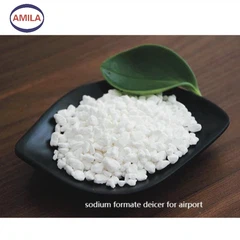
Potassium Formate As A Water-soluble Fertilizer Raw Material Has Become A New Star Product in The Agricultural Industry
Apr 10, 2025
Leave a message
Modern agricultural development is also constantly seeking effective fertilizers to improve crop yields and quality. Potassium formate, as a high-potassium water-soluble fertilizer raw material, has become a "new star product" in the agricultural industry due to its excellent performance and wide applicability. Today, let's talk about the characteristics, advantages and applications of potassium formate in agriculture, so that more people can understand and better utilize water-soluble fertilizers with potassium formate as raw materials to improve the comprehensive benefits of crops.
I. Basic characteristics of potassium formate
Potassium formate (KCOOH) is an inorganic compound with the characteristics of an efficient potassium source. Its main components are potassium and formic acid. Potassium is a macroelement required for plant growth and development, and has the functions of promoting photosynthesis, enhancing chlorophyll content, and improving crop resistance. Formic acid can play a role in slow release and transportation, providing plants with lasting nutrients.
1. Water solubility and stability
Potassium formate has excellent water solubility and can be quickly dissolved in water for timely absorption by plants. Compared with other potassium fertilizers, potassium formate has better fluidity and is not easy to precipitate, ensuring the uniform distribution of nutrients in the soil. This high water solubility makes it suitable for irrigation and fertilization, especially in modern agricultural irrigation methods such as drip irrigation and sprinkler irrigation.
2. Eco-friendliness
As an eco-friendly fertilizer, potassium formate will not pollute the soil and water after decomposition. Its decomposition products are non-toxic to soil microorganisms and plants, can improve soil structure, promote the reproduction of soil microorganisms, thereby improving soil fertility and crop disease resistance.
II. Advantages of potassium formate
1. Significant yield increase effect
Many studies and practices have shown that water-soluble fertilizers using potassium formate as raw materials can significantly increase crop yields. For example, in grain crops such as rice, corn, and wheat, the yield increases by an average of 10% to 20% after the application of potassium formate. This is mainly attributed to the fact that potassium formate can effectively enhance the photosynthesis of crops and improve the utilization rate of nutrients.
2. Improve crop quality
In addition to increasing yields, potassium formate water-soluble fertilizers also perform well in improving crop quality. Crops that are applied with potassium formate often have significantly increased sugar content, fuller fruits, brighter colors, and stronger stress resistance. For example, apples and tomatoes, after applying high-potassium fertilizers containing potassium formate, not only increase sugar content, but also improve the hardness and storage of fruits, and reduce pests and diseases.
3. Reduce soil salinization
With the excessive application of chemical fertilizers, soil salinization has occurred in some areas, affecting crop growth. Potassium formate has been found in scientific and technological research to effectively alleviate this phenomenon. Through its unique chemical structure, it helps to reduce the salt concentration in the soil and improve the soil pH value, thereby providing a good growth environment for plants.
III. Application methods and precautions of potassium formate
1. Timing of application
The timing of potassium formate application is crucial to the growth of crops. Generally speaking, the best effect is achieved during the growth, reproduction and fruiting period of crops. At this time, crops have a large demand for potassium, and the application of potassium formate can meet their needs in time, thereby promoting photosynthesis and increasing yields. For some crops with well-developed root systems, such as potatoes and sugarcane, the first application can be made during seedling cultivation, and subsequent topdressing can be carried out according to the growth situation.
2. Application method
Potassium formate can be applied through soil application and foliar spraying. When applying to the soil, it can be applied to the roots before sowing or during the growing season to ensure that it is fully mixed with the soil. Foliar spraying is suitable for quickly supplementing the potassium element of crops, especially when the crops show symptoms of nutrient deficiency. Pay attention to the dilution ratio when spraying to avoid excessive concentration that burns the plants.
3. Appropriate application
Like other fertilizers, the application of potassium formate should also follow the principle of appropriate amount. According to the soil background and crop growth stage, a reasonable fertilization plan should be formulated. Usually, the application amount of adult crops is 5-10 kg per mu. It is best to conduct soil testing before application to understand the existing potassium content in the soil and avoid waste caused by repeated fertilization.
As a high-potassium water-soluble fertilizer raw material, potassium formate can not only increase crop yields and improve quality, but also effectively alleviate soil salinization problems. It is an indispensable and important fertilizer in modern agriculture. Through reasonable application and scientific matching, farmers and horticultural workers can give full play to the advantages of potassium formate and contribute to sustainable agricultural development. In this era of pursuing high efficiency and environmental protection, the application of potassium formate provides more new ideas and methods for agricultural development, helping the prosperity and development of agriculture.
Send Inquiry