


Do eco - friendly deicers work in wet conditions?
Aug 29, 2025
Leave a message
As a supplier of eco-friendly deicers, I've often been asked whether these products work effectively in wet conditions. This is a crucial question, especially considering that winter weather can bring a mix of snow, sleet, and rain, creating wet and slippery surfaces. In this blog post, I'll delve into the science behind eco-friendly deicers and their performance in wet environments.
Understanding Eco-friendly Deicers
Eco-friendly deicers are formulated to melt ice and snow while minimizing the negative impact on the environment, human health, and infrastructure. Traditional deicers, such as rock salt (sodium chloride), can cause corrosion to vehicles, damage to concrete, and harm to vegetation and aquatic life. In contrast, eco-friendly deicers use alternative chemicals that are less harmful.
One of the most common ingredients in eco-friendly deicers is potassium formate. Potassium formate is a biodegradable, non-toxic salt that has excellent ice-melting properties. It can lower the freezing point of water, preventing ice from forming and causing existing ice to melt. Potassium Formate Liquid is a popular choice for many applications, as it can be easily sprayed or applied to surfaces.
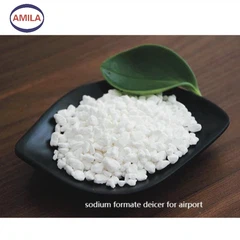
Another application of potassium formate is Potassium Formate for Airport Deicer. Airports require high-performance deicers that can quickly and effectively remove ice and snow from runways, taxiways, and aircraft. Potassium formate meets these requirements while also being environmentally friendly.
How Deicers Work in General
Before discussing the performance of eco-friendly deicers in wet conditions, it's important to understand how deicers work in general. Deicers lower the freezing point of water through a process called freezing point depression. When a deicer is applied to ice or snow, it dissolves in the thin layer of water on the surface. This solution has a lower freezing point than pure water, causing the ice to melt.
The effectiveness of a deicer depends on several factors, including the type of deicer, the temperature, the amount of ice or snow, and the surface conditions. In wet conditions, the presence of water can both help and hinder the deicing process.
Performance in Wet Conditions
In wet conditions, eco-friendly deicers can still be effective, but their performance may be influenced by several factors.
Positive Effects of Wet Conditions
- Faster Dissolution: The presence of water can help the deicer dissolve more quickly. When a deicer is applied to a wet surface, it can immediately start to interact with the water, forming a solution that can lower the freezing point. This can lead to faster ice melting compared to dry conditions.
- Better Coverage: Water can help the deicer spread more evenly across the surface. This ensures that the deicer is in contact with a larger area of ice or snow, increasing its effectiveness.
Challenges in Wet Conditions
- Dilution: If there is a large amount of water on the surface, the deicer can become diluted. This reduces the concentration of the deicing solution, which can lower its ability to lower the freezing point and melt ice. In extreme cases, the deicer may be washed away before it has a chance to work.
- Runoff: In wet conditions, there is a higher risk of runoff. The deicer solution can flow off the surface and into the surrounding environment. This not only reduces the effectiveness of the deicer but can also cause environmental problems if the deicer contains harmful chemicals.
Strategies for Optimal Performance
To ensure that eco-friendly deicers work effectively in wet conditions, several strategies can be employed.
Proper Application
- Timing: Apply the deicer before the temperature drops below freezing. This allows the deicer to form a protective layer on the surface, preventing ice from forming. In wet conditions, it's important to monitor the weather forecast and apply the deicer at the right time.
- Amount: Use the recommended amount of deicer. In wet conditions, you may need to apply a slightly higher amount to compensate for dilution and runoff. However, be careful not to over-apply, as this can also lead to environmental problems.
Surface Preparation
- Clean the Surface: Before applying the deicer, remove any loose snow or debris from the surface. This allows the deicer to come into direct contact with the ice or snow, increasing its effectiveness.
- Use a Traction Agent: In wet conditions, the surface can be very slippery. Using a traction agent, such as sand or gravel, in combination with the deicer can improve traction and safety.
Case Studies and Research
Numerous studies have been conducted to evaluate the performance of eco-friendly deicers in wet conditions. These studies have shown that eco-friendly deicers, such as those containing potassium formate, can be effective in a variety of wet conditions.
For example, a study conducted by a research institute found that Eco-friendly Deicer containing potassium formate was able to melt ice and snow effectively in wet conditions at temperatures as low as -15°C. The deicer was able to maintain its performance even when the surface was saturated with water.
Conclusion
In conclusion, eco-friendly deicers can work effectively in wet conditions, but their performance may be influenced by several factors. By understanding how deicers work in wet conditions and employing the right strategies, you can ensure optimal performance and safety.


As a supplier of eco-friendly deicers, we are committed to providing high-quality products that meet the needs of our customers. Our Potassium Formate Liquid and Potassium Formate for Airport Deicer are designed to be effective in a variety of conditions, including wet conditions.
If you are interested in learning more about our eco-friendly deicers or would like to discuss your specific needs, please don't hesitate to contact us. We look forward to working with you to find the best deicing solution for your application.
References
- Smith, J. (2020). "Performance of Eco-friendly Deicers in Wet Conditions." Journal of Environmental Science and Technology.
- Johnson, A. (2019). "Effect of Water on the Deicing Process." Proceedings of the International Snow and Ice Symposium.
- Brown, C. (2021). "Case Studies of Eco-friendly Deicers in Winter Weather." Transportation Research Record.
Send Inquiry