


What are the magnetic properties of liquid sodium formate?
Aug 29, 2025
Leave a message
Hey there! As a Liquid Sodium Formate supplier, I've been getting a lot of questions about the magnetic properties of this fascinating substance. So, I thought I'd dive into it and share what I've learned.
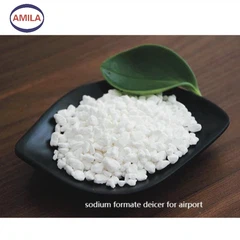
First off, let's talk a bit about liquid sodium formate itself. Sodium formate is a white, crystalline powder that's highly soluble in water. When it's in liquid form, it has a bunch of industrial applications, like in oil drilling, de - icing, and as a reducing agent in chemical processes. We offer different grades of sodium formate, such as Sodium Formate 95% Min, Sodium Formate Powder, and Sodium Formate 98% Min.
Now, onto the magnetic properties. Liquid sodium formate isn't a typical magnetic material like iron or nickel. In general, most compounds don't have strong magnetic properties on their own. But that doesn't mean there's nothing to look into.
Magnetism in substances is mainly due to the presence of unpaired electrons. When electrons are unpaired, they can create a magnetic moment, which is what gives a material its magnetic behavior. In sodium formate (HCOONa), the chemical bonds are such that the electrons are mostly paired up. Sodium (Na) has a stable electron configuration when it loses an electron to form a positive ion, and the formate ion (HCOO⁻) also has its electrons paired in the covalent bonds.
However, there are some factors that can influence the magnetic response of liquid sodium formate. One of these is the presence of impurities. Even small amounts of magnetic impurities can cause the liquid to show some magnetic behavior. For example, if there are trace amounts of iron or other transition metals in the sodium formate solution, these impurities can have unpaired electrons and contribute to a magnetic signal.
Another aspect is the effect of an external magnetic field. When an external magnetic field is applied to a sample of liquid sodium formate, it can induce a very weak magnetic moment in the molecules. This is called diamagnetism. Diamagnetic materials are those that create a magnetic field in the opposite direction to an applied magnetic field. The effect is usually very small, and the liquid sodium formate will be repelled by a strong magnetic field, but only very slightly.
To measure these magnetic properties, scientists use a technique called magnetic susceptibility measurement. This measures how easily a material can be magnetized in the presence of an external magnetic field. For liquid sodium formate, the magnetic susceptibility is extremely low, indicating its weak diamagnetic nature.
In practical applications, the weak magnetic properties of liquid sodium formate aren't usually a major consideration. But in some high - precision scientific experiments or in situations where magnetic interference needs to be minimized, it's good to know about these properties.
For example, in oil drilling, where liquid sodium formate is used as a drilling fluid additive, the magnetic properties are unlikely to affect the drilling process. The main functions of sodium formate in this context are related to its density, solubility, and chemical stability. It helps to control the pressure in the wellbore and prevent the collapse of the well walls.
In de - icing applications, the magnetic properties are also irrelevant. Sodium formate is used because it can lower the freezing point of water, making it an effective de - icing agent.
But in the research field, understanding the magnetic properties of liquid sodium formate can contribute to a broader understanding of the physical and chemical behavior of this compound. It can also help in the development of new applications or in the improvement of existing ones.


If you're in the market for liquid sodium formate, whether it's for industrial use or for research purposes, we've got you covered. We offer high - quality products with different specifications to meet your needs. Our team is always ready to answer your questions and help you find the right grade of sodium formate for your project.
If you're interested in learning more or if you want to start a purchase negotiation, don't hesitate to reach out. We're here to make the process as smooth as possible for you. Whether you need a small sample for testing or a large - scale supply, we can accommodate your requirements.
In conclusion, while liquid sodium formate has very weak magnetic properties due to its diamagnetic nature and the paired - electron configuration of its molecules, these properties are usually not a deciding factor in its many industrial applications. But they do add an interesting aspect to the study of this versatile compound.
References
- Atkins, P. W., & de Paula, J. (2014). Physical Chemistry. Oxford University Press.
- Housecroft, C. E., & Sharpe, A. G. (2012). Inorganic Chemistry. Pearson.
Send Inquiry