


How does potassium formate interact with phosphates?
Jul 30, 2025
Leave a message
Potassium formate (HCOOK) is a versatile chemical compound with a wide range of applications, from oil and gas drilling fluids to snow and ice melting agents. As a leading potassium formate supplier, we often receive inquiries about its interactions with various substances, including phosphates. In this blog post, we will explore how potassium formate interacts with phosphates, the underlying chemical mechanisms, and the potential implications of these interactions in different industries.
Chemical Properties of Potassium Formate and Phosphates
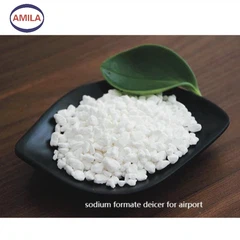
Before delving into their interactions, let's briefly review the chemical properties of potassium formate and phosphates. Potassium formate is a white, crystalline solid that is highly soluble in water. It is a strong reducing agent and has a relatively high boiling point and low freezing point, which makes it suitable for use in low-temperature applications.
Phosphates, on the other hand, are a group of chemical compounds containing the phosphate ion (PO₄³⁻). They are widely distributed in nature and are essential for many biological processes, such as energy metabolism and DNA synthesis. Phosphates can exist in various forms, including orthophosphates (PO₄³⁻), pyrophosphates (P₂O₇⁴⁻), and polyphosphates, each with different chemical and physical properties.
Interaction Mechanisms
The interaction between potassium formate and phosphates can occur through several mechanisms, including chemical reactions and physical interactions.
Chemical Reactions
One possible chemical reaction between potassium formate and phosphates is the formation of potassium phosphate salts. When potassium formate reacts with phosphoric acid (H₃PO₄), for example, the following reaction can occur:


3HCOOK + H₃PO₄ → K₃PO₄ + 3HCOOH
In this reaction, potassium formate reacts with phosphoric acid to form potassium phosphate (K₃PO₄) and formic acid (HCOOH). The formation of potassium phosphate salts can have implications for the solubility and chemical stability of the compounds in solution.
Another possible reaction is the oxidation of formate ions by phosphate-containing oxidizing agents. Some phosphates, such as peroxodiphosphates, can act as oxidizing agents and react with formate ions to produce carbon dioxide and water:
2HCOO⁻ + 2H₂P₂O₈²⁻ → 2CO₂ + 2H₂O + 4H₂PO₄⁻
This reaction is an example of an oxidation-reduction reaction, where the formate ions are oxidized to carbon dioxide, and the peroxodiphosphate ions are reduced to phosphate ions.
Physical Interactions
In addition to chemical reactions, potassium formate and phosphates can also interact physically. For example, they can form complexes or aggregates in solution, which can affect the solubility, viscosity, and other physical properties of the solution. The formation of these complexes can be influenced by factors such as the concentration of the compounds, the pH of the solution, and the presence of other ions.
Implications in Different Industries
The interaction between potassium formate and phosphates has several implications in different industries, including oil and gas, agriculture, and snow and ice control.
Oil and Gas Industry
In the oil and gas industry, potassium formate is commonly used as a component of drilling fluids. These fluids are used to lubricate the drill bit, carry cuttings to the surface, and maintain wellbore stability. Phosphates are also used in drilling fluids as additives to control the rheological properties of the fluid and to prevent the precipitation of scale-forming salts.
The interaction between potassium formate and phosphates in drilling fluids can affect the performance of the fluid. For example, the formation of potassium phosphate salts can lead to the precipitation of solids, which can clog the drill bit and reduce the efficiency of the drilling process. On the other hand, the formation of complexes between potassium formate and phosphates can improve the stability and rheological properties of the fluid, making it more effective in carrying cuttings and maintaining wellbore stability.
Agriculture
In agriculture, phosphates are essential nutrients for plant growth and development. Potassium formate can be used as a fertilizer additive or soil conditioner to improve the availability of nutrients to plants. The interaction between potassium formate and phosphates in the soil can affect the uptake of phosphates by plants.
For example, the formation of potassium phosphate salts in the soil can reduce the solubility of phosphates, making them less available to plants. However, the presence of potassium formate can also enhance the mobility of phosphates in the soil by forming complexes or chelates with them, which can improve their uptake by plant roots.
Snow and Ice Control
In the snow and ice control industry, potassium formate is widely used as a deicing agent. It is effective at melting snow and ice at low temperatures and has a lower environmental impact compared to traditional deicing agents such as sodium chloride. Phosphates can also be used in snow and ice control formulations to improve the performance of the deicing agent.
The interaction between potassium formate and phosphates in snow and ice control formulations can affect the melting efficiency and environmental impact of the product. For example, the formation of potassium phosphate salts can reduce the solubility of the deicing agent, making it less effective at melting snow and ice. On the other hand, the addition of phosphates can also improve the corrosion resistance of the deicing agent, which can reduce the damage to infrastructure such as roads and bridges.
Applications of Potassium Formate in Related Fields
As a potassium formate supplier, we offer a range of high-quality potassium formate products for different applications. Our Potassium Formate for Airport Deicer is specifically designed for use in airport runways and taxiways, where it provides fast and effective snow and ice melting performance while minimizing the environmental impact. Our Potassium Formate Liquid is a convenient and easy-to-use product that can be applied directly to surfaces for snow and ice control. And our Aircraft Deicer is formulated to meet the strict safety and performance requirements of the aviation industry.
Conclusion
In conclusion, the interaction between potassium formate and phosphates is a complex process that can occur through chemical reactions and physical interactions. These interactions have several implications in different industries, including oil and gas, agriculture, and snow and ice control. Understanding the mechanisms and implications of these interactions is essential for optimizing the performance of products containing potassium formate and phosphates.
If you are interested in learning more about our potassium formate products or have any questions about their interactions with phosphates, please feel free to contact us for a detailed discussion and potential procurement opportunities. We are committed to providing high-quality products and excellent customer service to meet your specific needs.
References
- Atkins, P., & de Paula, J. (2014). Physical Chemistry (10th ed.). Oxford University Press.
- Housecroft, C. E., & Sharpe, A. G. (2012). Inorganic Chemistry (4th ed.). Pearson.
- Kirk-Othmer Encyclopedia of Chemical Technology. (2005). John Wiley & Sons.
Send Inquiry