


How does Sodium Formate 95% Min affect the electrical conductivity of solutions?
Jun 30, 2025
Leave a message
As a supplier of Sodium Formate 95% Min, I've witnessed a growing interest in understanding how this chemical affects the electrical conductivity of solutions. This exploration isn't just a scientific curiosity; it has practical implications in various industries, from chemical manufacturing to environmental science. In this blog, I'll delve into the science behind it, share some real - world applications, and offer insights based on my experience in the field.
Understanding Sodium Formate 95% Min
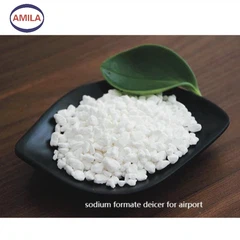
Before we discuss its impact on electrical conductivity, let's first understand what Sodium Formate 95% Min is. Sodium formate (HCOONa) is a white, crystalline solid that is highly soluble in water. The "95% Min" specification means that the product contains at least 95% sodium formate, with the remaining 5% consisting of impurities or other substances.
Sodium formate has a wide range of applications. It is commonly used as a de - icing agent, a reducing agent in the textile industry, and an additive in oil - drilling fluids. The high solubility and relatively low cost make it an attractive option for many industrial processes. You can learn more about different forms of sodium formate on our website, including Liquid Sodium Formate and Solid Sodium Formate. We also offer Sodium Formate 98% Min for applications that require a higher purity.
The Science of Electrical Conductivity
Electrical conductivity in solutions is determined by the presence of ions. When a substance dissolves in water, it may dissociate into ions. These ions are charged particles that can move freely in the solution and carry an electric current. The more ions there are in the solution, and the more mobile they are, the higher the electrical conductivity.
For example, strong electrolytes such as sodium chloride (NaCl) dissociate completely in water into sodium ions (Na⁺) and chloride ions (Cl⁻). This results in a high concentration of ions in the solution and, consequently, a high electrical conductivity. Weak electrolytes, on the other hand, only partially dissociate, leading to a lower concentration of ions and lower conductivity.
How Sodium Formate 95% Min Affects Electrical Conductivity
When Sodium Formate 95% Min is dissolved in water, it dissociates into sodium ions (Na⁺) and formate ions (HCOO⁻). These ions contribute to the electrical conductivity of the solution. The degree of dissociation depends on several factors, including the concentration of the sodium formate, the temperature of the solution, and the presence of other substances.
Concentration Effect
As the concentration of Sodium Formate 95% Min increases, the number of sodium and formate ions in the solution also increases. This leads to a proportional increase in the electrical conductivity. However, at very high concentrations, the ions may start to interact with each other more strongly, which can reduce their mobility and limit the increase in conductivity.


For instance, in a laboratory experiment, we prepared solutions of different concentrations of Sodium Formate 95% Min. At low concentrations, the conductivity increased linearly with the concentration. But when the concentration reached a certain point, the rate of increase in conductivity slowed down. This is because the ions are closer together, and there are more ion - ion interactions, such as ion - pairing, which reduces the effective number of free - moving ions.
Temperature Effect
Temperature also plays a crucial role in the electrical conductivity of a sodium formate solution. As the temperature increases, the kinetic energy of the ions increases, which makes them more mobile. This results in an increase in electrical conductivity.
In general, for most electrolyte solutions, including those containing sodium formate, the conductivity approximately doubles for every 10°C increase in temperature. However, at extremely high temperatures, the water may start to evaporate, which can change the concentration of the solution and complicate the relationship between temperature and conductivity.
Presence of Other Substances
The presence of other substances in the solution can have a significant impact on the electrical conductivity. For example, if there are other electrolytes present, they will also contribute to the total number of ions in the solution. If these electrolytes have a higher degree of dissociation or more mobile ions, they can increase the overall conductivity more than sodium formate alone.
On the other hand, non - electrolytes or substances that can form complexes with the sodium or formate ions can reduce the number of free - moving ions and lower the conductivity. For example, some organic compounds may form hydrogen bonds with the formate ions, reducing their mobility and thus the conductivity of the solution.
Real - World Applications
The ability of Sodium Formate 95% Min to affect the electrical conductivity of solutions has several real - world applications.
Oil - Drilling Industry
In the oil - drilling industry, sodium formate is used as an additive in drilling fluids. The electrical conductivity of the drilling fluid is an important parameter. By adjusting the concentration of Sodium Formate 95% Min in the drilling fluid, engineers can control its electrical conductivity. This is useful for well - logging operations, where the electrical properties of the drilling fluid are measured to gather information about the subsurface formations.
Chemical Manufacturing
In chemical manufacturing, the electrical conductivity of solutions can be used as an indicator of the reaction progress. For example, in a reaction where sodium formate is involved, the change in electrical conductivity can be monitored to determine when the reaction is complete or to control the addition of reactants.
Environmental Monitoring
In environmental monitoring, the electrical conductivity of water bodies can provide information about the presence of dissolved salts and other contaminants. Sodium formate may be present in wastewater from certain industries. By measuring the electrical conductivity of the water, environmental scientists can estimate the concentration of sodium formate and other electrolytes, which is important for assessing water quality and potential environmental impacts.
Practical Considerations for Suppliers and Users
As a supplier of Sodium Formate 95% Min, we understand the importance of providing high - quality products that meet the specific needs of our customers. When it comes to using sodium formate to affect the electrical conductivity of solutions, there are some practical considerations.
Quality Control
We ensure that our Sodium Formate 95% Min meets the highest quality standards. The purity of the product can affect its performance in terms of electrical conductivity. Impurities may introduce additional ions or interact with the sodium and formate ions, altering the conductivity behavior. We conduct regular quality checks to ensure that the product has the correct composition and properties.
Application - Specific Advice
We also provide application - specific advice to our customers. Depending on the particular application, such as oil - drilling or chemical manufacturing, the optimal concentration of sodium formate and the operating conditions may vary. Our technical team is available to assist customers in determining the best approach for their specific needs.
Conclusion
Sodium Formate 95% Min has a significant impact on the electrical conductivity of solutions. Its ability to dissociate into sodium and formate ions makes it a valuable electrolyte in various applications. The concentration, temperature, and presence of other substances all influence how it affects conductivity.
Whether you are in the oil - drilling industry, chemical manufacturing, or environmental science, understanding the relationship between Sodium Formate 95% Min and electrical conductivity can help you optimize your processes and achieve better results. If you are interested in purchasing Sodium Formate 95% Min or have any questions about its application in your industry, please feel free to contact us for further discussion and procurement.
References
- Atkins, P. W., & de Paula, J. (2014). Physical Chemistry for the Life Sciences. Oxford University Press.
- Haynes, W. M. (Ed.). (2016). CRC Handbook of Chemistry and Physics. CRC Press.
- Bard, A. J., & Faulkner, L. R. (2001). Electrochemical Methods: Fundamentals and Applications. John Wiley & Sons.
Send Inquiry