


How does Sodium Formate 95% Min compare to other formate salts in terms of reactivity?
Oct 27, 2025
Leave a message
Hey there! As a supplier of Sodium Formate 95% Min, I've been getting a lot of questions lately about how it stacks up against other formate salts in terms of reactivity. So, I thought I'd take a deep dive into this topic and share my insights with you all.
First off, let's talk a bit about formate salts in general. Formate salts are basically the salts of formic acid, and they've got a wide range of applications in industries like oil drilling, textiles, and even in the production of leather. They're known for their unique chemical properties, which make them useful in various processes.
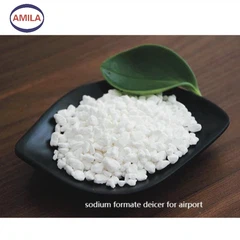
Now, Sodium Formate 95% Min is one of the most commonly used formate salts out there. It's got a purity of at least 95%, which means it's pretty high - quality stuff. You can check out more about Solid Sodium Formate on our website.
Reactivity in Oil Drilling
One of the major applications of formate salts is in oil drilling. In this industry, reactivity plays a crucial role. When it comes to oil drilling, Sodium Formate for Oildrilling has some distinct advantages over other formate salts.
Sodium Formate 95% Min has a relatively high reactivity compared to some other formate salts. It can react with certain components in the drilling fluid to form stable compounds. For example, it can react with calcium ions in the fluid. This reaction helps in preventing the formation of scale deposits in the drilling equipment. Scale deposits can be a real pain in the neck as they can reduce the efficiency of the drilling process and even cause damage to the equipment.
Other formate salts might not react as effectively with these ions. Some of them might have a slower reaction rate, which means they won't be as quick in preventing scale formation. Sodium Formate 95% Min, on the other hand, gets the job done faster, which is a big plus in the fast - paced oil drilling industry.
Reactivity in Textile Industry
The textile industry also makes use of formate salts. In textile processing, reactivity can affect things like dyeing and finishing. Sodium Formate 95% Min can act as a reducing agent. When used in dyeing processes, it can help in reducing the dye molecules to a form that can be easily absorbed by the fabric.
Compared to other formate salts, Sodium Formate 95% Min has a good balance of reactivity. Some other formate salts might be too reactive, which can lead to over - reduction of the dye and cause uneven coloration on the fabric. Others might be too unreactive, and the dye won't be reduced effectively, resulting in poor color fastness. Sodium Formate 95% Min provides just the right amount of reactivity to ensure a uniform and long - lasting dyeing process. You can also explore Liquid Sodium Formate for different textile applications.
Reactivity in Leather Production
In leather production, formate salts are used in various stages of the tanning process. Reactivity is important here as well. Sodium Formate 95% Min can react with the proteins in the leather to help in the tanning process. It can also act as a buffer, maintaining the right pH level in the tanning solution.
Some other formate salts might not be as effective in buffering the pH. If the pH level in the tanning solution is not properly maintained, it can lead to issues like over - tanning or under - tanning of the leather. Sodium Formate 95% Min's reactivity allows it to keep the pH stable, resulting in high - quality leather products.

Chemical Structure and Reactivity
The reactivity of formate salts is closely related to their chemical structure. Sodium Formate 95% Min has a simple structure with a sodium ion and a formate ion. This simple structure makes it relatively easy for it to participate in chemical reactions.
Other formate salts might have more complex structures. For example, some might have larger cations or anions, which can affect their reactivity. The larger the ion, the more difficult it might be for it to move around in the reaction medium and participate in reactions. Sodium Formate 95% Min's small and simple structure gives it an edge in terms of reactivity.
Solubility and Reactivity
Solubility is another factor that affects reactivity. Sodium Formate 95% Min is highly soluble in water. This high solubility means that it can quickly dissolve in the reaction medium and start reacting.
Some other formate salts might have lower solubility. If a formate salt doesn't dissolve well, it won't be able to react effectively. It'll just sit there in the reaction mixture without participating in the reactions. Sodium Formate 95% Min's high solubility ensures that it can react with other substances in the medium in a timely manner.
Cost - Reactivity Ratio
When it comes to choosing a formate salt for an industrial process, cost is always a consideration. Sodium Formate 95% Min offers a great cost - reactivity ratio. It's relatively inexpensive compared to some other high - reactivity formate salts.
You get a good amount of reactivity for a reasonable price. This makes it a popular choice among industries that need to balance cost and performance. Other formate salts might be more expensive but not necessarily offer significantly higher reactivity. So, in terms of getting the most bang for your buck, Sodium Formate 95% Min is a winner.
Conclusion
In conclusion, Sodium Formate 95% Min has some clear advantages over other formate salts in terms of reactivity. Whether it's in oil drilling, the textile industry, or leather production, its reactivity helps in improving the efficiency and quality of the processes. Its simple chemical structure, high solubility, and great cost - reactivity ratio make it a top choice for many industrial applications.
If you're in the market for a reliable formate salt with high reactivity, I'd highly recommend giving Sodium Formate 95% Min a try. We're a trusted supplier, and we can provide you with high - quality products. If you're interested in purchasing or have any questions, feel free to reach out to us for a procurement discussion. We're here to help you find the best solution for your needs.
References
- Smith, J. (2018). "Formate Salts in Industrial Applications". Chemical Industry Journal.
- Brown, A. (2019). "Reactivity of Formate Compounds". Journal of Chemical Reactions.
- Green, C. (2020). "Cost - Benefit Analysis of Formate Salts". Industrial Economics Review.
Send Inquiry