


How does Sodium Formate Powder interact with other chemicals in a battery system?
Jan 07, 2026
Leave a message
As a supplier of Sodium Formate Powder, I've witnessed firsthand the growing interest in its applications, especially within battery systems. In this blog, I'll delve into how Sodium Formate Powder interacts with other chemicals in a battery system, exploring the underlying mechanisms, benefits, and potential challenges.
1. Introduction to Sodium Formate Powder
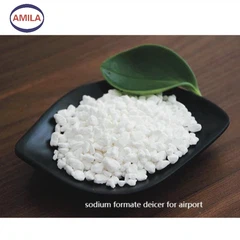
Sodium Formate Powder is a white, crystalline solid with the chemical formula HCOONa. It is highly soluble in water and has a wide range of applications, from being used as a Feed Grade Sodium Formate in the animal feed industry to serving as a reducing agent in various chemical processes. In the context of battery systems, its unique chemical properties make it an interesting candidate for further exploration.
2. Role in Battery Systems
Battery systems are complex electrochemical devices that rely on the interaction of multiple chemicals to store and release energy. Sodium Formate Powder can play several roles in these systems, primarily due to its ability to participate in redox reactions.
2.1 Reducing Agent
One of the key functions of Sodium Formate Powder in a battery system is as a reducing agent. In a redox reaction, a reducing agent donates electrons to another substance, causing it to be reduced. In a battery, this can be crucial for the charge - discharge cycle. For example, in some metal - air batteries, Sodium Formate can react with metal ions, reducing them to their elemental form during the charging process.
The chemical reaction can be represented as follows:
[HCOONa + M^{n+}\rightarrow HCOO^{-}+M^{(n - 1)+}+Na^{+}]
where (M^{n+}) represents a metal ion with a charge of (n+). This reaction helps to regenerate the active materials in the battery, allowing it to be recharged.
2.2 pH Buffer
Sodium Formate can also act as a pH buffer in a battery system. Maintaining a stable pH is essential for the proper functioning of many battery chemistries. The formate ion ((HCOO^{-})) can react with hydrogen ions ((H^{+})) or hydroxide ions ((OH^{-})) in the electrolyte, helping to keep the pH within an optimal range.
The buffer reactions are as follows:
[HCOO^{-}+H^{+}\rightleftharpoons HCOOH]
[HCOOH + OH^{-}\rightleftharpoons HCOO^{-}+H_{2}O]
A stable pH can prevent the degradation of battery components and improve the overall performance and lifespan of the battery.
3. Interaction with Electrolytes
The electrolyte is a crucial component of a battery system, responsible for conducting ions between the electrodes. Sodium Formate Powder can interact with different types of electrolytes in various ways.
3.1 Aqueous Electrolytes
In aqueous electrolytes, Sodium Formate can dissolve readily, releasing sodium ions ((Na^{+})) and formate ions ((HCOO^{-})). These ions can contribute to the ionic conductivity of the electrolyte, enhancing the flow of charge within the battery.
However, the presence of Sodium Formate can also affect the solubility and stability of other components in the electrolyte. For example, it may interact with metal salts in the electrolyte, potentially forming complexes or precipitates. This interaction needs to be carefully studied to ensure the proper functioning of the battery.
3.2 Non - Aqueous Electrolytes
In non - aqueous electrolytes, such as organic solvents, the solubility of Sodium Formate may be limited. However, if it can be dissolved or dispersed effectively, it can still participate in redox reactions and influence the properties of the electrolyte. For instance, it may affect the viscosity and dielectric constant of the non - aqueous electrolyte, which in turn can impact the ion mobility and the overall performance of the battery.
4. Interaction with Electrodes
The electrodes are the sites where the electrochemical reactions occur in a battery. Sodium Formate Powder can interact with both the anode and the cathode.
4.1 Anode
At the anode, Sodium Formate can act as a source of electrons during the discharge process. It can be oxidized, releasing electrons and forming carbon dioxide and water. The oxidation reaction is as follows:
[2HCOONa + 2OH^{-}\rightarrow 2CO_{2}+2H_{2}O + 2Na^{+}+4e^{-}]
This reaction can provide the necessary electrons for the external circuit, allowing the battery to deliver power.
4.2 Cathode
At the cathode, Sodium Formate can participate in reduction reactions, either directly or indirectly. It may react with oxygen or other oxidizing agents present at the cathode, facilitating the reduction process. This can improve the efficiency of the cathode reaction and enhance the overall performance of the battery.


5. Benefits of Using Sodium Formate Powder in Battery Systems
The use of Sodium Formate Powder in battery systems offers several benefits.
5.1 Cost - Effectiveness
Sodium Formate is relatively inexpensive compared to some other chemicals used in battery systems. This makes it an attractive option for large - scale battery production, potentially reducing the overall cost of the battery.
5.2 Environmental Friendliness
Sodium Formate is a relatively environmentally friendly chemical. It is biodegradable and has a low toxicity level. Using Sodium Formate in battery systems can contribute to the development of more sustainable battery technologies.
5.3 Improved Performance
As discussed earlier, Sodium Formate can enhance the charge - discharge cycle, pH stability, and ionic conductivity of the battery. These factors can lead to improved battery performance, including higher energy density, longer lifespan, and better charge - discharge efficiency.
6. Challenges and Considerations
While Sodium Formate Powder has many potential benefits in battery systems, there are also some challenges and considerations.
6.1 Side Reactions
There may be side reactions between Sodium Formate and other components in the battery system. These side reactions can lead to the formation of unwanted by - products, which may degrade the battery performance or cause safety issues. For example, the formation of carbonates or other insoluble compounds can block the pores in the electrodes, reducing the ion transport and the overall efficiency of the battery.
6.2 Compatibility
Ensuring the compatibility of Sodium Formate with other chemicals in the battery system is crucial. Different battery chemistries may require different formulations and operating conditions. Therefore, careful research and testing are needed to determine the optimal conditions for using Sodium Formate in a specific battery system.
7. Conclusion
In conclusion, Sodium Formate Powder has the potential to play an important role in battery systems. Its ability to act as a reducing agent, pH buffer, and interact with electrolytes and electrodes makes it a versatile chemical for battery applications. However, further research is needed to fully understand its interactions with other chemicals, optimize its use, and overcome the challenges associated with its implementation.
If you're interested in exploring the use of Sodium Formate 99% Min or Sodium Formate Powder in your battery systems, I encourage you to reach out for more information and to discuss potential procurement opportunities. Our team of experts is ready to assist you in finding the best solutions for your specific needs.
References
- Bard, A. J., & Faulkner, L. R. (2001). Electrochemical Methods: Fundamentals and Applications. John Wiley & Sons.
- Winter, M., & Brodd, R. J. (2004). What Are Batteries, Fuel Cells, and Supercapacitors?. Chemical Reviews, 104(10), 4245 - 4269.
- Conway, B. E. (1999). Electrochemical Supercapacitors: Scientific Fundamentals and Technological Applications. Kluwer Academic Publishers.
Send Inquiry