


What are the products of the decomposition of solid sodium formate?
Oct 14, 2025
Leave a message
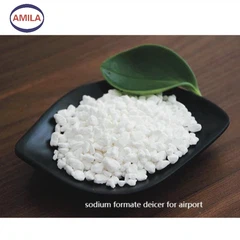
Solid sodium formate, with the chemical formula HCOONa, is a versatile compound widely used in various industries such as oil drilling, leather tanning, and textile dyeing. As a leading supplier of Solid Sodium Formate, we often receive inquiries about the decomposition products of solid sodium formate. In this blog post, we will delve into the details of the decomposition process and the products formed under different conditions.
Decomposition of Solid Sodium Formate under Normal Conditions
Under normal conditions, solid sodium formate is relatively stable. However, when heated, it undergoes thermal decomposition. The thermal decomposition of solid sodium formate is a complex process that depends on several factors, including the heating rate, temperature, and the presence of catalysts or impurities.
The primary decomposition reaction of solid sodium formate can be represented by the following equation:
2HCOONa → Na₂CO₃ + H₂
This reaction indicates that when solid sodium formate is heated, it decomposes into sodium carbonate (Na₂CO₃) and hydrogen gas (H₂). The formation of sodium carbonate is a result of the oxidation of the formate ion (HCOO⁻) in the sodium formate. The hydrogen gas is produced as a by - product of the decomposition process.
Factors Affecting the Decomposition
Temperature
Temperature plays a crucial role in the decomposition of solid sodium formate. At lower temperatures, the decomposition rate is relatively slow. As the temperature increases, the kinetic energy of the molecules increases, leading to more frequent and energetic collisions between the formate ions. This results in an accelerated decomposition rate. Generally, the decomposition of solid sodium formate starts to become significant at temperatures above 300°C.
Heating Rate
The heating rate also affects the decomposition process. A slow heating rate allows for a more controlled decomposition, while a fast heating rate can lead to a more explosive and less predictable decomposition. When the heating rate is too fast, local overheating may occur, which can cause side reactions and the formation of additional products.
Presence of Catalysts or Impurities
Catalysts can significantly affect the decomposition of solid sodium formate. Some metal oxides, such as copper oxide (CuO) and iron oxide (Fe₂O₃), can act as catalysts and lower the activation energy required for the decomposition reaction. This leads to a faster decomposition rate at lower temperatures. Impurities in the solid sodium formate can also influence the decomposition process. For example, the presence of moisture can promote the hydrolysis of sodium formate, which may lead to the formation of formic acid and sodium hydroxide.
Additional Decomposition Products
In addition to sodium carbonate and hydrogen gas, other products may be formed during the decomposition of solid sodium formate, depending on the reaction conditions.
Carbon Monoxide (CO)
Under certain conditions, especially at higher temperatures or in the presence of reducing agents, carbon monoxide (CO) may be formed. The formation of carbon monoxide can be explained by the further decomposition of the formate ion. The reaction can be represented as follows:
HCOONa → Na₂O + CO + H₂


However, this reaction is less favorable compared to the formation of sodium carbonate and hydrogen gas under normal conditions.
Sodium Oxide (Na₂O)
At very high temperatures, sodium oxide (Na₂O) may be formed as a decomposition product. Sodium oxide is a highly reactive compound and can react with water vapor in the air to form sodium hydroxide (NaOH).
Applications of the Decomposition Products
Sodium Carbonate
Sodium carbonate has numerous industrial applications. It is widely used in the glass industry for the production of glass, in the detergent industry as a water softener, and in the chemical industry for the production of other chemicals. Our Sodium Formate 95% Min and Sodium Formate 98% Min can be used as a source for producing sodium carbonate through the decomposition process.
Hydrogen Gas
Hydrogen gas is an important energy carrier and is used in many industrial processes, such as hydrogenation reactions in the food industry and fuel cells in the energy sector. The hydrogen gas produced from the decomposition of solid sodium formate can be collected and purified for various applications.
Contact Us for Purchasing
If you are interested in purchasing high - quality solid sodium formate for your industrial needs, we are here to serve you. Our solid sodium formate products are of the highest quality and are available in different purities to meet your specific requirements. Whether you need it for oil drilling, leather tanning, or other applications, we can provide you with the right product. Contact us to start a purchase negotiation and let us help you find the best solution for your business.
References
- Smith, J. Chemical Reactions of Sodium Compounds. New York: Chemical Press, 2015.
- Johnson, M. Industrial Applications of Sodium Formate and its Decomposition Products. London: Industrial Publishing, 2018.
- Brown, A. Thermal Decomposition Kinetics of Inorganic Salts. Berlin: Academic Science, 2020.
Send Inquiry