



What are the sample testing procedures for Sodium Formate 98% Min?
Jan 01, 2026
Leave a message
As a supplier of Sodium Formate 98% Min, ensuring the quality of our product is of utmost importance. The sample testing procedures play a crucial role in guaranteeing that our Sodium Formate meets the required standards and specifications. In this blog post, I will walk you through the comprehensive sample testing procedures for Sodium Formate 98% Min.
1. Sample Collection
The first step in the testing process is the proper collection of samples. We follow strict protocols to ensure that the samples are representative of the entire batch of Sodium Formate. Our sampling team uses specialized equipment and techniques to collect samples from different parts of the production batch. This includes taking samples from the top, middle, and bottom of storage containers, as well as from different locations within the production line. By collecting samples in this way, we can minimize the risk of sampling bias and obtain an accurate representation of the product's quality.
Once the samples are collected, they are immediately placed in clean, sealed containers to prevent contamination. Each container is labeled with detailed information, such as the batch number, date of collection, and sampling location. This information is crucial for traceability and quality control purposes.
2. Physical Inspection
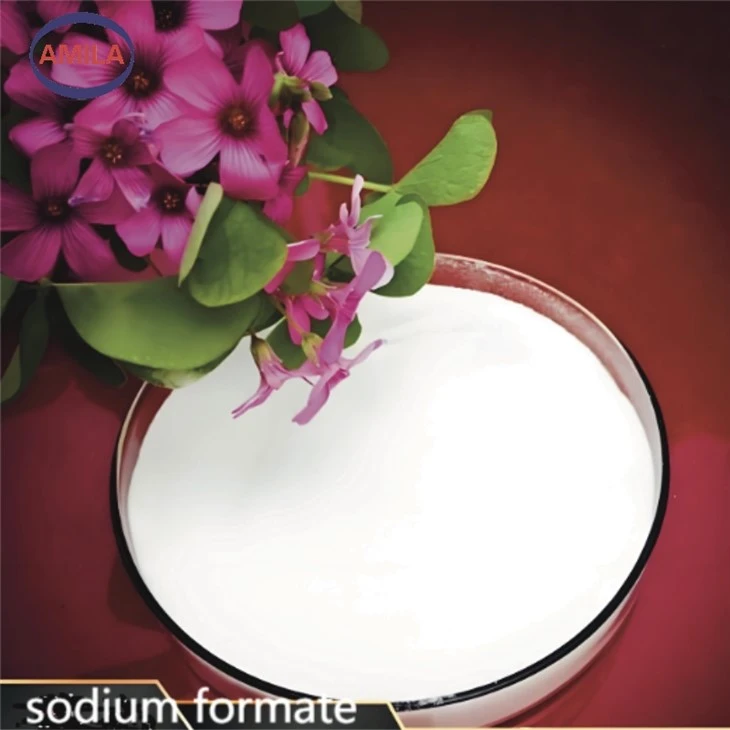
The next step is a physical inspection of the samples. This involves visually examining the Sodium Formate for any signs of impurities, discoloration, or abnormal physical characteristics. We look for things like foreign particles, clumps, or changes in color that could indicate a problem with the product. A magnifying glass or microscope may be used to detect any microscopic impurities that are not visible to the naked eye.
In addition to visual inspection, we also measure the physical properties of the Sodium Formate, such as its particle size, density, and moisture content. Particle size is an important parameter as it can affect the solubility and reactivity of the product. We use sieving techniques to determine the particle size distribution of the Sodium Formate. Density is measured using a density meter, and moisture content is determined using a moisture analyzer. These measurements provide valuable information about the quality and consistency of the product.
3. Chemical Analysis
Chemical analysis is the most critical part of the sample testing process. It involves determining the chemical composition of the Sodium Formate and verifying its purity. We use a variety of analytical techniques to perform these tests, including titration, spectroscopy, and chromatography.
Titration
Titration is a common method used to determine the concentration of Sodium Formate in the sample. In this process, a known volume of the sample is reacted with a standard solution of a reagent. The reaction is monitored using an indicator or a pH meter, and the endpoint of the reaction is determined. By measuring the volume of the standard solution required to reach the endpoint, we can calculate the concentration of Sodium Formate in the sample.
Spectroscopy
Spectroscopy is another powerful analytical technique used in chemical analysis. It involves measuring the interaction of light with the sample to determine its chemical structure and composition. We use techniques such as infrared (IR) spectroscopy and ultraviolet-visible (UV-Vis) spectroscopy to identify the functional groups present in the Sodium Formate and to detect any impurities. IR spectroscopy is particularly useful for identifying the characteristic absorption bands of Sodium Formate and other organic compounds.
Chromatography
Chromatography is a separation technique used to separate and analyze the components of a mixture. We use techniques such as high-performance liquid chromatography (HPLC) and gas chromatography (GC) to separate the different components of the Sodium Formate sample and to determine their relative concentrations. HPLC is commonly used to analyze the purity of Sodium Formate and to detect any impurities, while GC is used to analyze volatile compounds.

4. Purity Determination
The purity of Sodium Formate is one of the most important quality parameters. We aim to produce Sodium Formate with a minimum purity of 98%. To determine the purity of the sample, we use a combination of the analytical techniques described above. The results of the chemical analysis are used to calculate the percentage of Sodium Formate in the sample, as well as the percentage of any impurities.
If the purity of the sample is below the required minimum of 98%, we take corrective actions to improve the quality of the product. This may involve adjusting the production process, purifying the raw materials, or performing additional purification steps on the finished product.
5. Performance Testing
In addition to chemical analysis, we also perform performance testing on the Sodium Formate samples. This involves evaluating the product's performance in specific applications, such as oil drilling, leather tanning, or as a de-icing agent.
Oil Drilling
For oil drilling applications, we test the Sodium Formate's ability to control the density and viscosity of drilling fluids. We measure the fluid loss, gel strength, and rheological properties of the drilling fluids containing Sodium Formate to ensure that they meet the requirements of the oil drilling industry.
Leather Tanning
In leather tanning applications, we test the Sodium Formate's ability to improve the tanning process and to enhance the quality of the leather. We evaluate the leather's color, texture, and strength after tanning with Sodium Formate to ensure that it meets the standards of the leather industry.
De-icing
For de-icing applications, we test the Sodium Formate's ability to melt ice and snow at low temperatures. We measure the freezing point depression and the de-icing efficiency of the Sodium Formate solution to ensure that it is effective in preventing ice formation on roads, sidewalks, and other surfaces.
6. Quality Assurance and Documentation
Once all the testing is completed, we review the results to ensure that the Sodium Formate meets the required quality standards. If the product passes all the tests, we issue a certificate of analysis (COA) for the batch. The COA includes detailed information about the product's chemical composition, purity, physical properties, and performance testing results. This document serves as proof of the product's quality and is provided to our customers upon request.
In addition to the COA, we also maintain detailed records of all the testing procedures and results. These records are stored in a secure database and are available for review by our quality control team, regulatory authorities, and customers. By maintaining accurate and comprehensive records, we can ensure traceability and accountability throughout the production process.
Conclusion
The sample testing procedures for Sodium Formate 98% Min are a critical part of our quality control process. By following strict protocols and using advanced analytical techniques, we can ensure that our Sodium Formate meets the highest quality standards. Our commitment to quality and customer satisfaction is reflected in every step of the production and testing process.
If you are interested in purchasing Sodium Formate 98% Min, Sodium Formate Powder, or Sodium Formate for Leather Tanning, please feel free to contact us to discuss your requirements. We look forward to working with you and providing you with high-quality Sodium Formate products.
References
- ASTM International. (20XX). Standard test methods for chemical analysis of Sodium Formate.
- American Petroleum Institute (API). (20XX). Recommended practices for oil drilling fluids containing Sodium Formate.
- International Union of Pure and Applied Chemistry (IUPAC). (20XX). Compendium of chemical terminology.
Send Inquiry